
Unearthing the Long Shadow of the Second Plague Pandemic
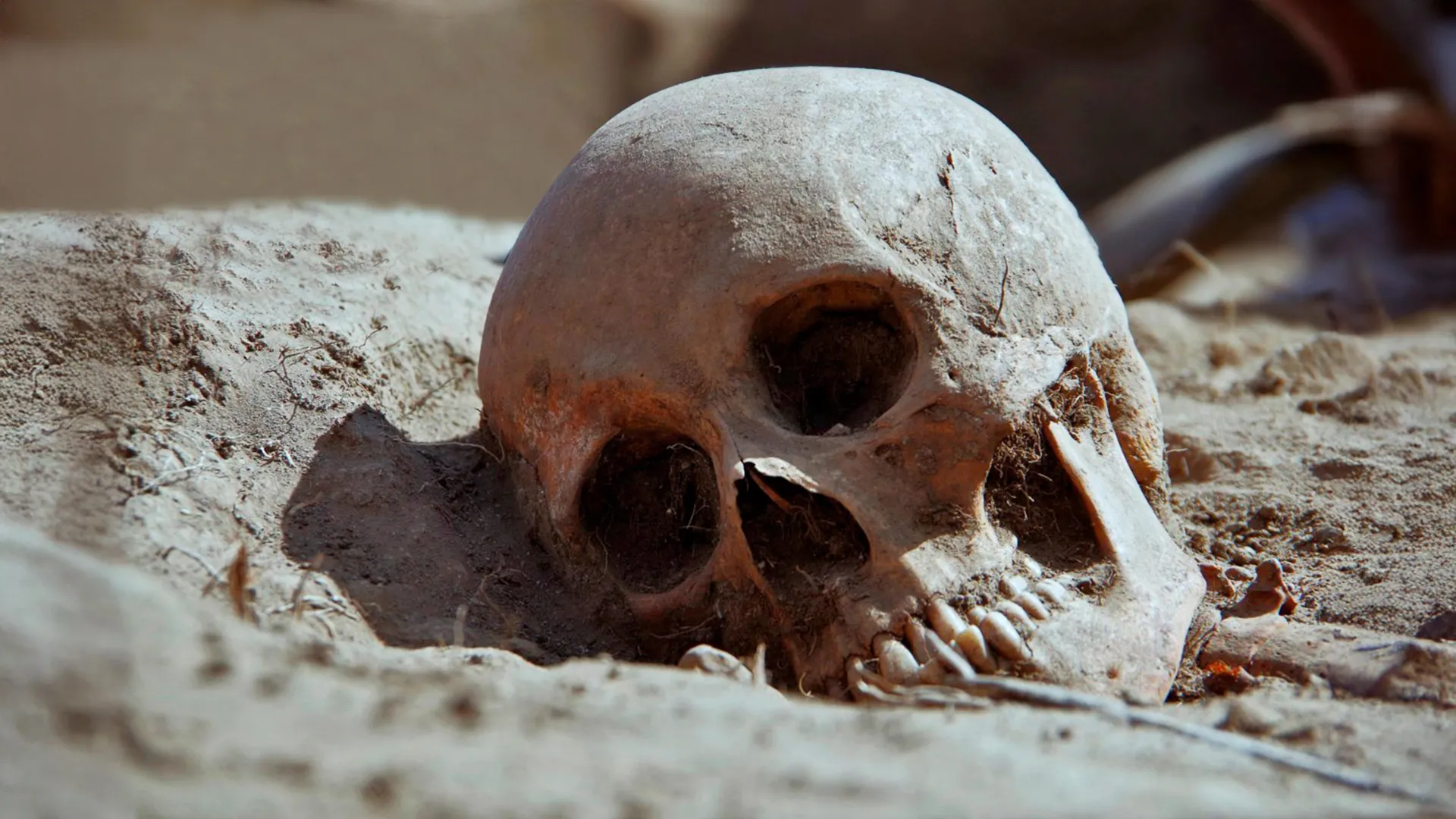
The collective historical memory of Europe is deeply scarred by the cataclysmic sweep of the Black Death between 1347 and 1353, an epidemic that eradicated an estimated third to half of the continent’s population in a terrifyingly brief span. For decades, popular narrative and early historiography treated this horrifying pandemic as a discrete, isolated historical trauma—a singular apocalyptic event that arrived from the East, peaked with devastating efficiency, and largely vanished as suddenly as it had materialized. Yet, contemporary epidemiological research and advanced archaeogenetic investigations have steadily dismantled this oversimplified perception. The bacterium responsible for the devastation, Yersinia pestis, did not simply disappear once the initial wave subsided. Instead, it entrenched itself within European and regional ecosystems, returning in devastating, recurring waves for more than four centuries.
A landmark international study spearheaded by researchers at the University of Tartu has now cast unprecedented light on this prolonged chapter of human history. By extracting and sequencing ancient DNA preserved within archaeological human remains across the continent, a multidisciplinary team of geneticists, historians, and archaeologists has reconstructed the evolutionary trajectory, geographical migration, and persistent resurgence of Yersinia pestis long after the initial medieval terror receded. This exhaustive study, which successfully reconstructed 26 new Yersinia pestis genomes from 11 distinct archaeological sites spanning Estonia, Russia, England, the Netherlands, and Switzerland, provides a granular look at the mechanisms that sustained the Second Plague Pandemic from the fourteenth through the eighteenth centuries.
The Chronology and Evolution of a Persistent Killer
To comprehend the sheer temporal scale of the Second Plague Pandemic, researchers must navigate a complex chronology stretching across four hundred years of shifting geopolitical landscapes, climatic anomalies, and demographic transformations. The newly analyzed genetic samples date from the 1300s to the 1700s, covering crucial windows of European history marked by intense urbanization, the Little Ice Age, the Renaissance, and catastrophic continent-wide conflicts.
Rather than indicating a continuous, localized survival of a single bacterial strain that repeatedly radiated outward from one primary European source, the genetic evidence tells a far more dynamic story. The data reveals that the plague repeatedly reintroduced itself to various regions over centuries, establishing transient or long-term ecological reservoirs that allowed the pathogen to persist in proximity to human settlements.
A pivotal turning point in this centuries-long timeline occurred between 1450 and 1500. During this half-century window, Yersinia pestis lineages underwent a massive evolutionary expansion, splitting into three distinct and highly successful genetic branches. Scientists theorize that these newly emerged lineages played a critical role in establishing persistent, native reservoirs of the bacterium within wild rodent populations across Europe.
Climate science further enriches this historical chronology. The researchers suggest that sweeping environmental shifts, most notably the Great Renaissance Drought, likely catalyzed this evolutionary divergence and subsequent geographic spread. Contemporary ecological models of modern plague reservoirs demonstrate that prolonged dry spells and subsequent climatic volatility drastically alter the population dynamics, ranging behaviors, and burrowing habits of wild rodents—the primary natural hosts for Yersinia pestis. As these animal populations fluctuated and migrated in response to environmental stress, the opportunities for zoonotic spillover into human communities multiplied exponentially.
"We found evidence for repeated introductions of plague into Estonia starting already in the late 14th century and identified several previously unknown genetic lineages, both in urban and rural settings," stated senior author Professor Kristiina Tambets, emphasizing the complex web of transmission that characterized northeastern Europe during the pandemic’s early centuries. Estonia, positioned as a vital commercial and maritime nexus, served as a recurring waypoint, demonstrating how long-distance trade networks and regional connectivity inadvertently facilitated the continuous circulation of the pathogen.
Solving the Chronological Puzzle of Ancient Pathogens
One of the most formidable barriers confronting paleogeneticists and historians has been the challenge of absolute dating. During contemporary health crises, such as the COVID-19 pandemic, researchers tracked the minute mutations and global dissemination of individual viral variants with remarkable precision because modern genomic sequencing is invariably accompanied by exact digital timestamps. In contrast, historical samples extracted from centuries-old bones lack such definitive metadata.
Archaeological remains are typically dated using radiocarbon dating techniques or stratigraphy, methods that inherently yield time windows spanning several decades or, in many cases, more than a hundred years. This temporal fuzziness has historically hindered researchers’ ability to link micro-evolutionary changes in the bacterial genome directly to specific historical events or documented outbreaks recorded by chroniclers.
"With COVID-19, scientists could reconstruct the spread of individual strains extremely well because the genomes came with precise timestamps," explained the study’s main author, Dr. Marcel Keller. "For historical pandemics, those timestamps are often missing or may cover more than 100 years, which limits our ability to interpret the genetic data."
To overcome this methodological hurdle, Dr. Keller’s team engineered an innovative computational framework designed to narrow these broad dating ranges. By meticulously mapping where individual ancient plague genomes positioned themselves on the bacterium’s broader phylogenetic tree—and leveraging the known clock-like mutation rate of bacterial DNA—the researchers refined the likely isolation dates for dozens of samples.
This analytical breakthrough enabled the team to place centuries-old infections into a significantly tighter, more reliable historical timeline. Building upon this refined model, the researchers synthesized 64 previously published ancient plague genomes with their 11 newly sequenced samples. This comprehensive undertaking marked the first systematic effort to align nearly every available European Yersinia pestis genome from the fourteenth through eighteenth centuries directly with the chronicles of pestilence preserved in municipal records, monastic annals, and tax rolls.
"We were able to improve dating intervals for many samples, which allowed us to connect them to specific plague waves and outbreaks that were recorded in the respective towns or regions by chroniclers," noted historian and corresponding author Professor Philip Slavin. This synergy between molecular biology and archival history bridged a long-standing chasm between hard science and humanistic scholarship.
Human Conflict as an Engine of Epidemic Dissemination
While climate and rodent ecology provided the biological foundation for the plague’s survival, human activity dictated its distribution across the European landscape. The newly interpreted genomic data provides compelling, empirical evidence that human warfare and geopolitical instability served as primary vectors for the movement of the disease.
The study highlights clear genetic links between Yersinia pestis lineages and two of the most devastating conflicts in early modern European history: the Thirty Years’ War (1618–1648) and the Great Northern War (c. 1700–1721). These prolonged military campaigns involved the mass mobilization of vast mercenary armies, the displacement of civilian populations fleeing devastation, and extensive logistical supply lines that crisscrossed the continent. As troops, refugees, and merchants traversed established land and maritime corridors, they inadvertently carried the pathogen into uninfected territories.
"We see how Yersinia pestis splits into new branches during periods of conflict and spreads along the routes traveled by troops and displaced populations," observed senior author Dr. Christiana L. Scheib.
The granular detail provided by the new genomes vividly illuminates localized historical tragedies, such as the catastrophic 1710 siege of Tallinn during the Great Northern War. As military forces clashed and populations crowded behind defensive fortifications, the plague swept relentlessly through the region, decimating entrenched Swedish and Russian military units alongside the civilian inhabitants. The genetic signature of the pathogen recovered from these victims confirms that military mobility acted as a high-speed transit network for lethal infectious strains, overriding natural geographic barriers.
The Broader Implications for Modern Epidemiology and Public Health
Although Yersinia pestis no longer poses an existential public health threat to contemporary Europe, the bacterium is far from extinct. Natural reservoirs of the plague persist in wild rodent populations across various regions of the globe, including parts of the Americas, Africa, and Asia, where sporadic human cases continue to be reported.
Epidemiologists and infectious disease specialists argue that unlocking the historical mechanisms of the Second Plague Pandemic offers invaluable insights into the long-term evolutionary behavior of pathogens. By understanding how a devastating pandemic pathogen transitions from an acute, catastrophic invader into an endemic, multi-century presence—and what ultimately drives its withdrawal from a region—scientists can better model the complex ecological and evolutionary trajectories of modern infectious diseases.
Furthermore, this pioneering research demonstrates the profound utility of interdisciplinary collaboration. By fusing cutting-edge ancient DNA extraction techniques with rigorous archaeological stratigraphy, radiocarbon chronology, and deep archival historiography, the international team—which included institutional partners from the University of Cambridge alongside research hubs in the Netherlands and Switzerland—has established a new gold standard for historical epidemiology.
Ultimately, the findings redefine our understanding of a defining era in human history. The Second Plague Pandemic was not a single, monolithic medieval disaster, but a prolonged, dynamic ecological and human crisis. It was a disease that continually crossed borders, mutated into resilient new lineages, exploited the vulnerabilities of human conflict and climate change, and fundamentally shaped the social, economic, and demographic fabric of Europe for generations after the Black Death had faded into memory.

