
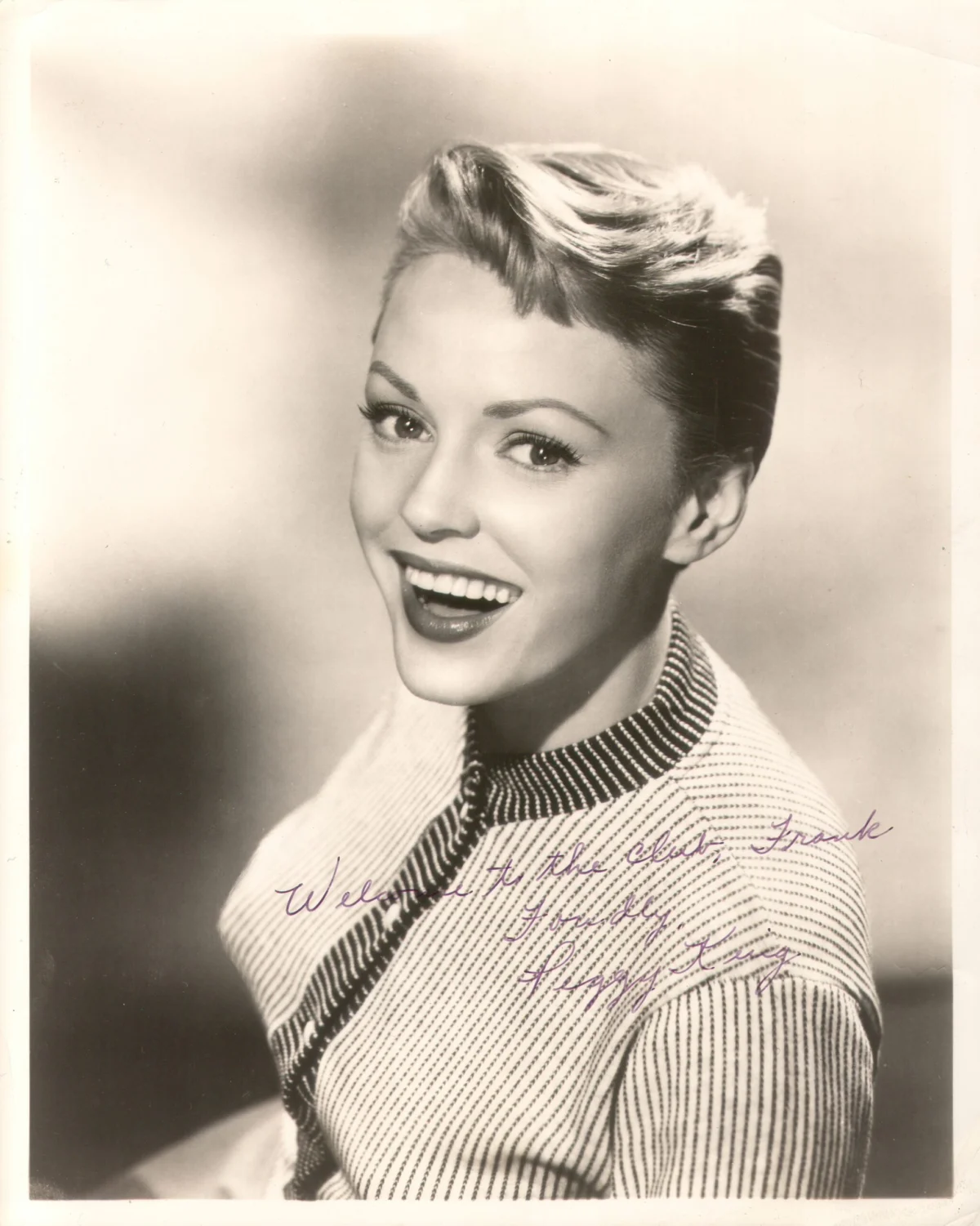
The acclaimed performer passed away on Sunday at the Saunders House Assisted Living facility in Wynnewood, Pennsylvania, following a long struggle with Alzheimer’s disease. Her death, confirmed by her longtime publicist Alan Eicher, marks the end of a remarkable career that spanned over six decades, bridging the gap between the big band radio era and the advent of modern television.
A Legacy Defined by "Perky" Charm
Peggy King was more than a singer; she was a fixture of American living rooms during the mid-20th century. Her ascent to fame began in earnest in 1954 when she joined the cast of The George Gobel Show. It was during this period that host George Gobel bestowed upon her the moniker "Pretty Perky Peggy King." The name was not merely a marketing gimmick; it captured the essence of her stage persona—an effervescent, energetic, and immensely talented vocalist who radiated the optimism of the post-war era.
Her impact during this period was significant. In 1955, she received an Emmy Award nomination for Best Female Singer, a testament to her vocal prowess and widespread appeal. That same year, she performed the song "Count Your Blessings" at the Academy Awards, cementing her status as a premier vocalist of the decade. By 1958, she had achieved the rare distinction of co-hosting the Emmy Awards, further demonstrating the industry’s high regard for her versatility and poise.
Chronology of a Storied Career
Born on February 16, 1930, in Greensburg, Pennsylvania, to Floyd Henry King and Margaret Finan, Peggy King’s journey toward stardom was marked by early signs of musical promise. After graduating from Ravenna High School in Ohio, she began performing on radio in Cleveland, honing the craft that would eventually make her a household name.
- Early 1950s: King moved toward national prominence. In 1952, she signed a contract with MGM, leading to a cameo in the classic Vincente Minnelli film The Bad and the Beautiful. During this time, she also appeared in the cult classic Abbott and Costello Meet the Mummy.
- 1954–1957: Her tenure on The George Gobel Show propelled her into the national spotlight, establishing her as one of the most recognizable faces on American television.
- The Columbia Years: Signed by legendary producer Mitch Miller to Columbia Records, King recorded two best-selling albums and a string of hit singles. During this tenure, she famously missed the opportunity to record the iconic standard "Cry Me a River," which was written for her by Arthur Hamilton but blocked by Miller’s artistic direction—a decision that remains a notable "what-if" in mid-century music history.
- 1960s and Beyond: She continued to make high-profile guest appearances on the most prestigious programs of the era, including The Tonight Show Starring Johnny Carson, The Steve Allen Show, and The Jack Benny Program.
- 2010–2016: King was inducted into the Broadcast Pioneers Hall of Fame in 2010. She continued to perform live in Philadelphia, New York, and Los Angeles as late as 2014, and released her final album, Songs a la King, in 2016.
The Television Variety Landscape
To understand Peggy King’s success, one must look at the unique cultural ecosystem of 1950s television. Variety shows were the bedrock of entertainment, requiring performers to be "triple threats"—capable of singing, dancing, and acting in comedic sketches. King’s ability to pivot seamlessly from dramatic roles in shows like Maverick and Dragnet to lighthearted musical numbers on The Perry Como Show or The Garry Moore Show highlighted a level of professionalism that is rarely seen in modern entertainment.
Her work extended into television specials as well. She starred alongside Tab Hunter in the musical Hans Brinker or the Silver Skates and performed in a high-profile musical adaptation of Jack and the Beanstalk alongside stage veterans Joel Grey, Celeste Holm, and Cyril Ritchard. She even lent her presence to the 1957 thriller Zero Hour!, proving that her appeal was not limited to musical comedy.
Statistical Significance and Recognition
King’s career was punctuated by milestones that placed her in the upper echelon of Hollywood history. She was among the first group of celebrities to be honored with a star on the Hollywood Walk of Fame, a recognition of her status as an early pioneer of television.
Furthermore, her success was not limited to scripted content. She was a master of commercial appeal, most notably through her iconic jingle for Hunt’s Tomato Sauce, which helped normalize the use of popular singers in television advertising—a strategy that would become a multi-billion dollar industry in subsequent decades.
Broader Implications of Her Passing
The passing of Peggy King serves as a poignant reminder of the transition of American pop culture. As one of the last living bridges to the formative years of television, her life story encapsulates the transition from the intimacy of radio to the visual dominance of the small screen.
Industry analysts often point to the 1950s as the "Golden Age" of broadcasting, a time when variety programs served as the primary source of national unity. Performers like King were essential to this dynamic; they provided a sense of consistency and comfort to audiences undergoing the rapid societal changes of the post-war boom. Her career path—from regional radio to national recording contracts, then to television acting, and finally to a lifetime of live performance—is a blueprint for the "career-artist" model that defined 20th-century entertainment.
Personal Life and Mourning
While King was a public figure, she was also a private individual deeply committed to her craft and her family. She is survived by her daughter, Suzy Rudofker, and her son-in-law, Dwain Goforth.
The outpouring of respect from the entertainment community underscores her reputation as a reliable, talented, and kind professional. While the battle with Alzheimer’s in her later years was a difficult period for her and her family, her legacy remains untarnished. The music she recorded and the archival footage of her performances on American Bandstand or What’s My Line? ensure that her voice and her "perky" spirit will continue to be studied and enjoyed by future generations of television historians and fans alike.
Final Reflections on an Era
In looking back at the trajectory of Peggy King’s life, one finds a narrative of perseverance. She navigated the complex landscape of studio contracts, the whims of powerful producers like Mitch Miller, and the constant demand for reinvention that defines the entertainment business. Her decision to continue performing well into her 80s speaks to an innate need to connect with an audience, a trait that defined her from her first radio broadcast in Cleveland to her final studio sessions in 2016.
The death of Peggy King is more than the loss of a television personality; it is the closing of a chapter on an era of entertainment defined by elegance, versatility, and the genuine, unvarnished talent of the stars who built the television industry from the ground up. As the industry continues to evolve, the memory of artists like King serves as a benchmark for the artistry and dedication required to remain relevant in an ever-changing cultural landscape. Her life, marked by 96 years of dedication, remains a testament to the enduring power of a well-sung song and a captivating screen presence.

