
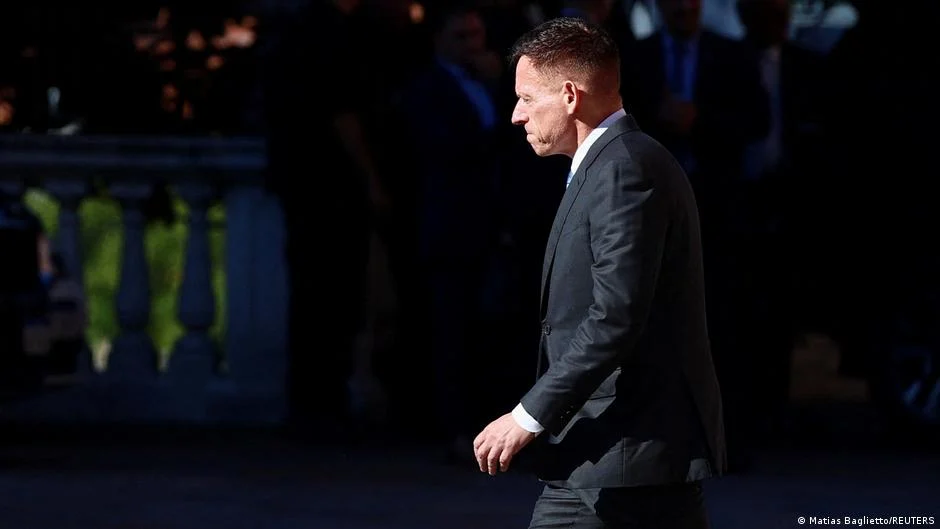
While the global stage is frequently dominated by the public personas of Donald Trump and Elon Musk, Peter Thiel operates with a calculated, low-profile intensity that arguably renders him one of the most consequential figures in modern history. With a net worth estimated by Forbes at $35.7 billion, Thiel has moved beyond the traditional boundaries of venture capital to become a central node in the intersection of high-stakes technology, global surveillance, and populist political realignment. His trajectory—from a childhood in Frankfurt and Namibia to the boardrooms of the most powerful companies on Earth—reflects a singular worldview that prioritizes efficiency, technological acceleration, and a profound skepticism toward established democratic institutions.
The genesis of Thiel’s influence lies in his early identification of the digital revolution’s potential. As a co-founder of PayPal, he was instrumental in the creation of the modern digital payments infrastructure. His subsequent role as the first outside investor in Facebook provided him with both a massive fortune and a seat at the table of the world’s most powerful information network. Today, his portfolio reads like a roadmap of the 21st century’s most sensitive sectors: he maintains stakes in Elon Musk’s SpaceX, the artificial intelligence powerhouse OpenAI, and, most controversially, the data-analytics firm Palantir Technologies.
A Chronology of Influence and Capital
The rise of Peter Thiel can be traced through a series of strategic pivots that defined his career:
- 1967–1977: Born in Frankfurt, West Germany; spends his formative years in Namibia, an experience he has cited as foundational to his perspective on state power and survival.
- 1998: Co-founds PayPal, revolutionizing online commerce and establishing his reputation as a visionary in the "PayPal Mafia" circle of entrepreneurs.
- 2004: Invests $500,000 in Facebook, a move that provides him a 10% stake and a board seat, cementing his status as a kingmaker in Silicon Valley.
- 2003: Co-founds Palantir, a company initially focused on counter-terrorism data analytics for the U.S. intelligence community.
- 2016: Emerges as a prominent donor and advisor to Donald Trump, contributing $1.25 million to his presidential campaign and breaking the trend of Silicon Valley’s traditional alignment with the Democratic Party.
- 2022: Donates $15 million to J.D. Vance’s Ohio Senate campaign, the largest individual contribution in the history of U.S. Senate races, signaling a long-term strategy for ideological influence.
- 2024–Present: Relocates his primary base of operations to Argentina, engaging in discussions with President Javier Milei regarding the development of AI infrastructure and foreign investment incentives.
The Palantir Paradigm: Surveillance and State Power
Perhaps the most significant of Thiel’s ventures is Palantir, a firm that has become essential to the operations of the U.S. Department of Defense, the FBI, and Immigration and Customs Enforcement (ICE). Palantir’s software, which aggregates vast quantities of disparate data to uncover patterns and identify targets, has placed Thiel at the center of the debate regarding the ethics of artificial intelligence and state surveillance.
In April 2024, Palantir released a 22-point manifesto detailing its vision for AI in warfare. The document triggered immediate international backlash, with critics describing the company’s stance as a form of "techno-fascism." The manifesto advocates for the rapid deployment of autonomous systems, arguing that human oversight must not be a bottleneck for technological superiority. This perspective mirrors Thiel’s long-standing belief that the efficiency of a single, decisive leader—or a highly optimized, automated system—is superior to the slow, consensus-based processes of traditional democracy.
The global reaction has been stark. Multiple European nations, including the United Kingdom, Germany, and the Netherlands, have faced pressure from domestic civil liberties groups to divest from Palantir software. These governments are increasingly wary of the security implications of relying on a private, U.S.-based entity for sensitive national intelligence, yet the company remains deeply embedded in Western security architectures, illustrating the difficulty of untangling public policy from private technological hegemony.
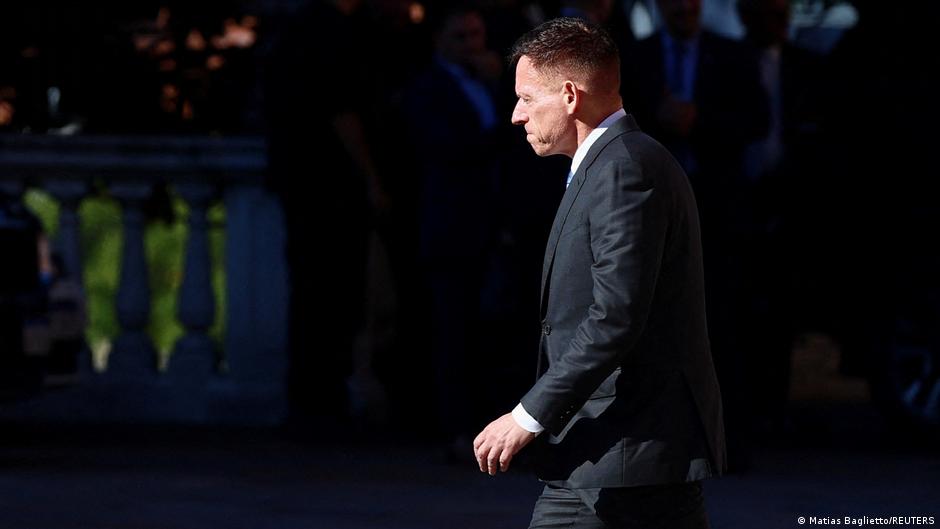
Political Philosophy: The Libertarian Nationalist
Thiel’s political ideology defies traditional categorizations. Often labeled a "libertarian nationalist," his rhetoric centers on the idea that "technology is the alternative to politics." He expresses deep-seated frustration with what he views as the stagnant nature of modern governance. His advocacy for a "single decision-maker" approach to management and his disdain for the "woke" culture of Silicon Valley and academia date back to his time at Stanford University, where he founded the Stanford Review to challenge liberal campus orthodoxy.
His relationship with J.D. Vance serves as a case study in his strategy to future-proof these ideals. Having mentored Vance since their first meeting at Yale Law School in 2011, Thiel has actively nurtured a generation of political leaders who share his skepticism of globalism and his belief in the necessity of a strong, technology-forward executive branch. Vance, who once expressed skepticism toward the populist right, has undergone a transformation that aligns closely with Thiel’s own ideological shifts. By bankrolling Vance’s political career, Thiel has secured a potential successor to the Trumpist movement, ensuring that his influence persists regardless of the outcome of future election cycles.
The Antichrist and the Secular Apocalypse
Thiel’s intellectual life is heavily influenced by his religious background. While he identifies as an "orthodox Christian," his interpretations often deviate from mainstream theological thought. In recent years, he has dedicated considerable energy to lecturing on the concept of the "antichrist," which he defines not as a biblical supernatural entity, but as a socio-political force that seduces society with promises of "peace and safety" while eroding the foundations of technological progress.
This preoccupation leads to unusual public confrontations. Thiel has publicly castigated environmental activists like Greta Thunberg, labeling them "Luddites" who threaten the scientific advancement necessary for human survival. Similarly, his criticism of Pope Francis for warning against the dehumanizing risks of AI suggests a belief system where technological progress is viewed as a moral imperative that supersedes religious or traditional ethical caution. For Thiel, the "antichrist" is any force—be it regulatory, bureaucratic, or humanitarian—that seeks to put the brakes on the acceleration of human capability through technology.
Implications for the Global Order
The implications of Thiel’s influence are profound. As he pivots toward regions like Argentina, he is positioning himself to operate within jurisdictions that are more favorable to his vision of AI-driven governance and minimal regulation. His ability to move between the worlds of high-tech venture capital and national policy-making has created a new category of global power.
For policymakers, the challenge is how to regulate an industry where the primary players are simultaneously contractors for the state and active participants in dismantling the influence of that same state. Analysts suggest that the future of the Western security apparatus will be defined by this tension. If Palantir and similar entities continue to hold the keys to data-driven decision-making, the distinction between private corporate interest and public government interest will continue to blur.
Thiel’s strategy is not merely about accumulating wealth; it is about architectural control. By investing in the foundational software of the state, the political figures of the future, and the technological systems that will define the next century, he has effectively hedged his bets against the volatility of the democratic process. Whether his vision of a technological, top-down order will succeed or be thwarted by the growing international resistance to surveillance and AI-centric governance remains the central question of his era. As he continues to operate from his global vantage point, one thing is certain: Peter Thiel will remain a decisive force, shaping the parameters of power in the 21st century from the shadows of the digital revolution.
