
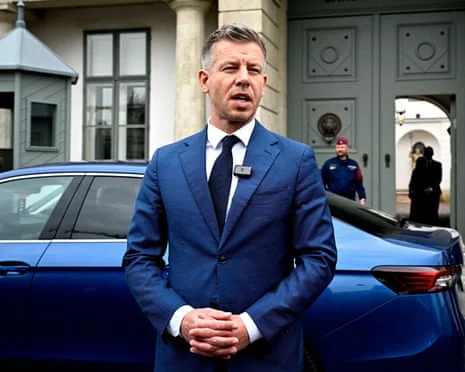
Former US President Donald Trump has made a surprising pivot in his assessment of Hungarian politics, expressing indifference to the electoral defeat of long-time ally Viktor Orbán and offering unexpected praise for the incoming Prime Minister, Péter Magyar. This swift recalibration of allegiance comes as Hungary navigates a significant domestic political transition and a potential re-evaluation of its strained relationship with the European Union.
Trump’s Sudden Endorsement of Magyar
In an interview with ABC News reporter Jonathan Karl, Donald Trump stated he was "not concerned" about Viktor Orbán’s recent electoral loss in Hungary. More remarkably, Trump offered a positive appraisal of Péter Magyar, the leader of the Tisza party and the presumptive new prime minister. "I think the new man’s going to do a good job – he’s a good man," Trump reportedly told Karl, according to Reuters. This statement marks a sharp departure from Trump’s prior effusive support for Orbán, whom he had often lauded as a strong conservative leader and a model for nationalist governance.
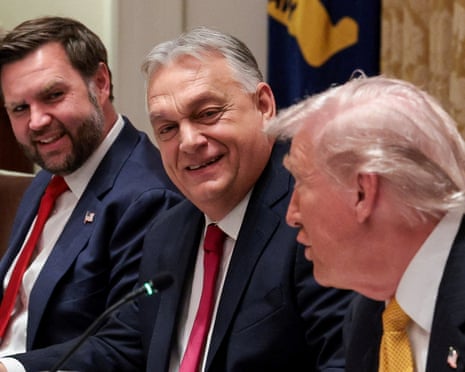
Trump further downplayed his involvement in the Hungarian election, claiming, "I wasn’t that involved in this one." He also expressed uncertainty about whether his personal presence in Hungary, instead of sending Vice-President JD Vance, would have altered the outcome. "He was behind substantially," Trump added, referring to Orbán, while still offering a nominal nod to his former ally: "Viktor’s a good man, though."
This assertion of minimal involvement, however, stands in stark contrast to Trump’s public actions leading up to the Hungarian vote. The former US president had issued multiple endorsements of Orbán on social media platforms and dispatched a high-profile surrogate, JD Vance, to Budapest in the final days of the campaign to rally support for the incumbent. Analysts widely interpret Trump’s rapid distancing from Orbán as a characteristic move to avoid association with electoral "losers," a label he frequently applies to those who suffer political defeat, irrespective of past alliances. The speed of this political manoeuvre has caught many commentators off guard, highlighting the transactional nature of Trump’s international relationships.

Péter Magyar, for his part, quickly capitalized on Trump’s comments, posting the former president’s remarks on his social media, clearly relishing the unexpected international endorsement.
The Rise of Péter Magyar and Domestic Reforms
Péter Magyar, whose Tisza party emerged victorious in the recent Hungarian elections, has wasted no time in initiating steps towards a new political era. Following talks with Hungarian President Tamás Sulyok, a known loyalist of the outgoing Orbán administration, Magyar confirmed that efforts are underway to form a new government by mid-May. The new parliament is expected to convene no earlier than May 4, pending the certification of election results.
Magyar’s reform agenda extends beyond governmental structure to the very foundations of Hungarian public discourse. He has declared his intention to suspend state media news broadcasts, which have been widely criticized both domestically and internationally for operating as a mouthpiece for the Orbán government. "Every Hungarian deserves a public service media that broadcasts the truth," Magyar stated on Kossuth state radio, a platform where Orbán was a weekly guest while opposition voices were largely excluded. He elaborated on plans to establish a new media law and authority, ensuring unbiased coverage and restoring media freedoms. "We have just witnessed the last days of a propaganda machine. After the formation of the Tisza government, we will suspend the news services of the ‘public’ media until its public service character is restored," he affirmed on X after a state television interview.
In a symbolic move underscoring the shift, Magyar’s appearance on the state broadcaster marked his first visit to the studios of Kossuth Rádió and M1 TV in 18 months, an irony he did not fail to highlight, noting he "needed to win an election to be invited by the public broadcaster."
Furthermore, Magyar has directly challenged the position of President Sulyok, calling for his resignation as part of a broader overhaul of state institutions. Magyar asserted that Sulyok, who is elected by parliament and holds a largely ceremonial role, is "unworthy of representing the unity of the Hungarian nation," "unfit to serve as the guardian of legality," and not a "moral authority or a role model." This strong stance suggests potential domestic tensions as the new administration seeks to consolidate power and dismantle vestiges of the previous regime. The Tisza leader has indicated that if Sulyok does not step down, he could face removal by the new parliamentary majority.
Navigating EU Relations: Ukraine Aid and Frozen Funds
The transition in Hungary has significant implications for its relationship with the European Union, particularly concerning the contentious issues of aid to Ukraine and the unfreezing of EU funds for Hungary. On the EU’s side, there is a palpable sense of expectation that the new Hungarian administration under Péter Magyar will drop Viktor Orbán’s persistent veto blocking a crucial €90 billion loan package for Ukraine.
Andrius Kubilius, the EU’s Defence Commissioner, publicly acknowledged this shifting dynamic, remarking today that "a new wind is blowing" in Hungary. He emphasized the EU’s readiness to "implement the loan as soon as we get the green light," signaling Brussels’ anticipation of a more cooperative stance from Budapest. Magyar has indeed suggested a willingness to drop the veto, albeit with a condition: Hungary must be allowed to maintain its previously agreed-upon opt-out, ensuring it will not be required to contribute financially to the loan. This arrangement was initially brokered with the previous administration in December, and Magyar’s insistence on its continuation suggests a pragmatic approach to EU relations, seeking to secure national interests while unblocking critical EU decisions.
Another pressing issue dominating early discussions between Hungary and the European Commission is the fate of approximately €17 billion in frozen EU funds. These funds were withheld by Brussels due to concerns over rule of law backsliding under Viktor Orbán’s government. Magyar has underscored the urgency of these discussions, stressing that any conditions for releasing the funds must be "good for Hungarian people, good for Hungarian businesses and, in general, for our country." His remarks leave open the question of whether he aims to narrow the list of conditions imposed by the EU, especially given what he described as an "extremely tight" deadline. The European Commission has not yet provided immediate comment on the specifics of these ongoing talks, but the expectation is that Magyar’s administration will seek a more conciliatory path to unlock these vital resources.
Background: The Orbán Era and its Conclusion
Viktor Orbán had dominated Hungarian politics for over a decade, establishing a system that critics frequently labeled as "illiberal democracy." His Fidesz party, though still a significant force, faced an unexpected defeat, signaling a potential turning point for the nation. Orbán’s tenure was marked by strong nationalist rhetoric, clashes with the EU over democratic norms, judicial independence, and media freedom, and a foreign policy that often sought closer ties with Russia and China while maintaining a complicated relationship with the United States. His political style resonated with Donald Trump’s "America First" philosophy, leading to a close personal and ideological alignment between the two leaders. Orbán had been a vocal supporter of Trump, and Trump, in turn, often praised Orbán’s conservative governance.

The electoral defeat of Orbán and the swift rise of Péter Magyar represent a profound shift. Magyar, a former insider who broke with Orbán’s Fidesz party, campaigned on an anti-corruption platform and a promise to restore democratic institutions and improve relations with the EU. His victory signals a desire among a significant portion of the Hungarian electorate for change, moving away from the confrontational politics of the Orbán era towards a more centrist and pro-European path.
Broader Implications and Future Outlook
The unexpected political developments in Hungary carry significant implications both domestically and internationally. For the United States, Trump’s immediate pivot from Orbán to Magyar underscores a pragmatic, results-oriented foreign policy approach, prioritizing perceived success over ideological consistency. Should Trump return to office, this could signal a willingness to engage with new leadership in nations previously aligned with his preferred strongman figures, provided they demonstrate political viability.
For the European Union, Magyar’s ascendancy offers a glimmer of hope for easing tensions with Hungary, a nation that has often been a disruptive force within the bloc. The potential unblocking of the Ukraine loan is a major victory for EU cohesion and its support for Kyiv. Furthermore, a renewed commitment from Budapest to rule of law reforms could lead to the release of frozen EU funds, benefiting the Hungarian economy and strengthening the EU’s institutional credibility. However, Magyar’s insistence on conditions for the Ukraine loan and the frozen funds indicates that while the tone may change, negotiations will still be robust.
Domestically, Hungary is poised for a period of significant reform and potential political turbulence. Magyar’s assertive stance on media reform and his challenge to President Sulyok demonstrate a clear intent to dismantle key pillars of the Orbán system. The coming weeks and months will be crucial as Magyar attempts to form his government, navigate complex EU negotiations, and deliver on his promises of transparency and democratic renewal, all while managing the expectations of a populace eager for change. The transition will undoubtedly be a test of his leadership and his ability to unite a country fractured by years of populist rule.

