
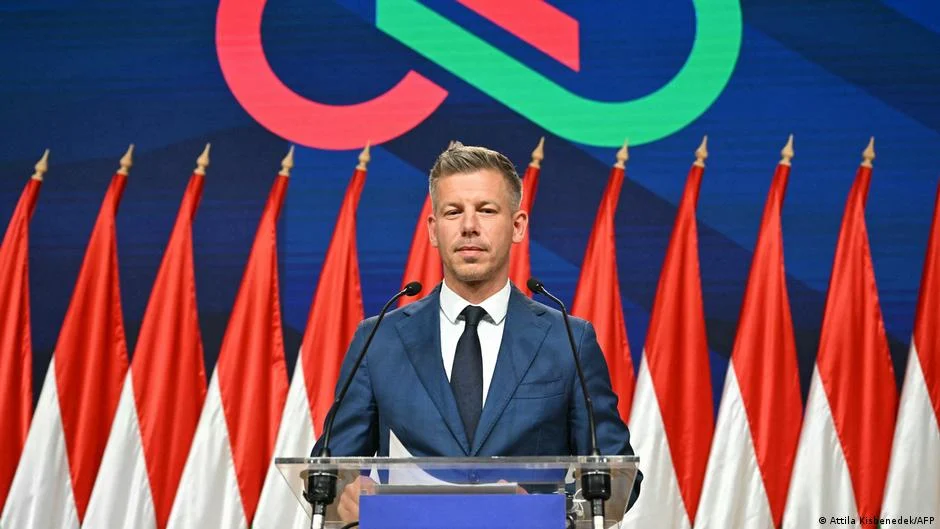
The election on April 12 marked a seismic shift in Hungarian politics, with Viktor Orban’s long-standing dominance decisively ended, triggering widespread euphoria and relief across the nation and within European circles. This electoral outcome is heralded as Hungary’s second systemic transformation since the collapse of communism in 1989/90, ushering in a new era defined by the promises of the charismatic newcomer, Peter Magyar. Magyar, the unexpected victor, has articulated a clear mandate: to "tear down the Orban system" and restore Hungary’s standing as a "normal, respected country" within Europe. The immediate challenge for Magyar and his Tisza party is to translate this ambitious rhetoric into tangible policy, navigating complex reforms while proving his distinct vision from the populist brand of his predecessor.
The Political Earthquake: A New Era Dawns in Hungary
For over a decade, Viktor Orban’s Fidesz party had incrementally consolidated power, reshaping Hungary’s constitutional and institutional landscape to solidify its rule. His tenure was characterized by a robust, often confrontational, stance against the European Union, a strong national conservative agenda, and a foreign policy that frequently leaned towards Moscow. Critics, both domestic and international, frequently raised concerns about democratic backsliding, erosion of the rule of law, media capture, and pervasive corruption under his administration. This context of entrenched power made Magyar’s victory all the more remarkable, representing a profound rejection of the status quo.
Magyar’s ascent was meteoric, fueled by a grassroots movement that tapped into deep-seated public discontent. His departure from the Fidesz establishment – where he held various positions and was married to a former Orban minister – and his subsequent exposé of alleged corruption and systemic abuses within the government resonated powerfully with voters. His campaign galvanized a fragmented opposition and disaffected Fidesz voters alike, promising a clean break from the past. The widespread jubilation following his victory underscores the public’s yearning for change, a desire for a more open, accountable, and European-aligned Hungary. European capitals, which had grown increasingly wary of Orban’s policies, have also cautiously welcomed the outcome, seeing it as an opportunity for improved relations and a re-commitment to shared democratic values.
Peter Magyar: Architect of Change
Peter Magyar defines his political ideology as conservative and right-wing, deliberately distancing himself from the "liberal conservative" label while also rejecting the "patriot" moniker as used by Orban, which often carried nationalistic and anti-EU connotations. He positions himself as unequivocally pro-European, yet committed to safeguarding national interests, seeking a balance between excessive EU influence and Orban’s "sovereignism." This nuanced stance aims to reassure both domestic voters who value national identity and international partners who advocate for European integration.
Magyar’s communication style is noted for its polemical and provocative nature, a characteristic that perhaps helped him cut through the established political discourse. However, analysts are quick to distinguish this from Orban’s brand of populism, suggesting Magyar’s approach is more focused on substantive policy critique and institutional reform rather than identity politics or scapegoating. His ability to articulate a vision for Hungary that is both conservative and pro-European, while sharply criticizing the excesses of the previous administration, has allowed him to carve out a unique political space. The challenge will be to maintain this distinction, especially on issues where his rhetoric might overlap with aspects of Fidesz’s earlier agenda, a point of skepticism for some observers.
Dismantling the Orban System: Constitutional and Judicial Reforms
At the core of Magyar’s agenda is a fundamental overhaul of Hungary’s governance structures. With a two-thirds parliamentary majority, he is well-positioned to deliver on his promise to restore the system of checks and balances and re-establish Hungary as a democratic state governed by the rule of law. A cornerstone of this ambition is the drafting and passage of a new constitution. The existing constitution, adopted under Orban’s Fidesz government, has been widely criticized for incorporating propagandistic elements and provisions designed to entrench the ruling party’s power, effectively weakening independent institutions.
Magyar intends for the new constitution to include robust mechanisms to restrict executive power, notably by limiting the prime minister to a maximum of two terms. This proposed change directly addresses concerns about the prolonged concentration of power that characterized Orban’s tenure. Furthermore, he plans to reform the country’s electoral law, which critics argued was gerrymandered and designed to favor Fidesz. Reversing the extreme centralization of the state is another priority, which includes restoring the autonomy of universities, many of which were brought under direct government control or placed under foundations linked to Fidesz.
While a detailed plan for judicial reform is still pending, Magyar has explicitly stated his commitment to ensuring a more independent judiciary. Under Orban, the judiciary’s independence was increasingly questioned, with allegations of political influence over appointments and decisions. Magyar’s proposed reforms aim to strengthen the institutional safeguards that protect judges from political interference. Crucially, he also intends to relinquish certain prime ministerial powers, such as direct control over the intelligence services, which would be returned to the Interior Ministry. This move is designed to enhance institutional accountability and prevent the potential misuse of state security apparatus for political ends, a common concern in illiberal democracies.

Confronting Corruption: A Core Mandate
Corruption was a recurring theme in Magyar’s campaign, with allegations of cronyism and illicit enrichment under the Orban government becoming a major point of public grievance. Once in power, Magyar has pledged decisive action to combat this. His administration plans to establish a dedicated anti-corruption authority, an independent body tasked with investigating and prosecuting corruption cases across all levels of government. Complementing this, an authority for the restitution of property will be created. This body will be responsible for reviewing all public tenders exceeding €25 million ($29 million) from the past 16 years of Orban’s rule, with a mandate to investigate potential irregularities and reclaim ill-gotten gains. This initiative signals a clear intent to address historical grievances and restore public trust in government procurement processes.
A significant step towards enhancing transparency and accountability will be Hungary’s integration into the European Public Prosecutor’s Office (EPPO). Orban’s government had notably resisted joining EPPO, raising concerns among EU partners about Hungary’s commitment to fighting fraud and corruption involving EU funds. Magyar’s pledge to join EPPO signifies a dramatic shift, aligning Hungary more closely with EU standards of judicial cooperation and oversight. He also aims to bolster the independence of the country’s Attorney General, further strengthening the legal framework for prosecuting corruption. Overall, Magyar’s platform on corruption is robust, promising a thorough investigation of past cases and the implementation of institutional safeguards to prevent future abuses.
Re-anchoring Hungary in Europe: EU and International Relations
Magyar’s government is poised to fundamentally reshape Hungary’s relationship with the European Union and NATO. He regards Hungary’s place as unequivocally anchored within Europe, a stark contrast to Orban’s often antagonistic posture. Magyar promises that Hungary will once again be a reliable and constructive partner for both the EU and NATO, signaling a departure from the previous government’s tendency to obstruct EU initiatives and challenge fundamental European values.
While promising constructive engagement, Magyar also acknowledges that there will be "debates about national interests." However, he emphasizes that Hungary will "not fight" in Brussels but will engage as a "constructive partner," suggesting a more diplomatic and less confrontational approach to disagreements. This nuanced stance seeks to balance national sovereignty with the responsibilities of EU membership. A particularly ambitious goal is Hungary’s aspiration to join the Eurozone, a long-term objective that would further integrate the country into the European economic framework. While no specific timeline has been set, this declaration underscores Magyar’s commitment to deeper European integration. This shift is likely to be met with relief in Brussels, which has often frozen EU funds for Hungary due to rule of law concerns, a situation that could now be re-evaluated.
Navigating Migration: A Complex Stance
On the contentious issue of migration, Magyar’s Tisza party intends to largely continue Orban’s strict anti-migration policy, including maintaining the border fortifications in the south of the country. This position reflects a prevailing sentiment among a significant portion of the Hungarian electorate and indicates a desire to avoid being seen as "soft" on border control. However, Magyar differentiates himself from Orban by advocating for a pan-European solution to migration challenges, emphasizing cooperation over unilateral action.
Crucially, he pledges not to exploit the issue of migration for anti-EU propaganda or to misuse it at the national level, a tactic frequently employed by Orban to rally his base and demonize Brussels. While concrete proposals regarding EU migration policy are yet to be fully articulated, this commitment to a more responsible and cooperative discourse marks a significant shift. Furthermore, Magyar has promised to halt the recruitment of workers from non-EU countries in Hungary. This pledge, however, could present practical challenges given the country’s existing labor shortages in various sectors, suggesting a potential tension between policy promises and economic realities.
Ukraine and Russia: A Geopolitical Reassessment
The war in Ukraine has been a particularly sensitive issue in Hungarian politics, with Orban’s government often adopting a cautious, sometimes perceived as pro-Kremlin, stance. Facing allegations during the campaign that Tisza was a "Ukrainian project," Magyar has adopted a measured but firm approach to Ukraine. He calls for a normalization of relations with Hungary’s northeastern neighbor but expresses reservations about fast-tracking Ukraine’s integration into the EU, reflecting a pragmatic rather than ideologically driven position.
Unlike Orban, who had repeatedly vetoed EU financial aid packages for Ukraine, Magyar condemns Orban’s veto of the €90-billion EU loan package for Ukraine, even though Hungary had negotiated an exemption for itself in December 2025. While he has not explicitly stated he would reverse Orban’s veto, his condemnation signals a clear change in attitude. He also firmly opposes any peace plan for Ukraine that does not involve Ukraine’s active participation and consent. Critically, Magyar has stated unequivocally that the sovereignty and international borders of Ukraine are inviolable, and that the aggressor and the victim in this war must be clearly named – a direct rebuke to Orban’s often ambiguous rhetoric.
Regarding Russia, Magyar has been far more confrontational, famously describing the Orban government as a "puppet of the Kremlin." This stance resonated with Tisza supporters, who were frequently heard chanting "Russians out!" during his rallies. Magyar intends to adopt a tough stance on Russian influence in Hungary, pledging to heavily diversify the country’s energy supplies in the future, although not completely cutting off Russian energy. All contracts with Russia, including the private agreement for the extension of the Paks nuclear power plant, will be reviewed and potentially amended. This signals a significant reorientation of Hungary’s energy and foreign policy away from its reliance on Moscow. He has also stated that if Russian President Vladimir Putin were to call him, he would urge an end to the war in Ukraine, adding that Europe can normalize relations with Moscow only once the conflict is resolved.

US Relations Under a New Guard
Magyar views the United States as a crucial partner with whom Hungary should cultivate a "good and close relationship." This outlook contrasts sharply with the previous administration’s often transactional and ideologically aligned relationship with certain American political factions. However, given Donald Trump’s vocal support for Viktor Orban during the Hungarian election campaign, Magyar’s initial relationship with a potential Trump presidency is likely to be cool. Magyar has publicly stated that he sees no immediate reason to engage in direct phone calls with Trump. Nevertheless, in a gesture aimed at fostering diplomatic ties, he plans to invite the US president to the celebrations marking the 70th anniversary of the 1956 revolution in Budapest in October. This move indicates a pragmatic desire to maintain open channels despite past political alignments.
Central European Alliances: Reshaping Regional Dynamics
Within the EU, Magyar’s government will prioritize close cooperation with the Central European states, specifically Poland, Czechia, Slovakia, and Austria. He envisions an expanded Visegrad Group, potentially including Slovenia, Croatia, and Romania, aiming to forge a stronger Central European voice within the EU. This vision suggests a more cohesive regional bloc that can exert greater influence in Brussels, moving beyond the often-fractured and ideologically driven dynamics of the Orban era.
Magyar attaches particular importance to a robust relationship with Poland, a country that has also recently undergone a significant political shift away from a populist, nationalist government. His decision to make Warsaw his first official foreign trip as prime minister underscores this priority, signaling a desire to build alliances with like-minded, pro-European governments in the region. This could lead to a revitalization of Central European cooperation based on shared democratic values and a constructive approach to EU membership, rather than the "illiberal" front that Orban often sought to build.
Addressing ‘VIP Refugees’: Accountability and Extradition
A notable point of contention and international embarrassment during Orban’s tenure was Hungary’s granting of asylum to several politicians from Central and Southeastern Europe who faced corruption charges in their home countries. These included former Macedonian Prime Minister Nikola Gruevski and former Polish Justice Minister Zbigniew Ziobro. Critics viewed this as an abuse of asylum laws and a means to protect allies or undermine judicial processes in neighboring states.
Magyar has unequivocally announced that his government will extradite these individuals to their home countries if they have not already left Hungary voluntarily. This pledge underscores his commitment to the rule of law and international judicial cooperation, signaling a clear break from the previous government’s controversial practices. It also aims to restore Hungary’s reputation as a responsible actor within the international community, willing to cooperate on matters of justice and accountability.
Challenges and Outlook: The Path Ahead for Magyar
Peter Magyar’s victory, while significant, marks only the beginning of a challenging journey. His mandate to "tear down the Orban system" will face considerable resistance from remnants of the old guard, including a potentially recalcitrant Fidesz party and its allied institutions. Implementing a new constitution, reforming electoral laws, and overhauling the judiciary will require political skill, unwavering determination, and broad public support. The high expectations generated by his campaign also present a significant hurdle; he must deliver tangible results quickly to maintain momentum and public trust.
Economically, attracting frozen EU funds, combating inflation, and navigating the complexities of potential Eurozone accession will demand astute financial management. On the international stage, Magyar must successfully re-establish Hungary’s credibility within the EU and NATO, balancing national interests with collective responsibilities, particularly concerning Ukraine and Russia. His nuanced stance on migration and energy diversification will also require careful calibration. The question of whether he can definitively prove himself different from Orban, particularly on issues like nationalism or executive power, will loom large. The coming months will be crucial in determining whether Magyar can truly usher in a lasting democratic renewal for Hungary and solidify its place as a respected, constructive partner in Europe.

