
The years immediately following the COVID-19 pandemic painted a stark, almost apocalyptic picture for the future of moviegoing. As global lockdowns tightened their grip, audiences, already showing signs of decline, dwindled further. The ascendance of streaming services intensified, siphoning viewers away from traditional theaters, and many smaller arthouse cinemas faced the grim reality of permanent closure, unable to coax patrons back through their doors even after reopening. This pervasive sense of doom, however, has begun to recede over the past two years, replaced by a cautious yet palpable sense of optimism. Paradoxically, the very pandemic that decimated older arthouse demographics has inadvertently cultivated a new generation of cinephiles. This emerging audience, deeply connected through internet archives, social media, and platforms like Letterboxd, is now actively seeking out repertory screenings and special events in major cities across the United States and internationally, signaling a significant cultural and economic recalibration for the independent film industry.
This revitalized engagement with cinematic art was a central theme at the recent Costa Rica Media Market, where industry leaders discussed the evolving landscape of film distribution. Charlie Sextro, Senior Vice President of Acquisitions and Business Development at Utopia Distribution, shared his insights on how this burgeoning cinephilia has reshaped Utopia’s release strategies over the past year. Sextro, who brings a wealth of experience from his 13-year tenure as a senior film programmer and curator at the Sundance Film Festival before joining Utopia in March 2025, acknowledged the current challenges in the film release market. "It is a very difficult time right now for releasing films," Sextro stated. "In the United States, it is perhaps as tough as it’s ever been to really connect and get traction, but I feel like everything is being destroyed right now to be rebuilt into something new."
A New Arthouse Vanguard
The driving force behind this hopeful shift, according to Sextro, is a profound re-engagement with arthouse cinema by younger audiences. "What I love is that it really feels like it’s based on young audiences falling in love with arthouse movies and going to independent films," he elaborated. Historically, the bedrock of arthouse and foreign language film distribution was an older demographic. This core audience, however, was significantly disrupted by the pandemic. "The independent film world has always been driven by older audiences – that was the cornerstone of releasing a foreign language or arthouse film. But that went away with COVID, and we now have this young generation that is driving arthouse, which, to me, is the dream. It’s what I’ve always wanted in my life. Young cinephiles are the greatest thing in the world, so I am incredibly hopeful about what’s coming."
This phenomenon is evident in the success of films that tap into strong fan cultures and community engagement. Sextro pointed to the popularity of projects like Curry Barker’s "Obsession" and Kane Parsons’ "Backrooms" as prime examples of how contemporary audiences are drawn to and actively participate in driving excitement around films. This understanding of audience fervor has prompted Utopia Distribution to strategically adjust its business model. The company is now scaling back the sheer volume of its yearly releases, opting instead to invest more time and resources into each film through meticulously curated, event-driven release strategies.

Rethinking Distribution: From Volume to Value
For a company like Utopia, which has operated as an independent distributor for approximately seven years – a significant duration in the indie space – this pivot is not merely a trend but a necessity for sustainable operation. "We’re a small company," Sextro explained. "We used to release nine to ten movies a year, it was pretty regular, one campaign after another in that old school way of just putting a really well-reviewed film in theaters. That doesn’t happen anymore. So our pivot is that we’re pulling back on numbers because it’s not sustainable. We want to be transparent, and we need to change the way we release."
The traditional model of releasing a film and hoping for organic word-of-mouth or broad VOD pickup is no longer sufficient. Sextro acknowledged the enduring difficulty of achieving significant theatrical runs for smaller independent films but emphasized the potential for success by focusing on creating unique experiences. "We can have success in creating really cool events and eventivizing releases," he stated. "What we’re doing now as a company is that we are going to release about four to five movies a year, where we are releasing only one movie at a time, and we’re willing to do a complicated roadshow style of release that most companies similar to us won’t do because it takes a lot of work. But we know that if you build something pure for an audience and don’t just fall into traditional ways, people show up and they love it. They love having something created especially for them."
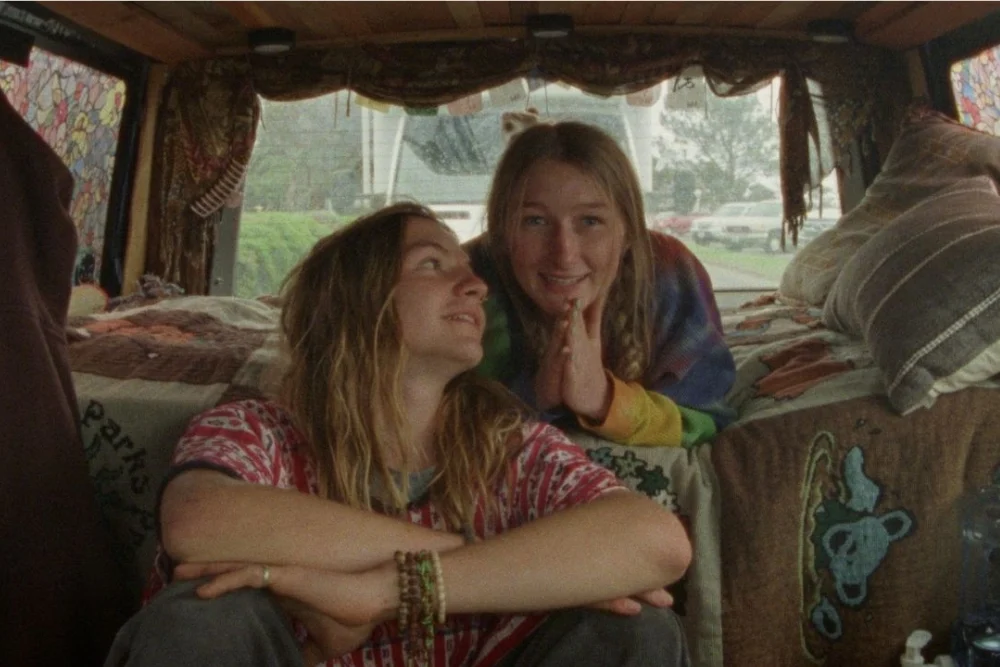
This refined approach was exemplified by Utopia’s recent release of the Chloe Sevigny-produced documentary "Summer Tour," directed by Mischa Richter. Instead of a conventional theatrical rollout, Utopia orchestrated a six-week tour of the documentary, which explores the fervent fanbase of The Grateful Dead. Screenings were held exclusively in music venues, each followed by a 90-minute live performance from a Grateful Dead cover band featured in the film. "We’re creating material for six weeks before we go into art houses," Sextro elaborated. "We use the first six weeks to promote the art house instead of just spending money. We’re creating revenue by generating events that [sell.] I always believe the movies are great, and there are audiences. The thing that needs fixing right now is how [films] are being connected to audiences. How audiences are being engaged with movies is what needs to change from the old-school, traditional ways."
The Impact of Declining VOD Licensing
This strategic recalibration by distributors like Utopia is also a direct response to a significant decline in Video on Demand (VOD) licensing revenue. For years, independent films often found a crucial financial lifeline through deals with major streaming platforms. However, Sextro noted a marked shift in this revenue stream. "In the past year alone, we’ve gotten no major streaming licensing deals from any of the streamers," he reported. "Every time they see our movies, they say [they] are too small. They’ve kind of given up on independent film, on arthouse film, and that has taken away a major point of money that was going to come into the release."
The landscape of digital distribution for independent cinema has become increasingly challenging. "VOD and streaming like rentals, Amazon, Apple get smaller and smaller every year," Sextro continued. "There is no discovery of arthouse movies on Apple and Amazon." This lack of algorithmic support and curated visibility on major digital platforms forces distributors to seek alternative avenues to connect with audiences and generate revenue, further emphasizing the importance of live events and direct audience engagement.

Exploring New Horizons: Latin American Cinema and the U.S. Market
Sextro’s presence at the Costa Rica Media Market also signaled Utopia’s broader strategic vision, particularly its openness to international content. Despite Utopia’s current catalogue being largely comprised of American independent films and documentaries, with limited Latin American titles, the company expressed a keen interest in exploring these burgeoning markets. "We release documentaries; we release foreign language films; we do release a lot of American indies," Sextro stated, underscoring Utopia’s "agnostic" approach to genre and origin.
The United States boasts a substantial and growing Spanish-language-speaking audience, representing a significant demographic for filmmakers. "In the United States, there is a massive Spanish-language-driven audience," Sextro observed. "There are a lot of films where that is the highest percentage of ticket buyers, so there’s a massive space for it. We are open to the movies that we love, that we believe in, and that we see a potential audience for. That is the thing we are looking for in a movie, something where there is going to be passion within the release."
Utopia emphasizes a collaborative approach with filmmakers, recognizing their deep understanding and creative vision as integral to successful distribution. "We rely heavily on filmmakers to be partners in the release, generating ideas, helping us with the creative," Sextro noted. "The filmmakers are the ones with the best ideas because they’ve been living with these movies for years and years and years. Yes, I think there’s incredible potential in releasing Latin American films, even Spanish-language films in general, in the United States. It’s such a strong cause." This sentiment suggests a potential future where Utopia actively seeks and champions Latin American cinema for U.S. audiences, leveraging the growing cultural and market demand for diverse storytelling. The company’s forward-thinking strategy, born from the ashes of post-pandemic uncertainty, highlights a dynamic evolution in how independent films are conceived, distributed, and experienced, driven by a new generation’s passion and a distributor’s innovative spirit.

