
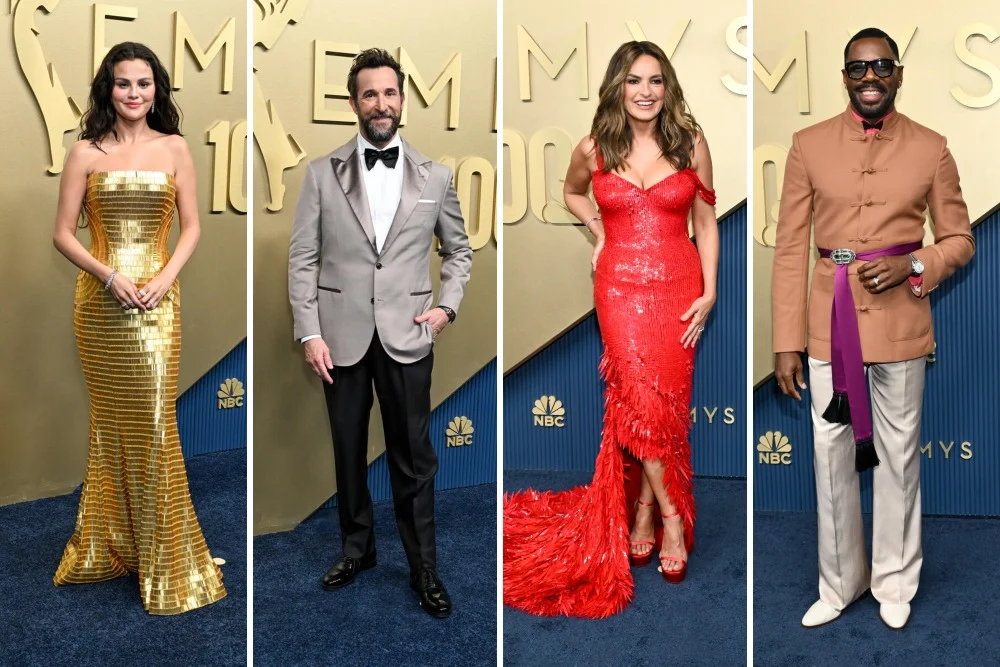
The 78th Primetime Emmy Awards have officially commenced, transforming the red carpet into a high-stakes display of cinematic prestige and sartorial elegance. As the industry gathers to honor the pinnacle of television achievement, the atmosphere is charged with the tension of record-breaking nominations and the transition of the broadcast landscape. This year’s ceremony serves as a barometer for the current state of streaming dominance, where platforms like HBO Max and Apple TV+ have firmly supplanted traditional networks as the primary engines of prestige storytelling.

The evening is defined by a fierce battle for creative supremacy. Leading the charge is HBO Max’s medical drama The Pitt, which entered the ceremony with a staggering 25 nominations. Not far behind is the streamer’s critically acclaimed comedy Hacks, which secured 24 nominations. This particular achievement is monumental; the fifth season of Hacks has not only etched its name into the history books as the most-nominated final season of a comedy series, but it also holds the record for the highest number of nominations ever received by a single season of a comedy in the history of the Television Academy.

A Chronology of Streaming Dominance
The trajectory of this year’s Emmy cycle reflects a broader shift that has been building over the past decade. While broadcast television once dictated the rhythms of the industry, the 2026 Emmys solidify the move toward a platform-agnostic model. The current nomination landscape, featuring Apple TV+ hits like the horror-comedy Window’s Bay with 19 nominations and the drama Pluribus with 18, illustrates a landscape where capital investment in high-quality episodic content is the primary driver of critical success.

For traditional broadcast, the landscape is increasingly sparse, though NBC’s Saturday Night Live continues to act as a resilient anchor, leading the broadcast contingent with 11 nominations. This divide between the massive volume of streaming-originated content and the more surgical, high-impact presence of network staples highlights the challenges facing traditional television models as they adapt to the on-demand era.

The Heavyweights: Performance and Prestige
The categories for acting reflect a mixture of established industry veterans and the emergence of new, transformative talents. In the race for Outstanding Lead Actor in a Drama Series, the list of nominees reads like a syllabus of modern dramatic acting: Sterling K. Brown for Paradise, Gary Oldman for Slow Horses, Mark Ruffalo for Task, Rufus Sewell for The Diplomat, and Noah Wyle for his anchor performance in The Pitt.

The category of Outstanding Lead Actress in a Drama Series is similarly competitive, featuring Carrie Coon for The Gilded Age, Chase Infiniti for The Testaments, Keri Russell for The Diplomat, Rhea Seehorn for Pluribus, and Zendaya for her continued work in Euphoria. The presence of these actors signifies the industry’s continued emphasis on character-driven narratives, where the nuance of a performance remains the most vital asset in an increasingly crowded television landscape.

Supporting Casts and Production Depth
The supporting categories have become a focal point for the overwhelming success of specific production houses this year. The Pitt has effectively dominated the supporting actor and actress brackets, a testament to the show’s ensemble strength. Patrick Ball, Shawn Hatosy, and Gerran Howell have all secured nominations for their roles in The Pitt, standing alongside formidable competitors such as Billy Crudup for The Morning Show, Jack Lowden for Slow Horses, Tom Pelphrey for Task, and Carlos-Manuel Vesga for Pluribus.

The supporting actress category is equally concentrated, with the creative team behind The Pitt—Taylor Deardon, Fiona Dourif, Katherine LaNasa, and Sepideh Moafi—all receiving nods for their work in the show’s second season. They are joined by Allison Janney for The Diplomat, Julianne Nicholson for Paradise, and Karolina Wydra for Pluribus. The density of these nominations indicates a broader industry trend where casting directors and producers are increasingly relying on cohesive ensemble dynamics to sustain multi-season arcs, rather than relying solely on the star power of a single lead performer.

Analytical Perspectives on Industry Trends
Industry analysts suggest that the concentration of nominations among a select few streamers is not merely a result of artistic quality but a reflection of the "platform-first" strategy currently employed by major studios. By funneling massive budgets into flagship series, streamers have created a "prestige vacuum" that makes it increasingly difficult for smaller, independent, or traditional broadcast projects to gain traction during the nomination window.

"We are seeing a consolidation of power," notes one industry consultant. "When a single streamer can secure 49 nominations between two flagship shows, it fundamentally alters the marketing and distribution strategy for every other production house in the game. It’s no longer just about the story; it’s about the infrastructure behind the delivery of that story."

Furthermore, the data suggests that the Academy is increasingly favoring high-concept, genre-bending narratives. The success of horror-comedy Window’s Bay indicates a shift in voter preference toward shows that can successfully navigate multiple tonal registers. As audiences become more fragmented, the ability of a show to serve as a "cultural conversation piece" is becoming the most reliable metric for Emmy recognition.

Official Responses and the Mood on the Red Carpet
While the ceremony is in its early stages, the mood among the nominees is one of tempered anticipation. Red carpet interviews have largely focused on the collaborative nature of the projects nominated tonight. Producers have noted that the 2026 cycle was characterized by significant logistical hurdles, including complex production schedules and the increasing demand for high-end visual effects, even in non-genre dramas.

Representatives from HBO Max and Apple TV+ have been vocal about the importance of creative freedom in securing these nominations. By allowing showrunners longer runways for development and, in some cases, providing the budget for more experimental storytelling, these platforms have cultivated a roster of talent that feels increasingly empowered to push the boundaries of the episodic format.

The Broader Impact and Future Implications
The implications of this year’s Emmys extend beyond the distribution of gold statuettes. The record-breaking performance of Hacks, for instance, sets a new benchmark for what a final season can achieve. This may influence how studios greenlight series in the future; if a show can maintain its quality and critical appeal through its final arc, it creates a "legacy value" that can be monetized for years on streaming platforms.

Moreover, the underrepresentation of traditional broadcast networks is likely to spur further consolidation in the television sector. As the divide between the production values of prestige streaming and network television continues to widen, analysts predict more partnerships between legacy networks and streaming entities to share the burden of production costs and leverage the reach of streaming algorithms.

As the 78th Primetime Emmy Awards continue, the industry remains focused on these key themes: the dominance of the streaming giants, the importance of ensemble-driven storytelling, and the necessity of evolving narratives to capture a global audience. The winners of tonight’s ceremony will not only take home an award; they will be recognized as the architects of the next era of television history.

As the sun sets on the red carpet and the focus shifts to the stage inside the auditorium, the anticipation remains palpable. The winners of this evening will reflect the values of the Television Academy at a critical juncture in the history of the medium. Regardless of the final tallies, the 2026 Emmys have already cemented themselves as a pivotal chapter in the ongoing narrative of television’s golden age. The industry continues to evolve at a rapid pace, but the goal remains the same: the pursuit of excellence in storytelling that transcends platforms, genres, and borders. As the ceremony proceeds, all eyes remain on the stage to see which of these powerhouse productions will ultimately define the year in television.

