
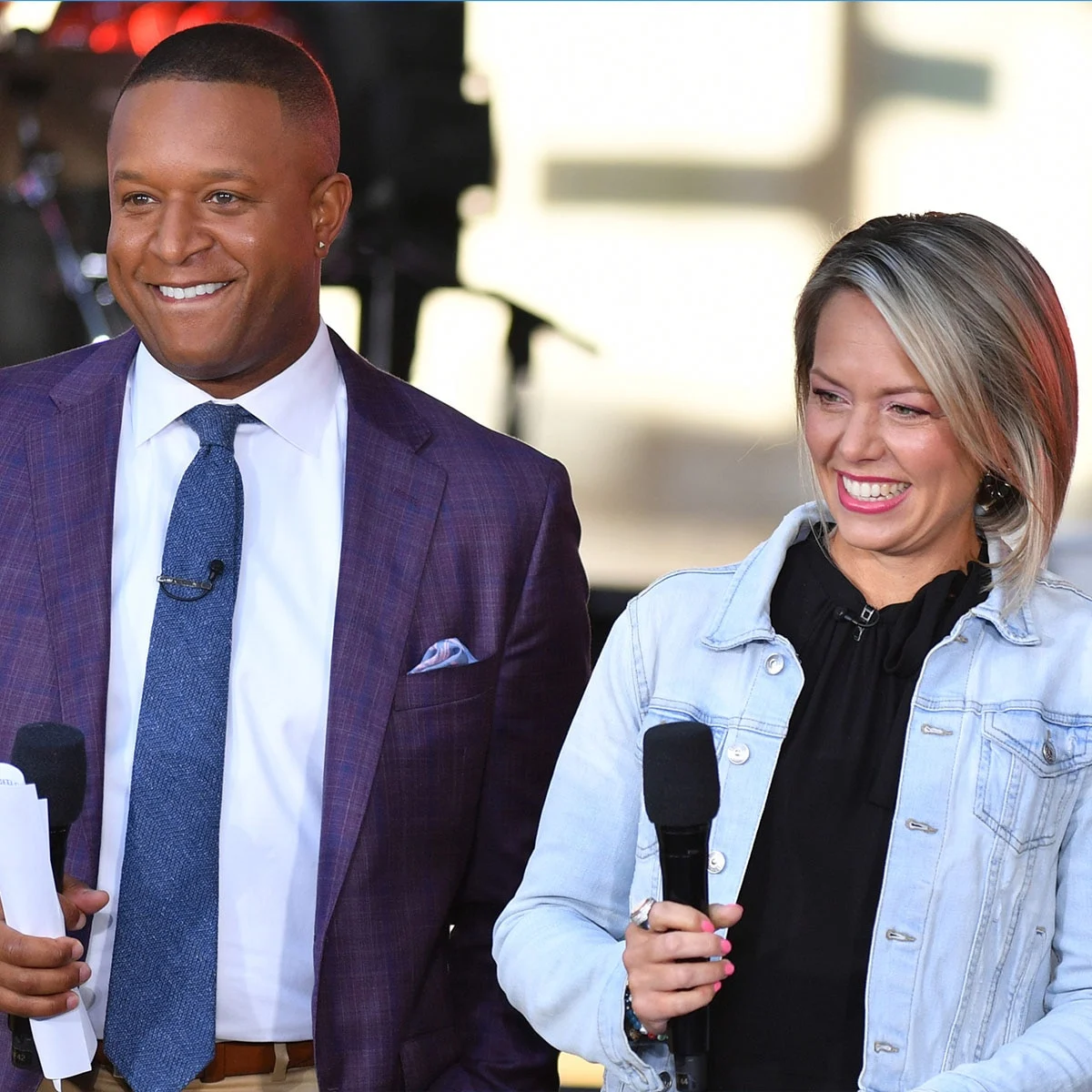
The atmosphere at Rockefeller Plaza took an unexpected and chaotic turn on September 17, 2026, when a scheduled segment on the Today show devolved from a lighthearted musical performance into a moment of bizarre on-air friction. While country music icon Kenny Chesney was slated as the morning’s headliner to promote his upcoming 21st studio album, Silver Sands Marina, the spotlight was briefly hijacked by an unscripted physical encounter involving Days of Our Lives legend Deidre Hall and co-host Craig Melvin.
The event, which occurred during the Citi Concert Series, began with high energy as Chesney delivered a set that captivated the co-hosts. Melvin, alongside colleagues Dylan Dreyer and Al Roker, had been effusive in their praise of the performance. However, the jovial tone shifted abruptly when Hall, a fixture of daytime television for decades, made a surprise appearance on the plaza. In a moment that left both the live audience and the television crew stunned, Hall approached Melvin and delivered a sharp, audible slap to his face. While the immediate aftermath saw the hosts attempt to pivot back to the musical performance, the incident has since dominated social media discourse and raised questions regarding the professional decorum expected during live morning broadcasts.
Chronology of the Today Show Incident
The sequence of events unfolded rapidly during the 8:00 a.m. hour. Kenny Chesney had just concluded a performance of his 2026 track "Get Along," a song that resonated deeply with the morning team. Al Roker remarked on the "Friday vibe" the concert had induced, noting that the performance was so infectious it made the hosts lose track of the work week.
Craig Melvin and Dylan Dreyer jokingly suggested that the intensity of the performance might serve as a pretext for their absence the following day. "If you don’t see us tomorrow, you know what happened," Melvin quipped to the camera. It was during this segment of light banter that Hall, who was visiting the studio for a separate promotional appearance, entered the frame. The transition from the musical segment to the physical confrontation occurred in under thirty seconds, leaving the broadcast team little time to adjust camera angles or mitigate the live feed.
Contextualizing the Performance and Media Presence
Kenny Chesney’s residency at The Sphere in Las Vegas and his recent literary endeavors, including the 2025 memoir Heart Life Music, have placed him at the center of a significant media blitz. His appearance on the Today show was a calculated part of his campaign to promote the September 25 release of Silver Sands Marina.
Chesney, 58, noted that this specific project was a departure from the "treadmill" of industry standards. "I was afforded the gift of time for this one," Chesney explained to the hosts. "Usually when an artist has a record and they put it out and it does well, the label kind of wants another one in a 12- or 18-month period. It took about three years to get this album where I wanted it." This focus on artistic autonomy was the intended narrative of the morning; however, the intervention by Hall shifted the public’s focus from the album’s thematic "mirror of current life" to the inexplicable behavior of a soap opera icon on a news program.
Historical Patterns of Talent Exits and On-Air Shifts
The incident at Rockefeller Plaza occurs against a backdrop of significant volatility in the entertainment industry, where high-profile departures have become a hallmark of the 2025–2026 television season. The landscape of broadcast and streaming media is currently seeing a "great exodus" of veteran talent.
From the quiet exits of long-standing procedural actors to the dramatic departures of reality television stars, the industry is undergoing a transition. Notably, the OneChicago franchise saw the exit of Joe Miñoso from Chicago Fire after 15 seasons, and LaRoyce Hawkins concluded a 13-season tenure on Chicago P.D. These departures, often cited as personal choices or creative pivot points, highlight a trend where actors are increasingly prioritizing mental health and personal projects over long-term series commitments.
The departure of figures like Tom Jones from The Voice UK—who explicitly cited financial disputes with ITV—and the resignation of Chrishell Stause from Netflix’s Selling Sunset, suggest that the leverage of legacy talent is shifting. Stause, for example, noted that her exit was driven by the fact that the show was "no longer good for my mental health," a sentiment echoed by various cast members across platforms, including those leaving Bravo’s Summer House and The Valley.
Implications and Industry Response
The incident involving Deidre Hall and Craig Melvin raises pertinent questions regarding the safety and management of guests on live morning television. While morning shows are designed to be spontaneous and engaging, the inclusion of actors from various genres often leads to complex, unscripted interactions.
Industry analysts suggest that the "slap" incident could lead to stricter protocols regarding guest access to the main desk during live musical segments. Furthermore, the incident has highlighted the pressure exerted on daytime hosts, who must maintain a composed demeanor regardless of external interruptions. Melvin, a seasoned journalist and anchor, managed to continue the broadcast, but the event has invited scrutiny into the vetting of guests who are permitted on the plaza during high-profile concert series.
Broader Impact on Television Culture
The convergence of soap opera theatricality and hard news morning television has historically been a successful formula, but the events of September 17 represent a deviation that may have long-term consequences for guest relations. As television networks struggle to compete with digital media, the reliance on viral, unscripted moments has grown. However, the line between "viral content" and "professional liability" is increasingly thin.
The collective impact of these industry shifts—combined with the high-profile exits of actors like Kevin Costner from Yellowstone and Ellen Pompeo’s reduced role on Grey’s Anatomy—points to an industry in flux. Whether this incident is viewed as a harmless publicity stunt gone wrong or a serious lapse in broadcast safety will likely be determined by the subsequent statements from the Today show’s production team and NBC’s legal department.
The Financial and Creative State of Current Programming
The industry’s current cycle of exits, such as the conclusion of the long-running series finale of the Wizards of Waverly Place spinoff, underscores the end of an era for many fans. As characters are killed off—such as the shocking death of Ser Criston Cole in House of the Dragon or the passing of Director Leon Vance in NCIS—viewers are faced with a new reality of television consumption where stability is no longer guaranteed.
The case of Jax Taylor, who departed The Valley following a season defined by personal controversy and public scrutiny, mirrors the growing trend of reality stars stepping back to prioritize sobriety and family. These decisions, while deeply personal, reflect a wider industry shift toward accountability.
In contrast, the Today show incident remains an anomaly of "live television friction." While the producers of the program have yet to release a formal statement regarding the physical altercation, the clip of the incident has been analyzed frame-by-frame across social media platforms. The lack of a clear, official explanation for Hall’s actions suggests that the network is currently conducting an internal review to determine whether the interaction was a premeditated performance or an impulsive reaction.
Conclusion
As the 2026 fall television season gains momentum, the industry continues to grapple with both the loss of foundational talent and the challenges of managing live, high-traffic broadcast environments. The disruption of the Citi Concert Series serves as a case study in the unpredictability of live media. Whether it results in a permanent change to the "open plaza" format remains to be seen. For now, the audience is left with a fragmented narrative: a successful album launch for a country icon overshadowed by an inexplicable breach of professional decorum, set against a backdrop of a television landscape that is rapidly shedding its most familiar faces.

