
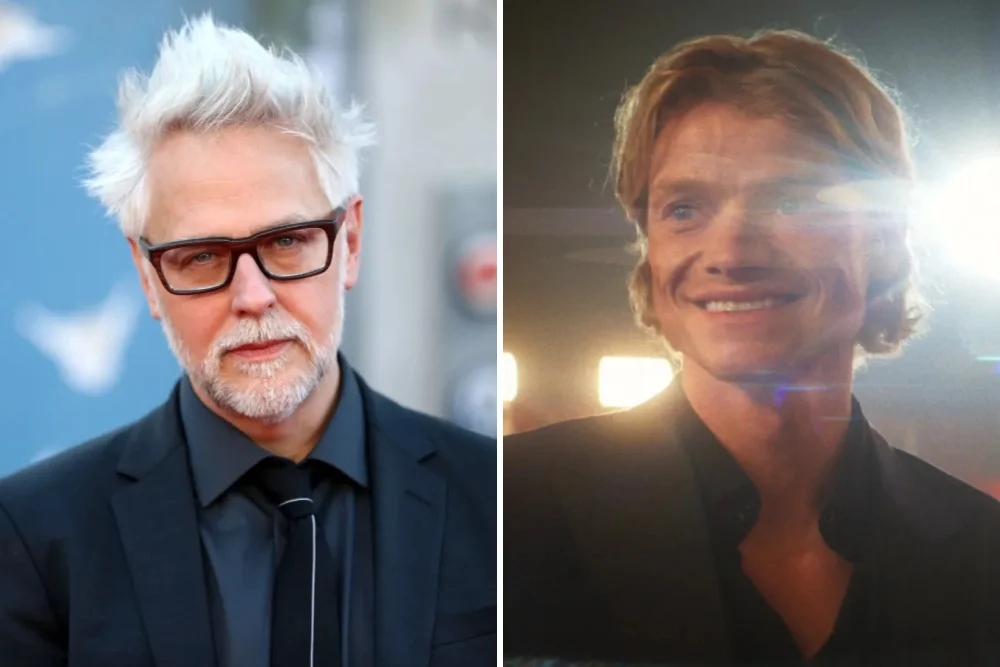
DC Studios co-head James Gunn has publicly addressed ongoing discourse surrounding the narrative structure of the revitalized DC Universe (DCU), pushing back against the prevailing industry expectation that every superhero film must function primarily as a stepping stone toward a grand, climactic crossover event. In a series of statements posted to the social media platform Threads this past Saturday, Gunn articulated a vision for the DCU that prioritizes individual narrative integrity and tonal variety over the rigid, serialized roadmap that has dominated the comic book movie landscape for the past decade and a half.
The defense came in response to a fan inquiry regarding the current slate of DC projects, which includes Superman, Peacemaker, Supergirl, Creature Commandos, and the recently released Clayface. The user, echoing a sentiment frequently found in online film forums, questioned the overarching endgame of these disparate projects, asking, "What is this building towards?"
Gunn’s response was a direct rejection of the necessity for a singular, linear trajectory. "I couldn’t agree more," Gunn wrote, concurring with a commenter who suggested that the foundation of a shared universe does not mandate a singular destination. "DCU is just an alternate universe; we can enter at any location or time and tell THAT story. I dislike the idea that individual stories aren’t meaningful unless they lead to something else."
The Evolution of the Shared Universe Model
The model popularized by the Marvel Cinematic Universe (MCU) transformed the film industry by utilizing post-credits scenes and multi-film narrative arcs to foster a sense of "event" television on a cinematic scale. This strategy proved wildly successful, leading studios across Hollywood to attempt similar "cinematic universe" constructions. However, the resulting fatigue among some segments of the audience has led to a re-evaluation of how comic book properties are adapted.
Gunn’s perspective draws a parallel to the Star Wars franchise, which has navigated a sprawling, multi-generational mythos for nearly 50 years. By utilizing diverse mediums—including feature films, television series, literature, and gaming—Star Wars has established a deep, interconnected lore without requiring every entry to serve as a prologue for the next theatrical release. Gunn argued that the DCU can achieve a similar breadth by focusing on the quality of individual stories, noting that while the DCU maintains internal consistency, it does not need to be a slave to a rigid release schedule.
Chronology and the Current DCU Slate
The current phase of the DCU represents a deliberate pivot from the previous iterations of the DC film slate. Following the restructuring of DC Studios under Gunn and Peter Safran, the focus has shifted toward a more curated and creatively diverse approach.
- 2024–2025 Foundation: The establishment of the new universe began with early announcements, followed by the rollout of projects such as the animated Creature Commandos and the highly anticipated, critically received Superman film.
- The 2026 Expansion: The release of Clayface marks a significant point in this strategy. By introducing a "niche" character—a villain who has historically occupied a secondary role in the Batman mythos—as the lead in a standalone feature, DC Studios is testing the appetite for genre-blending storytelling.
- Future Outlook: The momentum is set to continue with the upcoming release of Superman: Man of Tomorrow, scheduled for July 9, 2027.
The release of Clayface, directed by James Watkins and starring Tom Rhys Harries as the tragic figure Matt Hagen, provides a case study for Gunn’s philosophy. The film, which debuted at the top of the North American box office with a $24 million opening from 3,458 theaters, functions as a psychological horror-drama rather than a traditional superhero epic. By framing the character’s origin through a lens of body horror and stardom, the film stands as a distinct entry that requires no knowledge of prior DC films to appreciate.
Fact-Based Analysis: Why the "Standalone" Approach Matters
The shift toward standalone storytelling is a strategic response to several market pressures. First, the "homework" requirement—the belief that viewers must consume five or six previous films to understand a new one—has been cited by industry analysts as a barrier to entry for casual audiences. By decoupling projects from a central narrative anchor, DC Studios lowers the barrier to entry, potentially increasing the total addressable market for each individual release.
Furthermore, this approach provides directors and writers with greater creative freedom. When a film is not required to set up a sequel or a crossover event, the creative team can focus entirely on character development, tonal consistency, and thematic depth. As Gunn noted, "I would love people to be seeing Clayface because it’s a great, fun horror movie unto itself, not because of where else Clayface will show up three movies from now."
Economic and Industry Implications
Financially, the "event-driven" model carries high risk. If a film is designed purely to set up a later project, and the preceding film fails to generate sufficient interest, the entire "universe" architecture can become unstable. Conversely, the standalone model allows each film to succeed or fail on its own merits, diversifying the studio’s portfolio.
The box office performance of Clayface suggests that audiences remain receptive to characters outside of the core "Justice League" archetype, provided the marketing and the execution are compelling. With a $24 million debut in a crowded market, the film has validated, at least in the short term, the strategy of leaning into character-driven narratives over the promise of future team-ups.
Official Stance and Future Expectations
Gunn has been careful to emphasize that his rejection of "forced" connectivity does not imply a total lack of coherence. He points to the progression from the foundational Superman film to the upcoming Man of Tomorrow as evidence that the DCU remains a shared space. Characters are introduced in one film and may reappear in others, but their inclusion is organic rather than mandatory.
"The Superman saga begins with Superman and extends into Man of Tomorrow, and contains many characters we’ve introduced in other stories," Gunn explained. "But that doesn’t mean those other stories only exist to set up what’s happening there."
For the DCU, the path forward appears to be a hybrid model: a shared world that permits both grand, interconnected epics and intimate, genre-specific explorations. As the studio looks toward 2027 and beyond, the success of this strategy will be measured not by the complexity of the "crossover" events, but by the ability of individual films to capture the public imagination on their own terms.
Critics of this approach often point to the loss of the "water-cooler moment" that comes with massive crossover events like Avengers: Endgame. However, proponents argue that the current market saturation demands a move toward variety. By prioritizing "fresh and ickily enjoyable" experiences—as described in Variety’s review of Clayface—Gunn is betting that the audience’s appetite for high-quality storytelling outweighs their desire for a connected, serialized plot.
As the industry observes this transition, the DCU stands at a crossroads. The challenge for Gunn and Safran will be maintaining enough connectivity to satisfy long-term fans of the source material while ensuring that the films remain accessible to the general public. For now, the message from the top is clear: the story comes first, and the universe is simply the canvas upon which that story is painted. Whether this philosophy can sustain a long-term franchise remains the most significant question in modern blockbuster filmmaking.

