
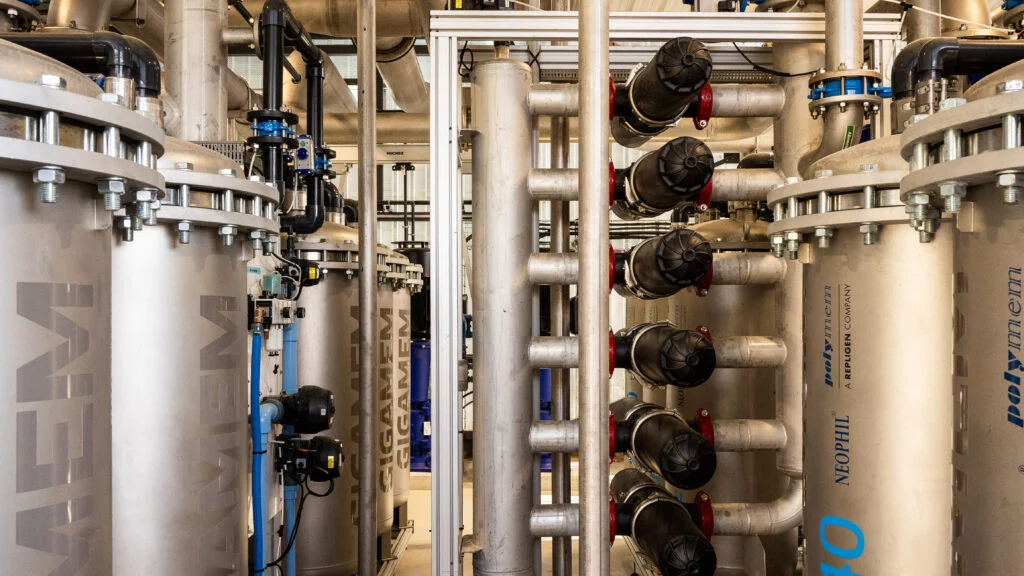
In a significant legal development for the European pharmaceutical and cosmetics sectors, an Advocate General at the European Court of Justice (ECJ) has recommended the partial annulment of a landmark EU directive that mandates manufacturers to cover at least 80% of the costs associated with upgrading wastewater treatment infrastructure. The recommendation, issued on September 11, 2026, marks a pivotal shift in the ongoing struggle between environmental regulatory goals and industrial fiscal responsibility.
The directive in question, which underwent extensive revision and entered into force in early 2025, represents a cornerstone of the European Green Deal’s "zero pollution" ambition. By requiring the implementation of a "quaternary treatment stage," the regulation aims to strip wastewater of micropollutants—chemical residues primarily derived from medicine and personal care products—before they are discharged into the environment. The Advocate General’s opinion, while not a final ruling, often signals the direction the Court will take, providing a potential reprieve for companies that have argued the financial burden is disproportionate and legally unsound.
The Legislative Landscape and Environmental Goals
The genesis of this conflict lies in the revised Urban Wastewater Treatment Directive (UWWTD). Historically, urban wastewater treatment focused on removing organic matter, nitrogen, and phosphorus. However, scientific evidence has increasingly highlighted the accumulation of pharmaceutical active ingredients and endocrine-disrupting chemicals in water bodies. These substances, even in trace amounts, have been linked to the collapse of local aquatic ecosystems and the proliferation of antibiotic-resistant bacteria.
The revised directive was designed to modernize treatment facilities across the 27 member states, with the stated goal of achieving a cleaner water supply by 2040. Projections from the European Commission suggested that the environmental and public health benefits—including reduced filtration costs for drinking water and healthier fisheries—would generate approximately $7.5 billion in annual economic savings. To fund these massive infrastructure upgrades, the EU adopted the "Extended Producer Responsibility" (EPR) principle, placing the financial weight of the quaternary treatment directly on the producers of the pollutants.

Chronology of the Dispute
The path to this legal challenge has been marked by intense lobbying and legislative friction:
- January 2024: The European Parliament and the Council of the European Union reach a provisional agreement on the revised Urban Wastewater Treatment Directive.
- December 2024: The directive officially enters into force, setting a compliance deadline for member states to establish national producer responsibility schemes by December 2028.
- Early 2025: Industry associations representing pharmaceutical manufacturers and cosmetic conglomerates file legal challenges in national courts, which are subsequently referred to the ECJ.
- September 2026: The Advocate General releases an opinion suggesting that the directive’s funding mechanism violates specific legal principles regarding proportionality and the scope of industrial liability.
Arguments Behind the Legal Challenge
The pharmaceutical industry, led by major trade groups such as EFPIA (European Federation of Pharmaceutical Industries and Associations), has long maintained that while they support environmental protection, the current directive is fundamentally flawed. Their primary legal argument rests on the claim that the "polluter pays" principle is being applied indiscriminately.
Manufacturers argue that the substances found in wastewater are the result of legal, prescribed, and necessary medical use. Unlike industrial waste, which can be mitigated at the point of production, pharmaceutical waste is a byproduct of public health necessity. Consequently, industry lawyers contend that assigning 80% of the cost to companies constitutes a punitive tax rather than a proportionate environmental levy. Furthermore, the industry has raised concerns about the impact of these costs on the affordability and accessibility of essential medicines, warning that such expenses may eventually be passed down to healthcare systems already struggling with rising budget pressures.
Implications of the Advocate General’s Opinion
If the Court follows the Advocate General’s recommendation, it would force a significant restructuring of the UWWTD. A partial annulment would likely necessitate a return to the negotiating table, where the European Commission would be required to devise a new funding mechanism that distributes the financial burden more equitably or justifies the current allocation under stricter legal standards.
From an environmental perspective, the legal uncertainty poses a risk of delay. Many municipalities have already begun planning for the mandatory quaternary treatment upgrades, relying on the projected financial contributions from the private sector to bridge budget gaps. If the funding source is deemed unconstitutional or is substantially reduced, these projects could face indefinite delays, threatening the EU’s 2040 water quality targets.

Economic and Regulatory Analysis
The economic stakes are substantial. For the pharmaceutical industry, the 80% cost-sharing requirement represents a massive recurring liability that could alter capital allocation for R&D. Conversely, for environmental regulators, the "polluter pays" model is considered the only viable way to finance the multi-billion-euro infrastructure project without placing an undue burden on taxpayers or local municipal utilities.
Analysis suggests that the outcome of this case will serve as a bellwether for future environmental legislation in Europe. If the court strikes down the directive, it may embolden other industries to challenge similar EPR schemes in the textile, electronics, and plastics sectors. If the court upholds the directive despite the Advocate General’s concerns, it will solidify the "Extended Producer Responsibility" doctrine as the dominant regulatory framework for addressing industrial impacts on the environment.
Stakeholder Responses and Future Outlook
While official responses from the European Commission have remained measured, emphasizing that they are "carefully studying the opinion," environmental advocacy groups have expressed alarm. Organizations such as the European Environmental Bureau have stated that any weakening of the directive would prioritize corporate profit over the fundamental human right to clean water.
On the other side, pharmaceutical lobbyists have welcomed the opinion as a "victory for legal clarity and proportionate regulation." They maintain that while they remain committed to environmental sustainability, the burden of protecting water quality must be shared across the entire supply chain, including hospitals, pharmacies, and patients, rather than resting solely on the shoulders of the manufacturers.
As the industry waits for the final judgment from the ECJ, the regulatory climate remains in flux. Member states are currently caught in the middle, tasked with preparing for the 2028 deadline while questioning whether the financial models they have put in place will remain valid. Regardless of the final ruling, the case has highlighted the profound tension between the EU’s ambitious ecological objectives and the operational realities of the global pharmaceutical and cosmetics markets. The coming months will likely see increased legislative activity as all parties prepare for a potential rewriting of the directive, ensuring that the debate over who pays for clean water will remain at the forefront of European policy for the foreseeable future.
