
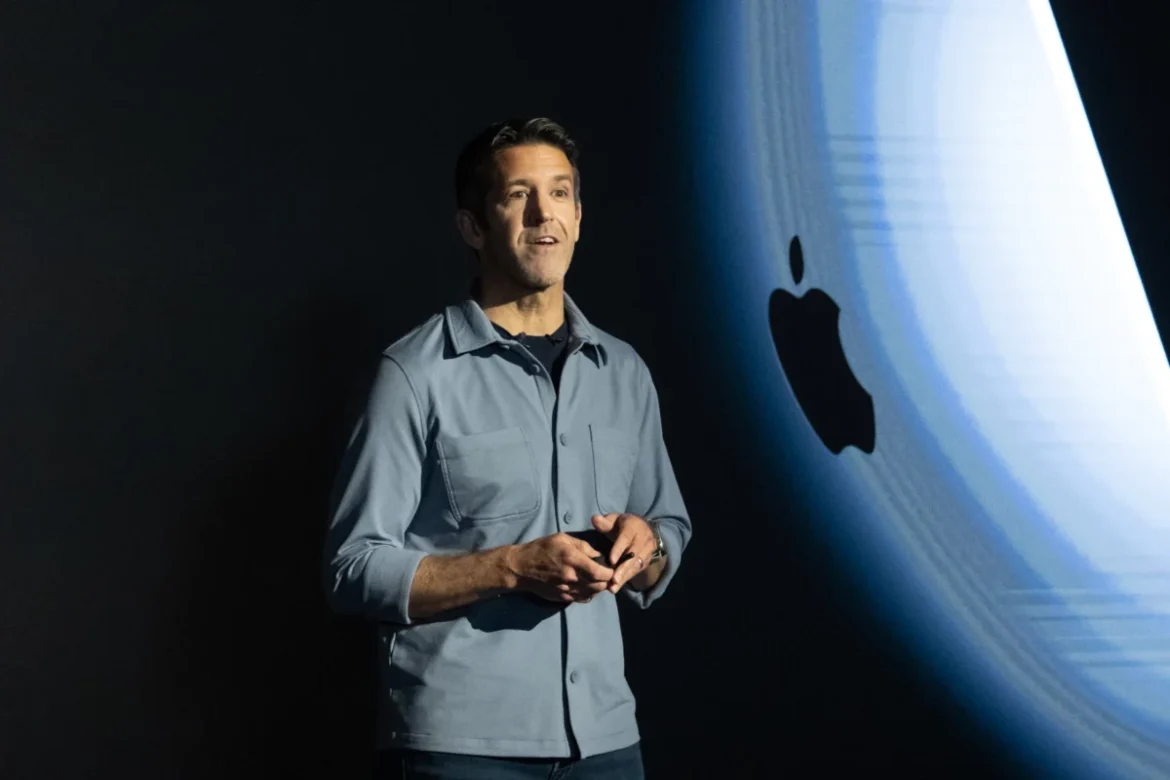
The tech industry has spent the better part of the last three years engaged in a frantic search for the "post-smartphone" era. As artificial intelligence models began to permeate consumer hardware, analysts, venture capitalists, and hardware startups rushed to proclaim the death of the handset, arguing that screen-based devices would soon be supplanted by ambient computing, wearables, and augmented reality interfaces. However, during his inaugural keynote as Apple’s Chief Executive Officer this past Wednesday, John Ternus delivered a definitive rebuttal to that narrative, positioning the iPhone not as a legacy technology, but as the essential architecture for the future of intelligent computing.
Ternus’s declaration marks a strategic pivot from the tenure of his predecessor, Tim Cook. While Cook spent years meticulously diversifying Apple’s revenue streams—building up the Services division and positioning the Apple Watch and Vision Pro as standalone growth engines to reduce reliance on the iPhone—Ternus is doubling down on the smartphone as the primary interface for human-AI interaction. "There is no product in the world better designed to be your intelligent personal hub than iPhone," Ternus stated, setting a tone that suggests the company’s product roadmap for the next decade will focus on vertical integration around the device that remains the most ubiquitous piece of hardware in human history.
The Historical Context: Lessons from the Digital Hub
To understand the gravity of Ternus’s assertion, one must look back to the early 2000s, a period that mirrors the current existential debate surrounding the smartphone. In 2001, the prevailing wisdom among Silicon Valley pundits was that the personal computer was a waning tool. Industry leaders at the time, including executives from Compaq and Gateway, were being pressured to pivot away from the desktop as the center of the consumer technology ecosystem.
Steve Jobs, during a Macworld New York keynote, famously addressed these concerns by projecting an image of a tombstone labeled "Beloved PC" on the screen behind him. He dismissed the premature eulogies for the PC, arguing instead that the device was entering its "third great age." Jobs envisioned the Mac as the "digital hub"—the central orchestrator for a growing constellation of peripheral devices like camcorders, digital cameras, and MP3 players. Less than a year later, Apple released the iPod, a device that didn’t kill the PC, but rather extended its relevance by tethering a massive new category of mobile media to the desktop.
Ternus is clearly drawing from this playbook. Just as Jobs used the Mac to anchor the digital media revolution, Ternus is positioning the iPhone to anchor the AI revolution. The logic is sound: the smartphone possesses the unique combination of high-resolution sensors, persistent network connectivity, and localized compute power necessary to run large language models (LLMs) and intelligent agents.
The Hardware Case: Why the iPhone Remains Unrivaled
The skepticism surrounding the iPhone’s longevity is largely based on the assumption that AI requires a radical departure from the handheld form factor. However, from a technical perspective, the iPhone has evolved into a formidable computing engine. With the introduction of the latest A-series silicon, Apple has achieved a level of performance-per-watt that is arguably unmatched in the consumer space.
Data from recent benchmarks indicate that the latest iPhone hardware is capable of executing complex neural network operations directly on-device. This is critical for privacy and latency, two factors that will define the adoption of AI services. If an intelligent personal assistant must ping a remote server for every query, the user experience suffers. By keeping the processing local, the iPhone maintains a competitive advantage that wearable startups—often constrained by battery life and thermal management—simply cannot match.
Furthermore, the ubiquity of the device provides an unassailable advantage. Estimates suggest there are over 1.5 billion active iPhones worldwide. This massive installed base provides a scale for developers and AI providers that no niche wearable device can replicate. While industry analysts have speculated about "AI pins" or smart glasses, the friction of adopting a new form factor remains high. The iPhone, by contrast, is already integrated into the daily workflows, financial habits, and communication patterns of billions.
Chronology of the Smartphone Debate
The discourse regarding the "death" of the smartphone has intensified over the last 36 months, driven by rapid advancements in generative AI.
- April 2026: Market analysis firms began publishing reports suggesting that the Tim Cook era would be defined by the "existential challenge" of replacing the iPhone.
- May 2026: Prominent media outlets ran headlines questioning the utility of the smartphone, suggesting that screen-based interaction would be replaced by voice and gesture-controlled wearables.
- September 2026: During the annual Apple product event, John Ternus officially unveiled his "Intelligent Personal Assistant" strategy, explicitly tying the success of Apple’s AI ambitions to the iPhone 18 series.
- Present Day: The debate has shifted from "what replaces the iPhone" to "how the iPhone transforms into an autonomous agent."
Industry Reactions and Market Implications
Wall Street and industry analysts have reacted with cautious optimism to the strategy shift. While some investors were initially hoping for a "next big thing" hardware product to drive growth, the realization that Apple plans to leverage its existing user base to capture the AI market has provided a sense of stability.
"The shift from a ‘product company’ to a ‘platform-plus-intelligence’ company is the logical next step," says an analyst from a leading investment bank who requested anonymity to speak freely on market strategy. "By doubling down on the iPhone as the hub, Ternus is mitigating the risk of fragmentation. He is telling the market that the smartphone is the only place where the software-hardware integration is mature enough to deliver a seamless AI experience."
However, the strategy is not without its critics. Some argue that by focusing so heavily on the smartphone, Apple risks missing the potential for "ambient computing," where the device disappears entirely into the environment. If the future of AI is truly conversational and reactive, does the user really need to pull a slab of glass out of their pocket?
The Path Forward: Defining the "Third Age" of the Smartphone
Ternus’s vision is clearly defined by four pillars: high-resolution sensor arrays, advanced on-device processing, persistent connectivity, and a robust software ecosystem that treats AI as an operating system layer rather than a standalone app.
The implications for Apple’s competitors are significant. Companies like Google, Samsung, and various AI-native hardware startups are now forced to compete on Apple’s terms. They must prove that their own ecosystems can replicate the, speed, privacy, and utility of the iPhone’s AI integration. If they cannot, they risk being relegated to the periphery of the AI economy.
For the consumer, this means the iPhone will likely become more proactive. Instead of acting as a passive tool for communication, it is poised to evolve into an agent that manages schedules, synthesizes communications, and automates complex digital tasks with minimal user intervention.
As the iPhone approaches its 20th anniversary, the question of its relevance has been answered by Apple’s new leadership with a resounding commitment. John Ternus is not looking for the next replacement; he is looking for the next evolution. By framing the iPhone as the essential hub of the AI era, he has effectively reset the expectations for the company, signaling that while the hardware may look similar to its predecessors, the intelligence driving it is undergoing a fundamental transformation. Whether this strategy will yield the same transformative growth as the iPod did in 2001 remains to be seen, but the intent is clear: Apple intends to own the AI-enabled future, and it will do so with the device already in the pockets of its users.
