
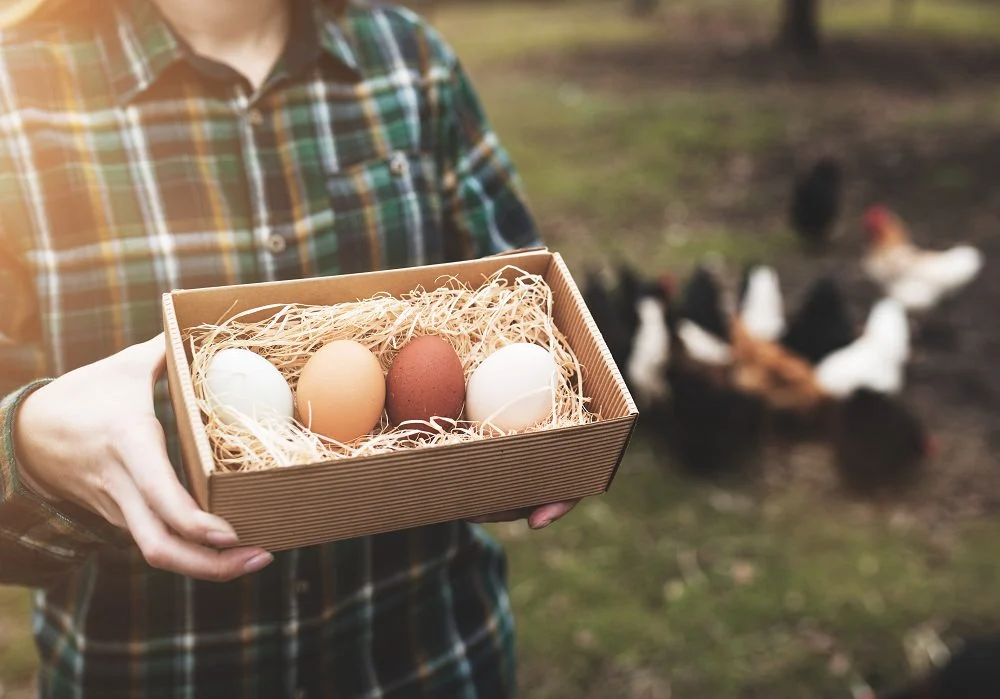
The economic landscape of American agriculture experienced a dramatic pivot between 2022 and 2026, directly reshaping the backyard livestock movement. In March 2025, commercial Grade A egg prices hit a staggering peak of roughly $6.22 per dozen, driven primarily by historic outbreaks of highly pathogenic avian influenza (HPAI). Just over a year later, in June 2026, those same commercial dozen averaged $2.14, representing a collapse in retail pricing that upended consumer habits and agricultural markets alike. This severe price swing explains the massive surge in American backyard chicken keeping, the subsequent cooling of the market, and the complex risk-benefit matrix that modern flock owners now face.
The Price Signal That Built the Boom, Then Reversed It
To understand the modern backyard poultry phenomenon, one must examine the macroeconomic pressures that sparked it. Retail egg prices rose steadily over a four-year period, jumping 32.2% in 2022, 1.4% in 2023, 8.5% in 2024, and an astonishing 21.9% in 2025, according to data from the United States Department of Agriculture’s (USDA) Economic Research Service. Highly pathogenic avian influenza served as the primary catalyst for these spikes. Since the ongoing outbreak began in February 2022, the virus has impacted more than 166 million birds across both commercial and backyard operations, decimating populations of chickens, turkeys, ducks, pheasants, and geese.
As commercial flocks recovered and the mortality rate among poultry slowed, supply finally caught up with consumer demand. The USDA recorded significantly fewer new HPAI detections in the first quarter of 2026 compared to the same period in 2025. Simultaneously, commercial hatcheries ramped up production of replacement pullets, ensuring ample supply for both routine flock turnover and unforeseen losses.
Consequently, retail egg prices in May 2026 dropped 35.2% compared to the same month in the previous year. The USDA Economic Research Service projected a total price decline of 30.4% for the full 2026 calendar year, with the prices paid directly to farmers plummeting by 82.9%.
This extreme volatility triggered a massive cultural shift. According to the American Pet Products Association, roughly 11 million U.S. households kept backyard chickens in early 2025, nearly doubling the 5.8 million households reported in 2018. Feed stores nationwide experienced unprecedented demand, selling out of chicks weeks ahead of their traditional spring "chick days," while major hatcheries reported order volumes surging by 80% or more. However, as prices stabilized through 2026, first-time buyers rapidly thinned out, shifting the market back toward experienced keepers replenishing established flocks.
Economic Realities: Running the Numbers on a Backyard Flock
For prospective chicken keepers, the fundamental financial calculation has fundamentally inverted. Evaluating the cost-effectiveness of a backyard flock requires a comparison against specific grocery tiers rather than the lowest-priced commodity carton. USDA Agricultural Marketing Service reports from mid-July 2026 placed average advertised retail prices at $1.02 per dozen for conventional caged eggs, while UEP-certified cage-free eggs averaged $2.65 per dozen, with organic and pasture-raised varieties commanding even higher premiums.
A standard six-hen backyard flock illustrates the financial dynamics. During their peak production years—typically the first two years of laying—individual hens produce between 180 and 250 eggs annually, resulting in a total flock output of 90 to 125 dozen per year. Valued against the June 2026 average retail price of $2.14 per dozen, this production yields between $190 and $270 in equivalent value. When benchmarked against cage-free feature prices at $2.65 per dozen, the output value rises to between $240 and $330. Even at the historic March 2025 peak of $6.22 per dozen, the output maxed out between $560 and $780.
Against these returns, operational expenses must be factored in. Annual costs for feed, bedding, grit, and basic supplies typically range from $250 to $600. Furthermore, initial startup costs—encompassing the construction of a secure coop, an outdoor run, fencing, feeders, and the purchase of the birds themselves—range widely from $500 to $2,000 depending on regional pricing, material choices, and scale.
Ultimately, financial analysts point out that under 2026 market conditions, a small backyard flock roughly covers its own feed costs in an optimal year but fails to amortize the capital investment of the coop. While flocks served as an effective hedge against extreme grocery inflation during the 2025 price peaks, they function primarily as a hedge against supply chain disruption rather than a tool for household budgetary savings. This calculation also excludes hidden expenses such as predator-proofing upgrades, unexpected veterinary care, pet boarding during travel, and the long-term maintenance of birds that live well past their productive laying years.
Public Health Realities: The Escalation of H5N1 and Salmonella
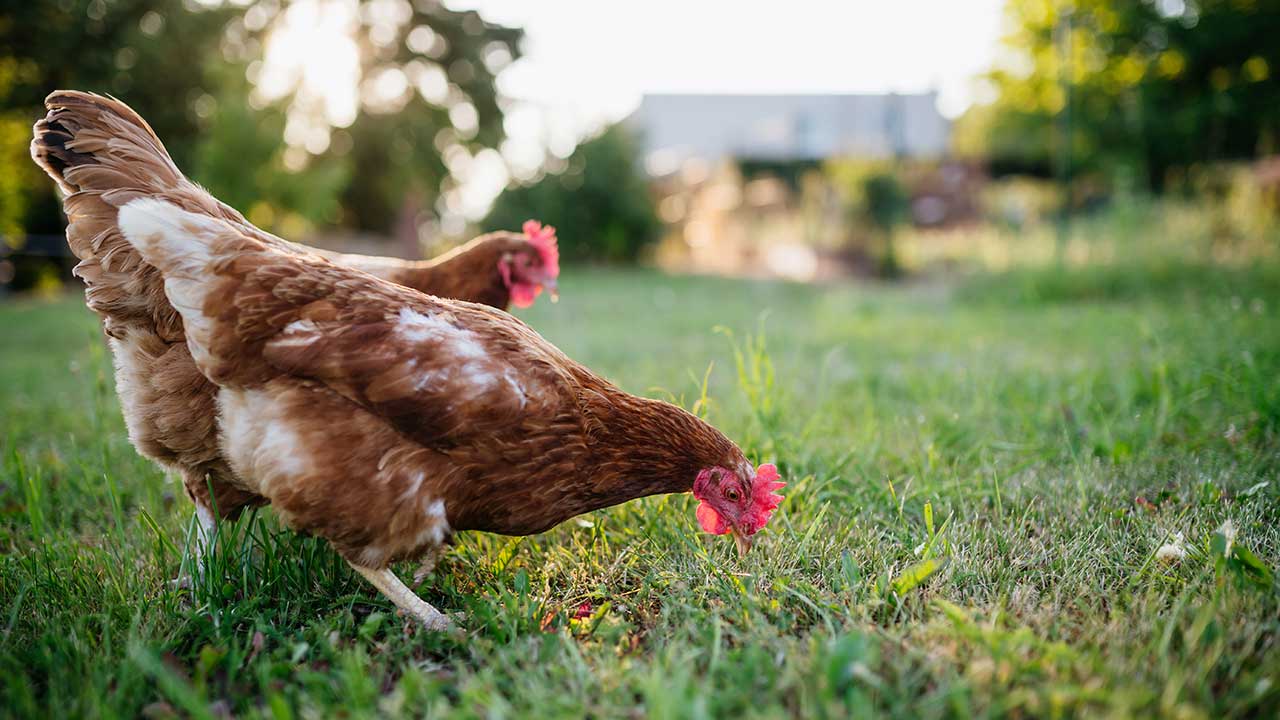
While economic considerations dominated the initial surge in backyard poultry, public health agencies have increasingly focused on the biological risks associated with keeping livestock in residential settings. The risk profile for backyard flock owners deteriorated notably between 2024 and 2026, driven by dual threats from avian influenza and bacterial pathogens.
The H5N1 avian influenza virus, primarily vectored by migratory wild birds carrying the pathogen in their droppings, poses a persistent environmental hazard. Humans can also spread the virus via contaminated footwear, clothing, equipment, and vehicles. Between March 2024 and mid-2026, federal health authorities recorded 71 human cases of influenza A(H5) in the United States. Significantly, three of these cases occurred in backyard flock owners, resulting in two fatalities—one in Louisiana in early 2025 and another in Washington in November 2025. While the Centers for Disease Control and Prevention (CDC) maintains that the risk of H5N1 to the general public remains low, that assessment changes substantially for individuals handling sick or deceased birds without appropriate personal protective equipment (PPE).
A CDC survey of 638 backyard flock owners across 48 states, conducted between July and December 2025 and published in May 2026, revealed that while 94% of respondents had heard of avian influenza, notable knowledge gaps persisted regarding specific transmission vectors and biosecurity protocols. The data demonstrated a direct correlation: respondents with higher comprehension of the disease were significantly more likely to utilize protective equipment when interacting with vulnerable or sick animals.
Simultaneously, bacterial outbreaks tied to backyard poultry continue to cause widespread illness. As of July 2026, the CDC investigated eight multistate Salmonella outbreaks linked directly to contact with backyard poultry, resulting in 814 documented illnesses across 44 states and one territory, 201 hospitalizations, and one fatality in Washington state. Children under the age of five accounted for approximately one-quarter of these infections. Epidemiological investigations traced these strains to multiple commercial hatcheries and agricultural retail stores, with several strains exhibiting predicted antibiotic resistance to critical medications including ampicillin, ceftriaxone, and ciprofloxacin. Public health officials emphasize that healthy-appearing birds frequently shed Salmonella, rendering visual cleanliness an unreliable indicator of safety.
Municipal Regulations and Zoning Constraints
Beyond economic and health factors, prospective chicken keepers must navigate a complex patchwork of local ordinances and homeowners association (HOA) covenants. Municipal regulations regarding backyard livestock vary drastically across jurisdictions.
City flock caps typically restrict residential properties to between four and eight hens, frequently scaled proportionally to total lot size. The maintenance of roosters is broadly prohibited in residential zones due to noise concerns. Furthermore, municipal codes routinely enforce strict coop setbacks—mandating that coops sit 10 to 25 feet from property lines and occasionally 40 to 50 feet from neighboring dwellings. Additional requirements often include mandatory permits, annual registration fees, restrictions limiting coops exclusively to rear yards, and explicit bans on on-site slaughter or the commercial sale of eggs.
Because several state legislatures have recently enacted laws preempting outright municipal bans on small hen flocks, property owners are advised to consult current municipal codes rather than relying on historical ordinances.
Environmental Footprint and Sustainability Considerations
Discussions regarding the sustainability of backyard farming have also undergone critical reassessment. Early lifecycle claims suggesting that backyard eggs maintain a carbon footprint one-third that of commercial operations have been largely discredited by agricultural researchers.
Commercial feed production accounts for the vast majority of greenhouse gas emissions across all egg production systems. Backyard flocks consume commercially formulated feed that mirrors commercial rations, yet backyard operations lack the large-scale efficiencies enjoyed by industrial producers. Because backyard hens generally lay fewer eggs per pound of feed consumed, emissions per individual egg produced are often higher in backyard settings than in optimized commercial systems. Peer-reviewed lifecycle assessments specific to backyard poultry remain scarce, though broader global life-cycle analyses position conventional eggs among the lowest-impact animal proteins available, with a carbon footprint significantly lower than ruminant meat production.
Despite higher per-unit emissions, backyard flocks offer distinct localized environmental benefits, including organic kitchen waste diversion, natural insect control, localized soil fertilization, and a reduction in the carbon footprint associated with the commercial food transport supply chain. For millions of American households, the primary value of maintaining a backyard flock lies not in macroeconomic efficiency or carbon accounting, but in food self-sufficiency, biosecurity independence, and the personal satisfaction of small-scale agriculture.
