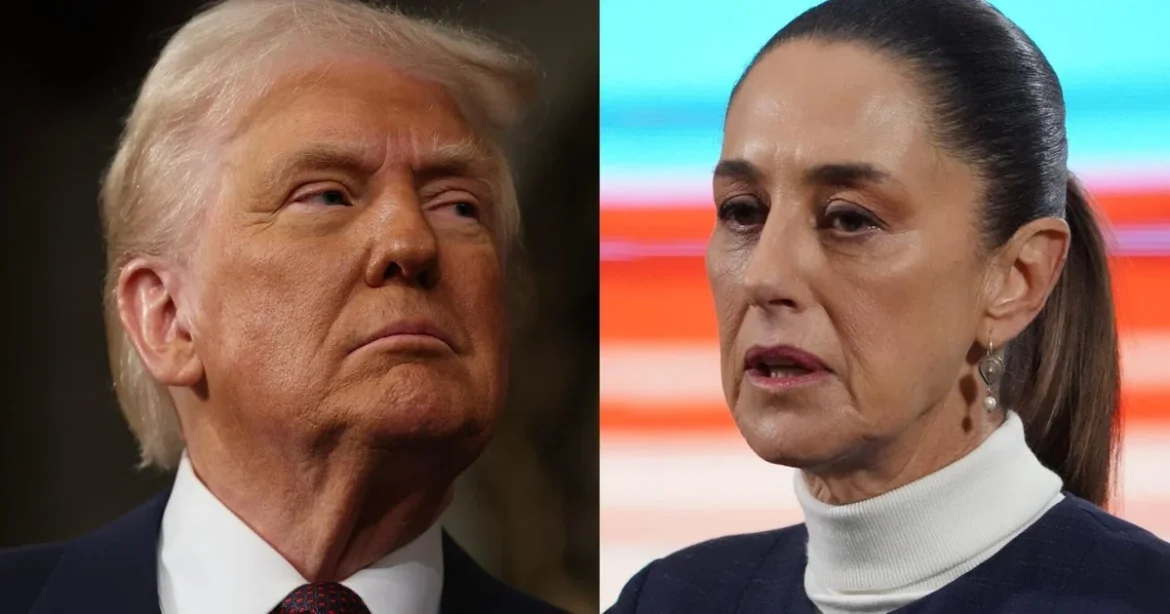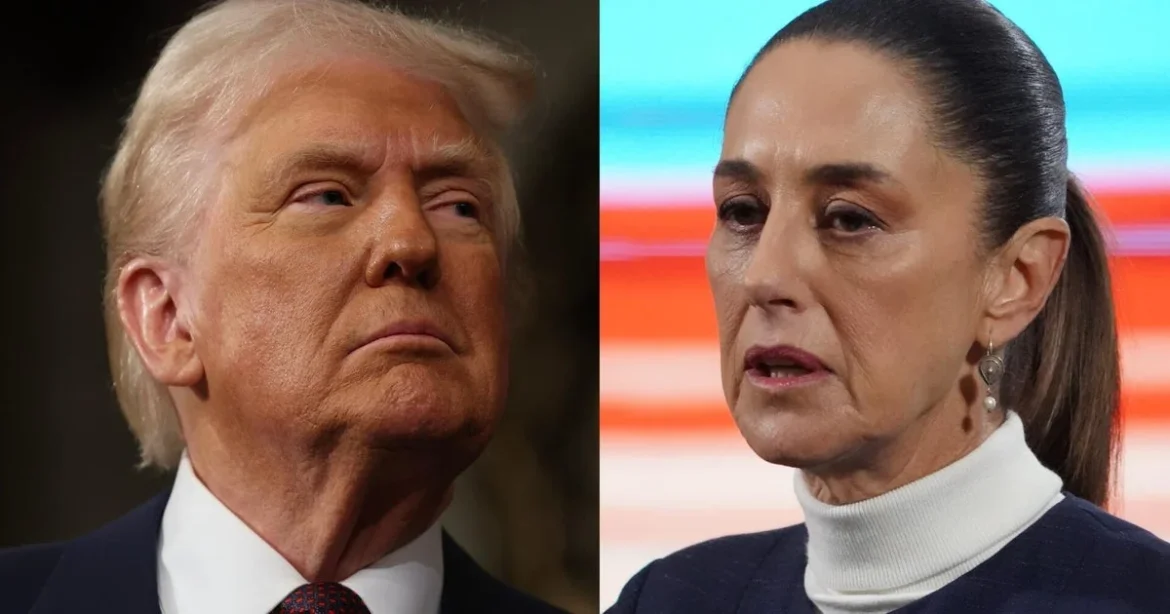
Mexican President Claudia Sheinbaum has confirmed her attendance at Sunday’s highly anticipated FIFA World Cup final in New Jersey, following a direct invitation from U.S. President Donald Trump. This high-profile encounter marks their first meeting since December and comes against a backdrop of escalating verbal sparring and significant diplomatic friction between the two North American neighbors. The event is set to be a convergence of global sport and complex geopolitics, with Canadian Prime Minister Mark Carney and Spain’s King Felipe VI also expected to be in attendance, underscoring the multifaceted nature of the occasion.
The announcement, made by President Sheinbaum on Friday, July 18, 2026, signals a potentially crucial moment for U.S.-Mexico relations, which have been mired in disputes ranging from border security and migration to critical trade agreements. The decision by Sheinbaum to attend the final, contrasting with her earlier choice to forgo the World Cup’s opening match in Mexico City, highlights the unique diplomatic weight carried by President Trump’s invitation and the grand stage of the global sporting event.
The Diplomatic Stage: A World Cup Final in North America
The 2026 FIFA World Cup is a historic event, being co-hosted for the first time by three nations: the United States, Mexico, and Canada. This unprecedented collaboration was designed to showcase North American unity and capacity, with matches distributed across 16 cities in the three countries. The final, set to take place at MetLife Stadium in East Rutherford, New Jersey, pits defending champions Argentina against Spain in a contest expected to draw over 80,000 spectators and a global television audience numbering in the billions. Tickets for the cheapest seats were reportedly listed at nearly $10,000 on FIFA’s official resale platform by Saturday afternoon, reflecting the immense demand and prestige associated with the event.
The presence of heads of state and government from the host nations, along with other international dignitaries such as King Felipe VI of Spain, transforms the sporting spectacle into a de facto diplomatic summit. For Presidents Trump and Sheinbaum, the opportunity for a face-to-face interaction, however brief, could be pivotal. Sheinbaum, who had previously delegated her ticket for Mexico’s opening match against South Africa in Mexico City to a young Indigenous woman as a symbolic gesture of inclusion, cited the direct nature of President Trump’s invitation as the decisive factor for her change of plans. "I decided to go because it is a direct invitation from the president of the United States," Sheinbaum told Mexican media, indicating a forthcoming message with more details.
A Fragile Bilateral Relationship: Security, Trade, and Sovereignty
The relationship between Mexico and the United States has long been characterized by a complex interplay of deep economic ties, shared cultural heritage, and persistent geopolitical challenges. Under both President Trump and President Sheinbaum, these dynamics have been particularly strained. Issues such as border security, drug trafficking, and migration policies consistently dominate the bilateral agenda, often leading to public disagreements and diplomatic tension.
Security concerns have escalated significantly in recent months. In May 2026, the U.S. State Department announced it was initiating a comprehensive review of all 53 Mexican consulates in the United States. This unprecedented move followed the tragic deaths of two CIA officers during an operation in Northern Mexico, an incident that underscored the perilous nature of cross-border law enforcement cooperation and raised questions about intelligence sharing and sovereignty. Mexican officials, while expressing condolences, have emphasized their commitment to investigating the incident fully, yet the review itself signaled a clear U.S. dissatisfaction with the perceived level of security cooperation or control over certain regions.
Beyond security, trade has emerged as another flashpoint. The U.S.-Mexico-Canada Agreement (USMCA), which replaced NAFTA in 2020, forms the bedrock of North American economic integration, facilitating trillions of dollars in trade annually. However, in June 2026, President Trump declared that the United States would not extend the USMCA trade deal until its scheduled expiration in 2042. This statement, delivered weeks after the State Department’s consulate review, sent shockwaves through the markets and diplomatic circles. The USMCA mandates a review every six years, with a potential for a 16-year extension. Trump’s stance, if followed through, could destabilize supply chains, impact industries ranging from automotive to agriculture, and force a renegotiation of terms that have taken years to establish. Mexico is the United States’ largest trading partner, with bilateral trade exceeding $750 billion annually, making the continuity of USMCA critical for both economies.
Chronology of Recent Friction: A Timeline of Tensions
The path to the current diplomatic crossroads has been marked by several key events:
- December 2025: President Sheinbaum and President Trump last met at the World Cup draw, an event that offered an initial, albeit brief, opportunity for interaction ahead of the tournament. Even then, reports suggested a cool, formal exchange reflecting underlying tensions.
- May 2026: The U.S. State Department announces its review of 53 Mexican consulates in the U.S. This decision came in the wake of the deaths of two CIA officers during an operation in Northern Mexico, signaling a significant deterioration in trust and cooperation on security matters. The review was perceived by some as a pressure tactic, questioning Mexico’s capacity to ensure the safety of U.S. personnel and its commitment to combating organized crime.
- June 2026: President Trump publicly states that the U.S. will not extend the USMCA trade agreement until 2042. This declaration, made without prior extensive public consultation with Mexico or Canada, introduced substantial uncertainty into the future of North American trade relations, adding a major economic dimension to the ongoing disputes.
- July 18, 2026: Mexican President Claudia Sheinbaum confirms her decision to attend the World Cup final, citing a direct invitation from President Trump. This announcement sets the stage for a high-stakes diplomatic encounter amidst the global sporting event.
- July 19, 2026: The FIFA World Cup final takes place in New Jersey, with Presidents Trump and Sheinbaum, Prime Minister Carney, and King Felipe VI among the distinguished guests.
- July 21, 2026: Scheduled bilateral negotiations between U.S. and Mexican officials are set to occur, just two days after the World Cup final. These talks are expected to focus heavily on the pressing trade issues, including the future of USMCA, as well as ongoing security and migration challenges.
Sheinbaum’s Calculated Move: A Study in Sports Diplomacy
President Sheinbaum’s decision to attend the World Cup final, especially after her conspicuous absence from Mexico’s opening match, can be interpreted as a carefully calculated diplomatic maneuver. Her initial gesture of giving away her opening match ticket was widely seen domestically as a populist move, prioritizing a young Indigenous woman over a high-profile political appearance, aligning with her political platform focused on social equity and austerity.
However, the direct invitation from the U.S. President for the final presents a different set of considerations. Declining such an invitation for an event co-hosted by Mexico could be perceived as a diplomatic slight, potentially exacerbating already strained relations. Accepting, on the other hand, provides a unique opportunity for direct, albeit informal, engagement with President Trump, potentially opening channels for dialogue outside the formal negotiation settings that have thus far proved challenging. For Sheinbaum, appearing alongside Trump on a global stage, even if tensions persist, demonstrates a willingness to engage, projecting an image of pragmatic leadership both domestically and internationally. It also allows her to represent Mexico at a pinnacle sporting event, showcasing national pride in a tournament her country is co-hosting.
Canada’s Role and Trilateral Dynamics
The presence of Canadian Prime Minister Mark Carney at the final underscores the trilateral dimension of North American relations. Canada, a key partner in both the World Cup hosting and the USMCA trade agreement, shares a vested interest in the stability and prosperity of the continent. Prime Minister Carney’s participation provides an additional layer of diplomatic opportunity, potentially allowing for trilateral discussions that could help mediate or de-escalate tensions between the U.S. and Mexico. Canada’s approach to the USMCA and its relationship with both the U.S. and Mexico has historically been one of cautious diplomacy, aiming to preserve the economic benefits of integration while navigating distinct national interests. Carney’s presence might serve as a stabilizing force, or at least a conduit for communication, in an otherwise fraught bilateral environment.
Global Spectacle and Political Theater: The Power of Sports Diplomacy
The World Cup final is more than just a football match; it is a global phenomenon that transcends sports, acting as a powerful platform for cultural exchange, national pride, and, inevitably, political theater. Historically, major sporting events have been utilized for various diplomatic purposes, from fostering goodwill to facilitating crucial back-channel negotiations. The 2026 final, with its high-profile attendees and underlying geopolitical currents, is poised to be a prime example of sports diplomacy in action.
For President Trump, extending the invitation could be seen as an attempt to soften his image or to assert U.S. leadership on the international stage, using the World Cup’s popularity to project an image of engagement. For all leaders involved, the optics of appearing together at such an event, even if disagreements persist behind the scenes, can convey a message of unity and cooperation to a global audience. The focus on a shared love for sport might temporarily overshadow political differences, creating an atmosphere conducive to dialogue, however fleeting.
Anticipating Post-Final Discussions: The Road Ahead
The real test of any diplomatic thawing that might occur at the World Cup final will come swiftly. The scheduled bilateral negotiations between U.S. and Mexican officials on July 21, just two days after the match, will serve as a crucial follow-up. These talks are expected to be intensive, focusing on the critical issues that have fueled the recent tensions. The fate of the USMCA will undoubtedly be a central topic, with Mexican officials likely seeking clarity and assurances regarding its future. Discussions will also likely delve into enhanced security cooperation, particularly in light of the CIA officers’ deaths and the U.S. consulate review, as well as ongoing challenges related to migration management.
Analysts suggest that while the World Cup meeting itself may not yield concrete policy shifts, it could be instrumental in setting a more constructive tone for the upcoming formal negotiations. A direct, albeit brief, conversation between Trump and Sheinbaum could help to break the ice, allowing for a more productive exchange between their respective negotiating teams.
Expert Perspectives on Diplomatic Opportunities
Foreign policy experts are closely watching the developments. Dr. Elena Ramirez, a professor of international relations at the National Autonomous University of Mexico (UNAM), commented, "Sheinbaum’s attendance is a strategic gamble. It could either lead to a much-needed de-escalation of rhetoric and open a door for pragmatic dialogue, or it could underscore the intractable nature of current disputes if the interaction remains purely ceremonial. The key is whether this meeting translates into substantive progress at the bilateral talks."
Similarly, Dr. Robert Davies, a senior fellow at the Council on Foreign Relations, noted, "Trump’s invitation, coming after a period of significant pressure on Mexico, could be a classic ‘carrot and stick’ approach. He might be signaling a willingness to engage, but the underlying leverage, particularly regarding trade and security, remains. The World Cup provides a high-visibility, low-stakes environment to test the waters before diving into the difficult details of the bilateral agenda."
The World Cup final, therefore, transcends its identity as a mere sporting event. It has become a crucial diplomatic arena, where the passions of football intertwine with the complex realities of international relations. The outcome of the match will be remembered by sports fans, but the interactions among the leaders, particularly Presidents Trump and Sheinbaum, could leave a lasting impact on the future trajectory of North American cooperation and stability. All eyes will be on New Jersey, not just for the football, but for the subtle cues and potential breakthroughs in a relationship that is vital to the entire continent.