
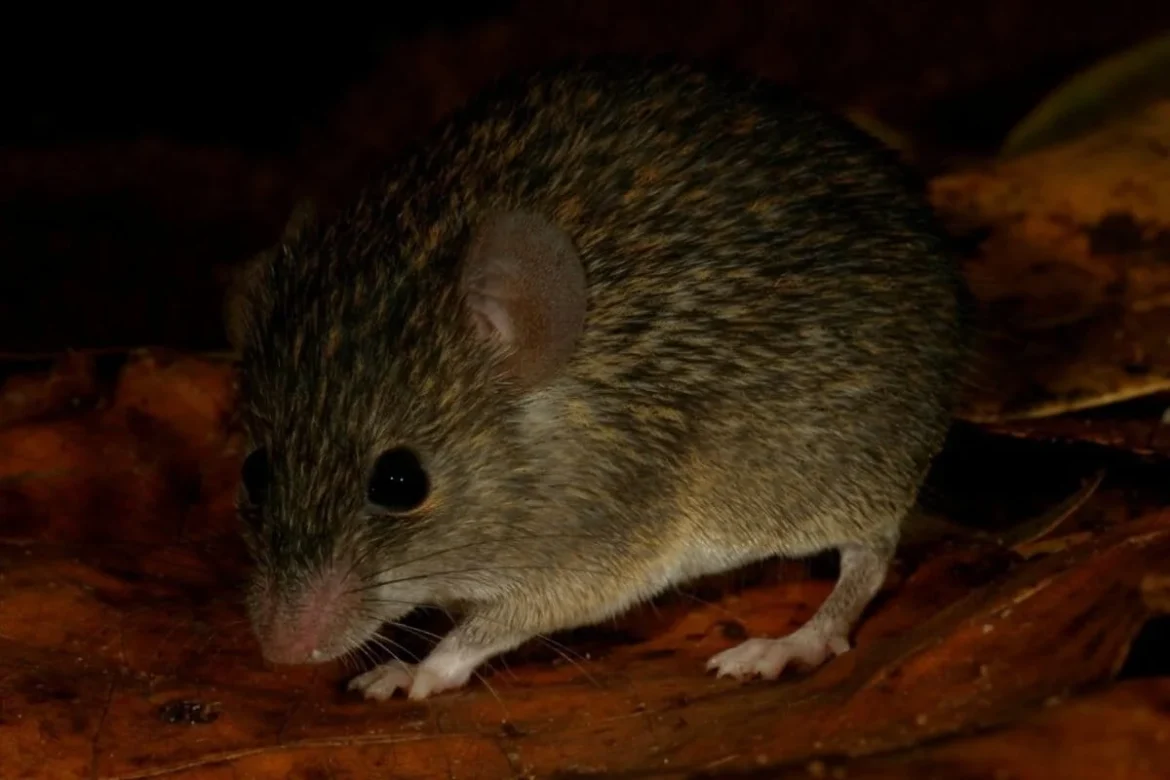
In the twilight hours near the village of Puwakpitiya, situated on the northern periphery of Sri Lanka’s mist-shrouded Knuckles Mountain Range, a team of researchers embarked on a quest that would span two decades. Armed with drift fences and Sherman live traps, the scientists were not searching for the island’s more iconic megafauna, but for the elusive, small-bodied inhabitants of the forest-farmland boundary. While standard biological surveys typically rely on peanut butter as a universal rodent lure, the local mice of the Dumbara mountains proved indifferent to the bait. It was only when the researchers pivoted to a locally familiar scent—the distinct, charred aroma of burnt coconut—that the creatures finally emerged from the undergrowth.
This serendipitous adjustment in methodology led to the collection of two female specimens in March 2004. These small rodents, no larger than a child’s palm, possessed a unique combination of fulvous-gray fur, spiny guard hairs, and tails remarkably long in proportion to their bodies. While they bore a superficial resemblance to the endemic Mayor’s mouse (Mus mayori), their distinct morphological traits suggested they were something entirely new. It would take twenty years of rigorous genetic sequencing and comparative anatomical analysis to formally introduce the world to the Dumbara spiny mouse (Mus dumbara).

A Two-Decade Scientific Odyssey
The journey from the initial discovery in 2004 to the formal taxonomic description in 2026 is a testament to the meticulous nature of modern zoological research. After the initial capture of the two female specimens, the research team, led by Suyama Boyagoda, sought to further document the species. However, the mouse proved notoriously difficult to track. During extensive follow-up expeditions in 2014 and 2015, the team invested 1,900 trap nights using identical methods, yet they failed to secure additional specimens.
This scarcity highlighted the elusive nature of the species and the challenges inherent in studying small, cryptic mammals. The research eventually shifted from field collection to the laboratory, where advanced genetic analysis revealed a 11.7% divergence in DNA between the new specimens and their closest relatives, Mus fernandoni and Mus mayori. This substantial genetic gap, combined with distinctive skeletal features—such as the presence of a prominent supraorbital ridge above the eye socket—provided the irrefutable evidence required to classify the mouse as a distinct species.
Taxonomic Significance and Evolutionary History
The discovery of Mus dumbara is a significant addition to the biodiversity of the Indian Ocean island. Sri Lanka is currently home to 16 recognized species of rats and mice, six of which are endemic. The inclusion of the Dumbara spiny mouse underscores the island’s role as a major biodiversity hotspot.

Sri Lanka and the Western Ghats of India share a deep evolutionary history. During the Pleistocene glacial periods, shifting sea levels periodically created land bridges across the Palk Strait, facilitating the migration of species between the Indian subcontinent and the island. However, as sea levels rose and isolated the island, many species—including the ancestors of the current murid population—followed distinct evolutionary paths. This isolation has resulted in the high levels of endemism observed today, particularly within the island’s wet-zone and montane forests, such as the Knuckles Mountain Range.
The Challenges of Small Mammal Conservation
Despite the formal recognition of Mus dumbara, the species remains an enigma. Known only from a single valley, its population status, distribution range, and ecological requirements remain largely unknown. This lack of data poses a significant challenge for conservationists.
Small mammals often serve as critical links in forest food webs, acting as both seed dispersers and prey for raptors, such as the black eagle (Ictinaetus malaiensis). Yet, they are frequently overlooked in favor of more charismatic species. The Knuckles Range, a UNESCO World Heritage Site, offers some level of protection; however, the margins where forest meets human-modified landscapes are increasingly threatened by road construction, agricultural encroachment, and plantation expansion.

The potential impact of climate change further complicates the survival of Mus dumbara. As a species seemingly restricted to a specific elevational band, it may face "escalator to extinction" scenarios, where rising temperatures force the population into higher, more restricted elevations, eventually leaving them with no viable habitat.
Expert Perspectives on Research Gaps
The scientific community in Sri Lanka has long highlighted the disparity in research funding and attention between vertebrates like amphibians and mammals. Sampath Goonatilake, a researcher with IUCN Sri Lanka, notes that the relative lack of research on small mammals is primarily a result of the high cost and labor-intensive nature of fieldwork.
"Studying small mammals is demanding and expensive," Goonatilake stated. "Researchers may spend weeks or months in the field to obtain a statistically significant sample size. This creates substantial logistical hurdles." Furthermore, the absence of up-to-date identification guides for Sri Lanka’s small mammal fauna acts as a barrier for both local students and international researchers.

To bridge these gaps, experts advocate for a comprehensive, island-wide taxonomic revision. This would require a synthesis of classical morphology and modern molecular phylogenetics, a project that would necessitate multi-million rupee investments and collaborative efforts between the University of Peradeniya, national museums, and international research organizations.
Implications for Future Biodiversity Planning
The formal naming of Mus dumbara is more than a taxonomic update; it is a call to action for conservation policy. The study, published in the journal ZooKeys, serves as a reminder that biodiversity often hides in plain sight, particularly in habitats that are subject to human pressure.
"The discovery of Mus dumbara adds another species to the relatively short list of recently recognized Sri Lankan mammals," says Madhava Meegaskumbura, a co-author of the study and an evolutionary biologist at Guangxi University. "Given the limited information, we must treat this species with caution and assume it is at potential risk of extinction until further surveys can establish its true population dynamics."

The implications are clear: without systematic, long-term monitoring, other endemic species may vanish before they are even discovered. The "burnt coconut" discovery highlights a need for innovation in field methods, but it also underscores that conservation success requires more than just luck—it requires sustained, interdisciplinary funding.
As the scientific community continues to piece together the evolutionary history of the Knuckles Range, the Dumbara spiny mouse stands as a symbol of the fragile, undocumented diversity of Sri Lanka. For now, the focus shifts to whether this tiny, spiny-haired resident of the forest edge can be found elsewhere in the mountain range, or if it is a relic of a vanishing ecosystem that requires immediate, targeted protection to survive into the next century. The discovery serves as a poignant reminder that even in a well-studied landscape, the natural world holds secrets that remain waiting to be uncovered, provided we are willing to look—and listen—with the right tools.
