
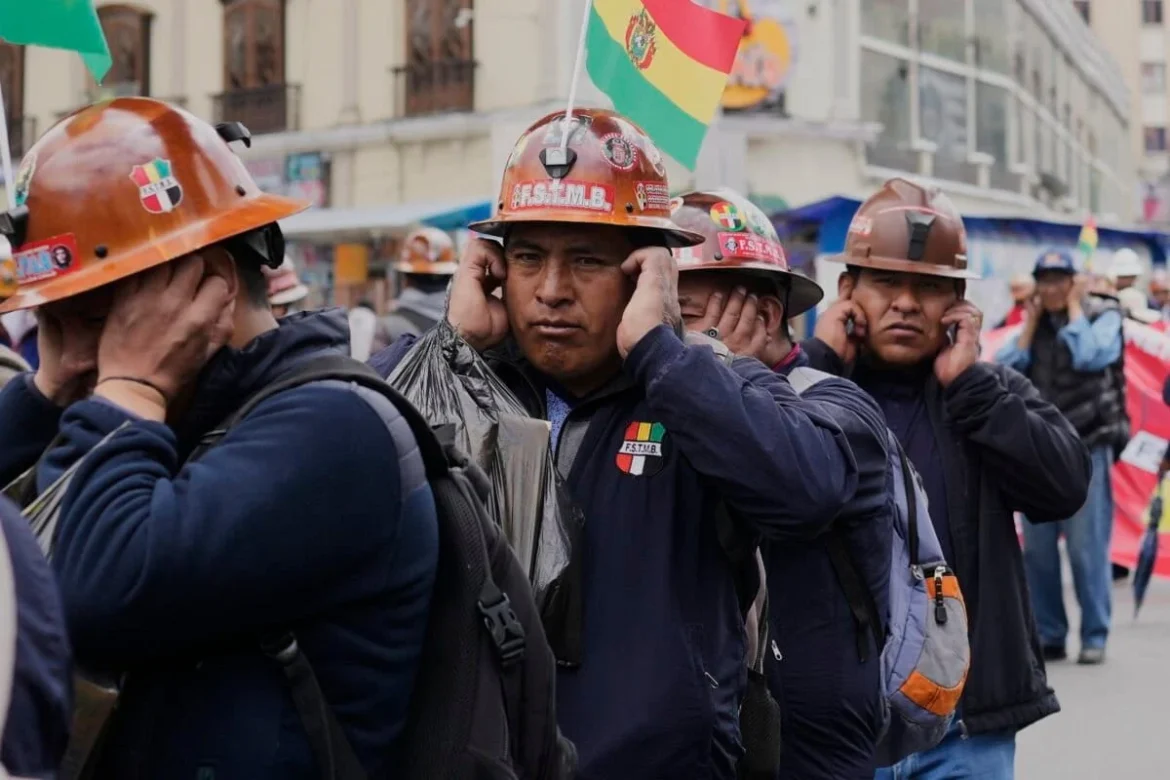
The Bolivian government has officially embarked on a comprehensive restructuring of its national mining legal framework, a move intended to modernize the country’s extractive industry while simultaneously addressing long-standing concerns regarding regulatory oversight, economic efficiency, and environmental accountability. As the Ministry of Mining and Metallurgy moves to draft a preliminary bill, the initiative has sparked a significant debate, pitting the government’s desire for increased foreign investment and sector formalization against the anxieties of Indigenous communities and environmental advocates who fear that the new legislation may prioritize profitability over ecological preservation and human rights.
A Legislative Evolution: From Law 535 to the Future
The existing regulatory architecture for Bolivia’s mining sector is currently governed by Law 535, enacted in 2014. For over a decade, this legislation has served as the primary mechanism for managing mining development, environmental permitting, and the participation of local communities. While Law 535 was designed to balance the interests of the state, private entities, and mining cooperatives, the rapidly evolving landscape of the global mineral market—particularly regarding lithium, gold, and base metals—has rendered parts of the 2014 framework obsolete in the eyes of current administration officials.
Minister of Mining and Metallurgy Marco Antonio Calderón de la Barca Quintanilla has framed the reform as a necessary step toward achieving "legal certainty." According to the Ministry, the new code aims to consolidate responsible environmental management while streamlining administrative procedures that have historically hindered the sector’s growth. The government’s central argument is that by establishing clear, modernized rules, Bolivia can attract more robust investment and improve the transparency of its extractive operations.
Chronology of the Reform Process
The push for a new mining code did not emerge in a vacuum; it follows several years of shifting economic priorities and internal pressure from various mining stakeholders.
- 2014: Law 535 is enacted, establishing the current framework for mining contracts and environmental oversight.
- 2022-2024: Heightened international interest in Bolivia’s lithium reserves, alongside concerns over the environmental impacts of rapid industrial expansion, puts increased pressure on existing regulatory structures.
- Early 2026: The Ministry of Mining initiates a series of "National Mining Summits," inviting representatives from cooperatives, private firms, and state entities to define the scope of the new code.
- Mid-2026: Weekly technical sessions are established to synthesize proposals from stakeholders.
- July 2026: Civil society groups, including the National Coordinator for the Defense of Indigenous and Peasant Territories, publicly criticize their exclusion from the core drafting committees, alleging the process is biased toward industrial interests.
- Late 2026: The government activates a technical committee to finalize the draft of the preliminary bill for eventual submission to the national legislature.
Stakeholder Proposals and Proposed Structural Changes
While the formal text of the draft remains under wraps, internal documents and reports from regional stakeholders have revealed several contentious proposals currently under consideration. These include a potential overhaul of the tax and royalty structure, which the government hopes will capture a larger share of the windfall from high-value mineral exports.
Perhaps most significant is the proposal to remove the 30-year limit on mining contracts. Proponents within the mining sector argue that this change would provide the long-term stability necessary for multi-billion-dollar investments. Critics, however, warn that indefinite contracts effectively lock the state into long-term extraction agreements that may prove detrimental if environmental regulations need to be tightened in the future.
Additionally, there are discussions regarding the restructuring of the Ministry of Mining and the various state-run mining institutions. Proposals have also surfaced to grant legal protections to individuals who report illegal mining—a move aimed at curbing the unchecked expansion of unregulated extraction that has decimated sections of the Bolivian Amazon and polluted vital river basins with mercury.
The Friction Between Development and Indigenous Rights
The central tension in the current reform effort lies in the proposal to amend or potentially remove "prior consultation" requirements. Under current law, the state is mandated to engage in a consultation process with Indigenous and local communities before granting mining concessions on their ancestral lands.

Indigenous leaders have expressed profound alarm at the prospect of weakening these safeguards. Ruth Alipaz, a prominent representative for the National Coordinator for the Defense of Indigenous and Peasant Territories, has been a vocal critic of the government’s approach. "The environmental focus is just talk," Alipaz stated in a public address. She argues that the government is curating a dialogue that excludes the very people most affected by the toxic byproducts of gold mining, such as mercury contamination and the diversion of freshwater resources.
The government maintains that its inclusion of the Unified Confederation of Peasant Workers of Bolivia on the technical committee demonstrates a commitment to broad-based dialogue. However, critics point out that the absence of independent environmental scientists and human rights NGOs from the inner circle of the drafting committee suggests that the legislative priorities remain heavily skewed toward production volume rather than social and ecological sustainability.
Fact-Based Analysis: The Risks of the New Framework
The implications of this legislative overhaul are significant for Bolivia’s economic future and its standing on the international stage.
1. Environmental Risks: The use of mercury in artisanal and small-scale gold mining remains a critical health crisis in the Amazon basin. If the new code focuses on "formalization" without providing the technology and capital for safer extraction, it may inadvertently legitimize environmentally destructive practices under the guise of legal, tax-paying operations.
2. Economic Implications: Bolivia’s dependence on extractive commodities makes it vulnerable to global price fluctuations. By extending contract lengths and simplifying the licensing process, the government hopes to diversify its mining output. However, if these changes lead to increased deforestation or water scarcity, the long-term costs—ranging from the loss of biodiversity to the public health expenses associated with contaminated water—could far outweigh the short-term gains in tax revenue.
3. Social Stability: The history of conflict between mining operations and local communities in Bolivia is well-documented. By potentially sidelining prior consultation processes, the government risks triggering widespread social unrest. Stability in the mining sector is not merely a matter of legal contract length; it is fundamentally tied to the "social license to operate," which is granted by the communities living in the shadow of the mines.
Looking Ahead: The Legislative Hurdle
Once the technical committee completes its work, the preliminary bill will be transmitted to the national legislature. This stage of the process will likely be the most public, providing a final opportunity for civil society groups to challenge specific clauses.
The government has not provided a firm timeline for the completion of the bill, leaving stakeholders in a state of suspended anticipation. The success of the new mining code will be measured not only by the amount of foreign investment it manages to attract but by its ability to resolve the historical contradictions between the state’s developmental mandate and the constitutional rights of Indigenous and rural populations.
As the debate intensifies, the eyes of the international community remain fixed on La Paz. The modernization of Bolivia’s mining sector represents a critical test case for resource-rich nations in the Global South, highlighting the difficult path toward balancing economic sovereignty with the urgent necessity of ecological stewardship. Whether the final version of the code serves as a blueprint for sustainable growth or a catalyst for further conflict remains the defining question of the year for the country’s mining sector.
