
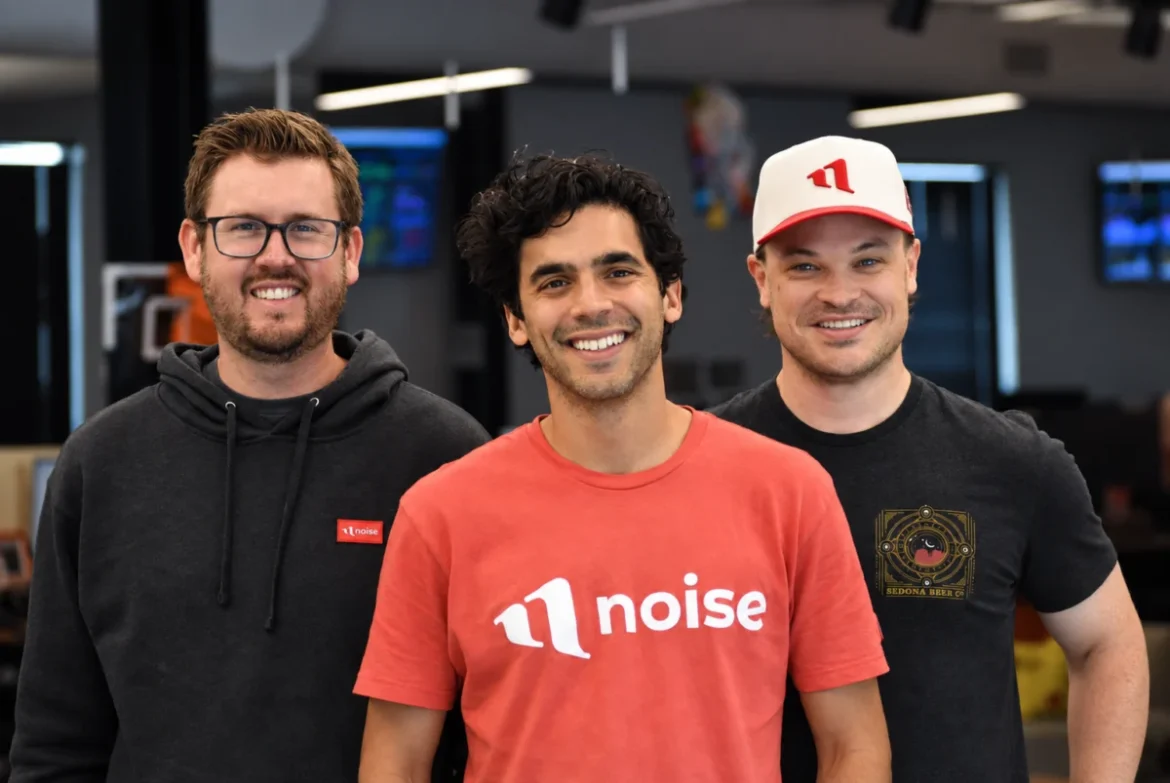
The digital marketing landscape is undergoing a structural shift, moving away from the high-cost, high-barrier world of celebrity influencer endorsements toward a more granular, scalable model centered on mass-market content creation. Noise, a burgeoning marketing platform that streamlines the relationship between brands and everyday content creators, announced on Wednesday that it has successfully closed a 5.5 million dollar seed funding round. This latest injection of capital, led by Capital Midwest, M25, and Grishin Robotics, brings the startup’s total lifetime funding to 7.2 million dollars. Additional participation in the round included Capitalize VC and various industry operators from high-growth tech firms such as DoorDash.
This funding marks a significant milestone for a company that is attempting to solve a dual-sided problem: brands are struggling to scale authentic content without ballooning their budgets, and millions of aspiring creators are finding it increasingly difficult to monetize their digital presence in an oversaturated influencer market.
The Genesis of Noise: A Strategy Born from Necessity
The origins of Noise are deeply rooted in the practical experiences of its co-founders, Diego Kafie, Stu Feldt, and Nic Weber. Before launching Noise in 2025, the trio spent two years developing and scaling Playbite, a mobile gaming application. During their tenure at Playbite, the founders faced the classic startup dilemma: how to drive mass adoption of a mobile app on a limited budget.
The founders initially experimented with traditional influencer marketing strategies but quickly found that the costs associated with established creators—those with massive, verified followings—were prohibitively expensive. Seeking a more efficient alternative, they pivoted to a grassroots approach. They began recruiting their own players, teaching them the fundamentals of social media content creation, and encouraging them to produce authentic, promotion-oriented videos on platforms like TikTok and Instagram.
The experiment was a success. By training a small, dedicated "army" of users, Playbite saw its install rates skyrocket. "We started with five, ten, 25, then 100 people," Kafie recalled. "Before we knew it, our installs were skyrocketing as this small army of people went to places like TikTok and posted engaging content daily." This realization—that ordinary users could deliver better conversion rates at a fraction of the cost of A-list influencers—became the core thesis for the Noise platform.
How the Noise Ecosystem Functions
Unlike traditional influencer agencies that act as talent managers for high-profile figures, Noise operates as an automated infrastructure layer. The platform serves as a bridge, allowing brands to input their content briefs and budgetary constraints into the system. From there, Noise handles the logistics of distribution, monitoring, and payment.
The platform’s primary differentiator is its performance-based payment model. Instead of paying a flat fee for a post—which carries the risk of low engagement—brands on Noise pay creators based on the number of views their content generates. For the creator, the barrier to entry is virtually nonexistent. Anyone with a smartphone can download the application, undergo a series of training modules designed to teach the nuances of effective brand storytelling, and begin participating in campaigns.
As creators demonstrate proficiency and deliver consistent results, they gain access to more lucrative, higher-tier campaigns. This gamified progression system serves a dual purpose: it ensures that brands receive high-quality, professional-grade content while providing a ladder for everyday people to turn their social media activity into a sustainable income stream. Today, the platform boasts a network of 1.5 million creators, with top-performing users earning six-figure annual incomes through the system.
Market Context and the Rise of the Creator Economy
The emergence of Noise occurs at a time when the "creator economy" is undergoing a cultural shift. According to recent data, more than 57% of Gen Z and over 40% of U.S. adults express a desire to become influencers. However, the path to success has become increasingly fraught with algorithmic volatility, high production costs, and the "winner-take-all" nature of major social platforms.
Noise joins a competitive field of infrastructure-focused startups, including Billo and JoinBrands, which are also vying to standardize the way brands source user-generated content (UGC). These platforms represent a departure from the "influencer" model of the early 2010s, focusing instead on "creator" marketing—where the content itself is the product, rather than the reach of the individual behind it.
The implications for the broader marketing industry are significant. For mobile apps and startups with limited runway, the ability to launch campaigns across thousands of creators simultaneously without the operational burden of managing individual contracts or client relationships provides a clear competitive advantage. By automating the sourcing, management, and payment processes, Noise allows brands to maintain a consistent drumbeat of authentic, diverse content that would otherwise be impossible to manage manually.
Expanding Capabilities: The Organic-to-Ads Program
The fresh capital from the seed round is earmarked for two primary objectives: scaling the company’s internal team and expanding its product capabilities. A key component of this expansion is the recently launched "Organic-to-Ads" program.
Historically, content created by users on the platform existed primarily within the native ecosystems of TikTok, Instagram, or YouTube. With the new program, brands can now select high-performing videos generated by Noise creators and deploy them as paid advertisements on Meta and TikTok. This effectively creates a closed-loop system: the same content that builds organic social proof and community engagement can be converted into high-conversion paid media, maximizing the ROI for every dollar spent on a creative brief.
Addressing Industry Critics and Ethical Considerations
The rise of platforms like Noise has occasionally drawn scrutiny regarding the potential for wage suppression. Some critics argue that by commoditizing content creation, such platforms may lower the baseline rates that professional creators can command in the open market.
CEO Diego Kafie has pushed back against these concerns, noting that the platform operates on a voluntary basis. Brands define their own rates, and creators retain the autonomy to accept or reject campaigns based on those terms. Furthermore, Kafie maintains that the platform does not aim to replace professional influencers; rather, it seeks to capture a segment of the market that is currently underserved: the "everyday person" who has the potential to create high-quality content but lacks the infrastructure or audience to do so professionally.
"By democratizing the process of becoming a creator to literally anyone with a smartphone, we’re bringing costs down for brands, while simultaneously enabling millions of people to make their first dollar on the internet," Kafie stated.
Implications for the Future of Digital Marketing
As the digital landscape moves toward an era of hyper-personalized advertising, the role of the "creator" is likely to evolve from a niche profession to a standard component of consumer behavior. The success of Noise indicates that brands are prioritizing scalability and efficiency over the prestige of individual celebrity endorsements.
By shifting the focus from follower counts to content quality and view-based performance, Noise is positioning itself at the center of a fundamental change in how products reach consumers. The platform’s ability to turn a brand’s user base into a decentralized marketing department represents a powerful, low-cost alternative to traditional advertising playbooks.
For investors, the 5.5 million dollar investment represents a bet on the continued professionalization of the creator economy. Whether Noise can successfully transition from its current focus on mobile apps and startups to larger, enterprise-level clients remains the next critical test for the company. However, with 1.5 million creators already on board and a proven mechanism for content delivery, the startup is well-positioned to continue its rapid ascent in the evolving digital advertising ecosystem. As brands continue to search for ways to cut through the digital noise, platforms that offer measurable, scalable, and authentic human connection will likely remain in high demand.
