
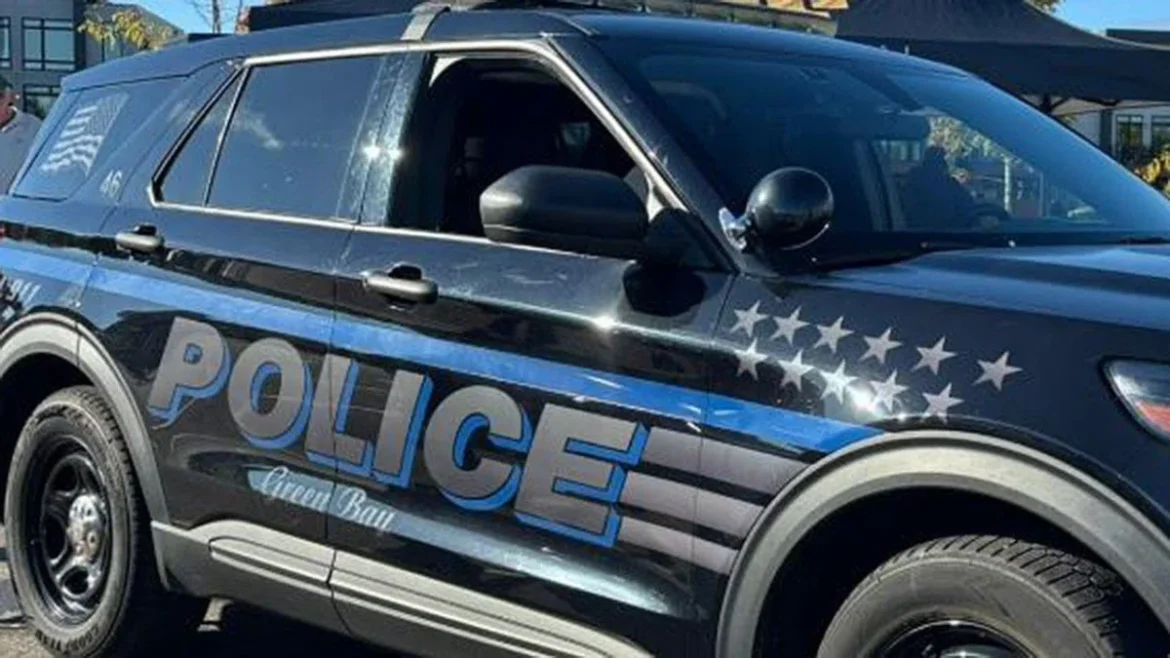
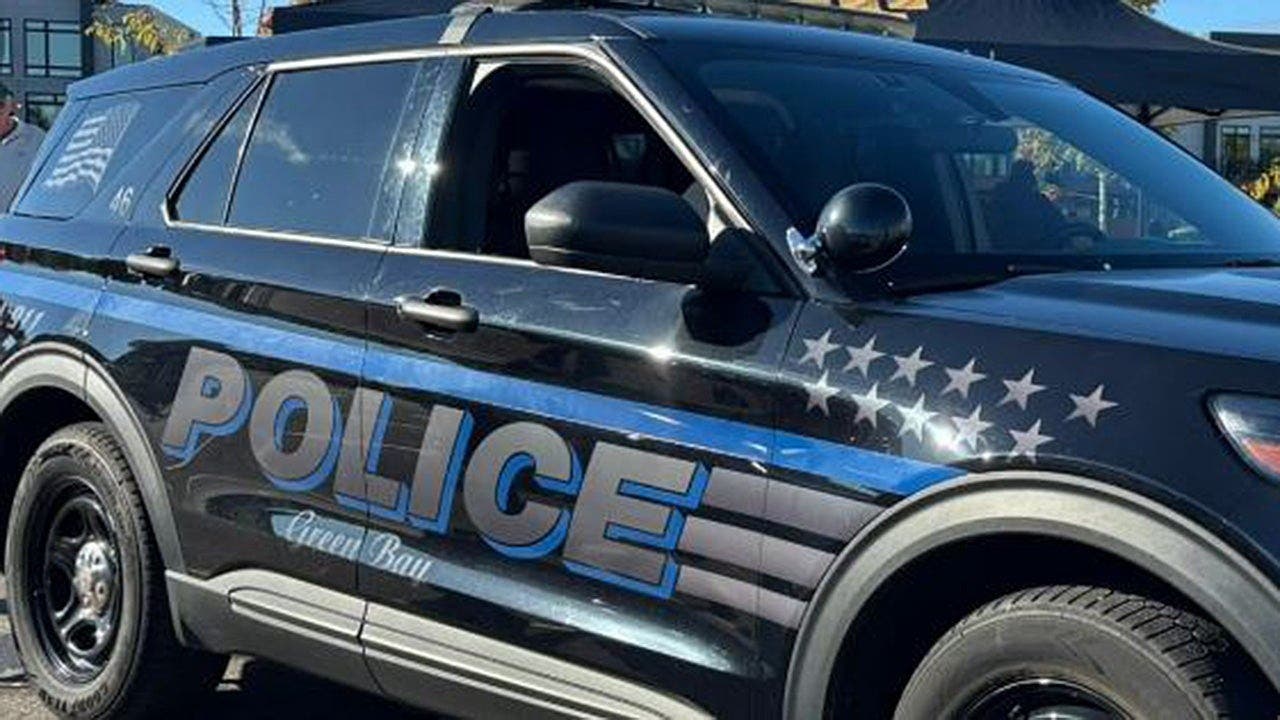
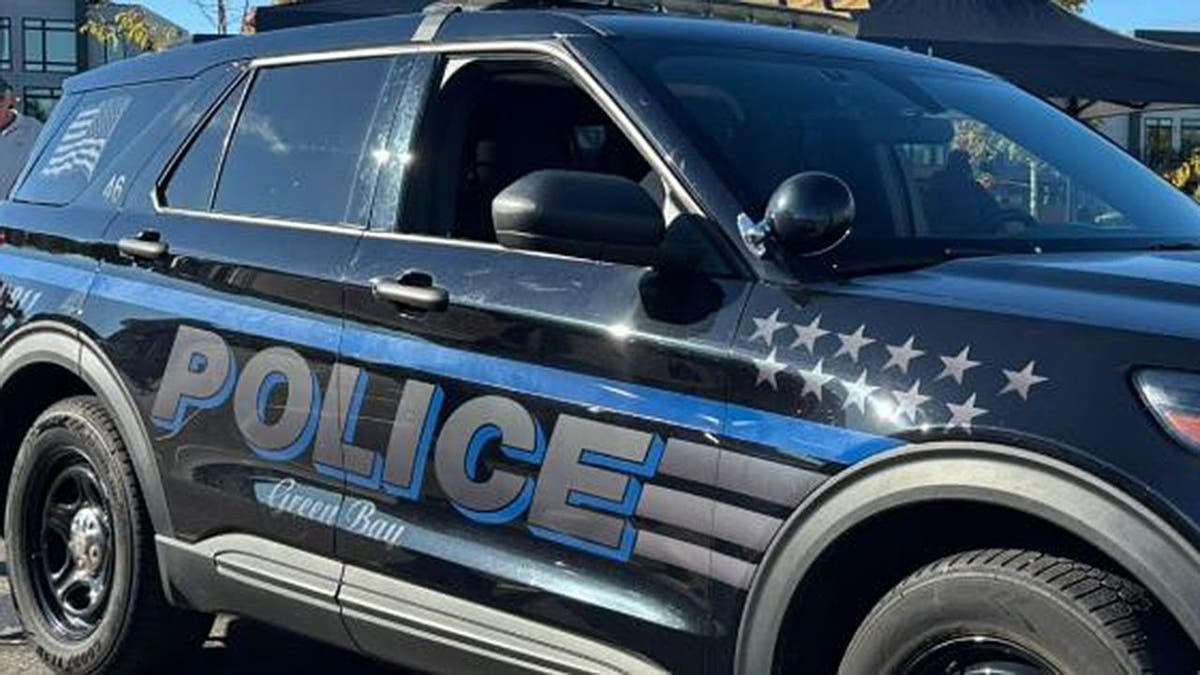
The early morning hours of Saturday transformed into a scene of chaos and high-stakes police intervention in Green Bay, Wisconsin, leaving four law enforcement officers injured, a suspect in custody, and a community searching for answers. What began as a routine response to a localized disturbance near a commercial food truck quickly escalated into a multi-tiered critical incident involving a vehicle assault, an officer-involved shooting, a high-speed pursuit, and a tactical vehicular takedown.
The Green Bay Police Department has since launched a comprehensive multi-agency investigation into the sequence of events that unfolded around 2:15 a.m. local time. The incident highlights the volatile and unpredictable nature of front-line police work, particularly during late-night and early-morning hours in entertainment and commercial zones. While none of the injuries sustained by the responding officers are believed to be life-threatening, the event has drawn intense local and regional scrutiny regarding public safety, vehicle-ramming incidents, and the protocol surrounding law enforcement responses to active threats in crowded public spaces.
Chronology of Events: From Food Truck Disturbance to Tactical Takedown
The timeline released by the Green Bay Police Department constructs a rapid, escalating sequence of events that spanned a matter of minutes but involved multiple distinct threat vectors.
At approximately 2:15 a.m. on Saturday, officers from the Green Bay Police Department were dispatched to a commercial area following reports of a disturbance centered around a food truck. Late-night food trucks and surrounding nightlife zones frequently draw large crowds, particularly on weekend mornings, creating logistical and crowd-control challenges for local law enforcement. Upon arrival, officers attempted to manage the situation and take several individuals into custody in connection with the initial altercation.
During the course of these attempted arrests, the situation deteriorated dramatically. A vehicle suddenly accelerated directly toward a crowd of civilian bystanders and the police officers actively working the scene. Faced with an imminent lethal threat—where a vehicle is utilized as a weapon against pedestrians and officers—at least one police officer discharged their firearm, firing at the oncoming vehicle in an effort to neutralize the threat.
Despite the gunfire, the driver refused to stop, steering the vehicle away from the immediate scene and fleeing the location. This prompted an immediate vehicular pursuit by police units. The chase was brief but intense, navigating city streets until pursuing officers executed a Precision Immobilization Technique (PIT) maneuver. The tactical driving maneuver successfully disabled the suspect’s vehicle, bringing the pursuit to an end.
The driver was subsequently taken into custody without further incident. Law enforcement officials confirmed that the suspect is being held on preliminary suspicion of operating a vehicle while intoxicated (OWI). Investigators have noted that the ongoing inquiry will determine the exact chronology of who sustained injuries and when, as well as whether the driver of the vehicle was directly connected to the initial disturbance at the food truck or if the vehicle-ramming incident was a secondary, opportunistic, or unrelated escalation.
Injuries and Medical Status of Law Enforcement Personnel
A total of four Green Bay police officers sustained injuries during the multi-staged incident, though authorities have confirmed that all affected personnel are expected to make full recoveries.
According to Green Bay Police Chief Chris Davis, the injuries sustained by the officers occurred in two distinct phases of the early morning operation. A portion of the injuries was incurred during the physical struggle as officers attempted to secure and take suspects into custody during the initial altercation near the food truck. The remaining injuries occurred when the suspect’s vehicle plowed into the crowd and the surrounding police presence.
Emergency medical services treated the injured officers at the scene and transported them to local medical facilities for evaluation and follow-up care. Fortunately, none of the officers suffered life-threatening trauma. Furthermore, despite the discharge of a firearm by an officer during the vehicle assault, no injuries—either to suspects, officers, or civilian bystanders—have been reported as a result of the gunfire. The lack of civilian casualties during a high-speed vehicle assault into a crowd has been noted by local officials as a fortunate outcome in an otherwise highly dangerous scenario.
Official Responses and Inter-Agency Investigation
In the wake of the incident, the Green Bay Police Department initiated standard protocols for critical incidents involving use of force and officer-involved shootings. Because the incident involved an officer discharging a firearm, independent oversight and investigative protocols have been triggered to ensure transparency and accountability.
The Brown County Sheriff’s Office has stepped in to lead the independent investigation into the officer-involved shooting component of the event. Independent investigations of police-involved shootings by outside agencies are standard practice in Wisconsin under state law, designed to maintain objectivity and public trust. The Sheriff’s Office will review the tactical decisions made by the officers, examine ballistics and dashcam footage, and compile a comprehensive report for the District Attorney’s office.
Green Bay Police Chief Chris Davis addressed the media in a subsequent press conference, providing transparency regarding the early stages of the investigation. Chief Davis emphasized that investigators are still working diligently to piece together the full narrative, noting that the department has not yet definitively established whether the driver who plowed into the crowd was an active participant in the original food truck disturbance or an outside actor whose actions intersected chaotically with the police response.
"We are still evaluating all available evidence, witness testimonies, and digital footage to understand the complete picture of what transpired early Saturday morning," Chief Davis stated during the briefing, underscoring the complexity of sorting out simultaneous disturbances and vehicular assaults in a chaotic nocturnal environment.
Broader Context and Public Safety Implications
The incident in Green Bay reflects a growing nationwide concern regarding the use of motor vehicles as weapons against crowds and law enforcement personnel. In recent years, public safety agencies across the United States have recorded numerous incidents where intoxicated or erratic drivers have plowed into groups of pedestrians, nightlife zones, or active police scenes.
The tactical response utilized by the Green Bay Police Department—specifically the deployment of the PIT maneuver—underscores the specialized training required by modern police forces to safely terminate pursuits before suspects can inflict further harm in densely populated urban environments. While pursuits carry inherent risks to public safety, the decisive action taken by officers prevented a prolonged high-speed chase through city streets.
Additionally, the incident brings renewed focus to the policing of late-night commercial and entertainment districts. Food trucks and late-night eateries serve as vital social hubs in many urban centers, but they also frequently become flashpoints for alcohol-fueled altercations, disorderly conduct, and demands for rapid police intervention. Balancing crowd management with officer safety in these environments remains one of the persistent challenges facing municipal police departments.
As the legal proceedings against the suspect move forward, the Brown County Sheriff’s Office and the Green Bay Police Department are expected to release further details regarding formal charges, toxicology reports, and the findings of the use-of-force review. For the Green Bay community, the incident serves as a stark reminder of the unpredictable perils faced by front-line law enforcement officers in the line of duty, and the fine line between a routine disturbance call and a critical, life-threatening emergency.
