
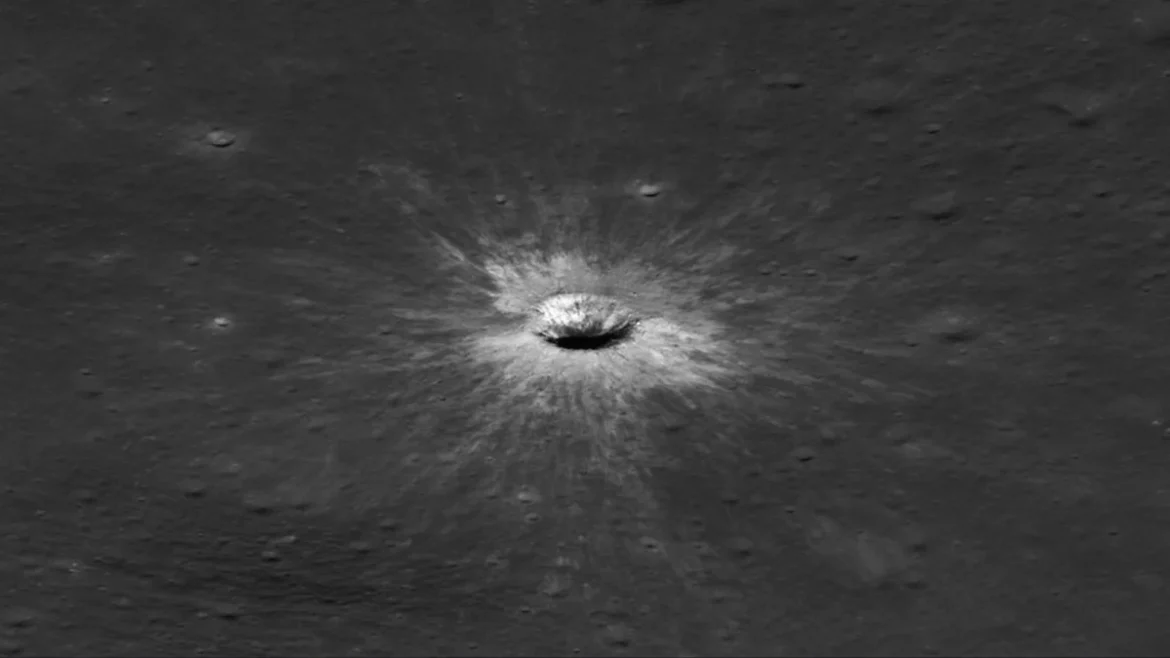
The Moon’s surface, long perceived as an unchanging, desolate landscape, is far more dynamic than it appears to the naked eye. While the absence of an atmosphere prevents the erosion seen on Earth, it also leaves the lunar surface entirely vulnerable to the relentless bombardment of space debris. On September 15, 2026, researchers published findings in the journal Science Advances detailing the discovery of a massive, newly formed crater, a geologic event described as a once-in-a-century occurrence. The impact, which occurred between April 11 and May 22, 2024, resulted in a scar measuring 768 feet wide and 141 feet deep, an unprecedented event in the era of modern lunar observation.
A Violent Collision in the Lunar East
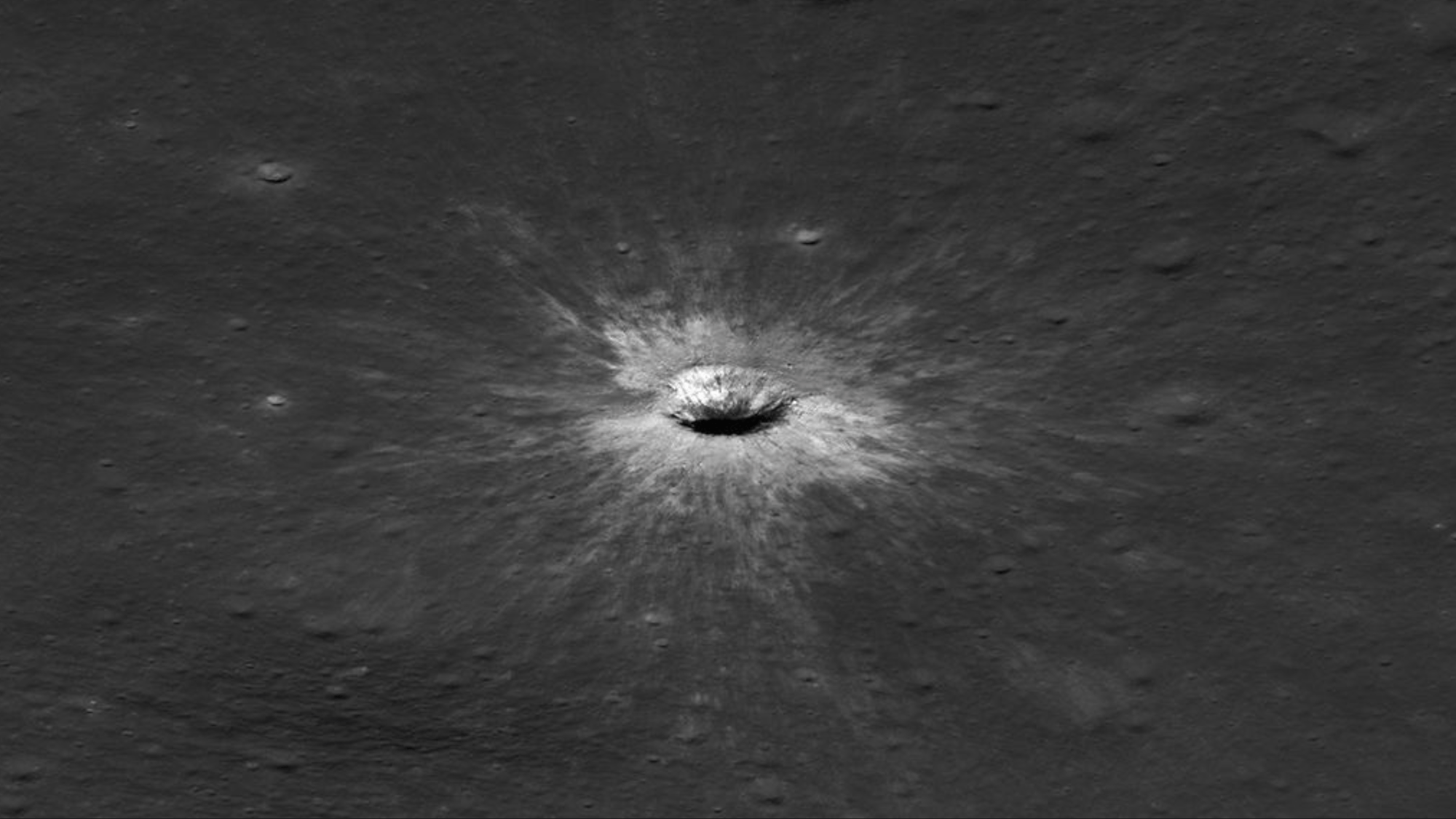
The crater, officially designated as McGetchin in honor of the late, distinguished planetary scientist Tom McGetchin, is located on the moon’s eastern limb. The force required to carve a hole of this magnitude—roughly equivalent to the length of two professional football fields—suggests the impactor was a rocky or icy body roughly the size of a three-to-six-story building. Unlike the frequent, smaller impacts that occur daily, this collision released energy on a scale that provides a rare, real-time look at how large-scale kinetic energy reshapes planetary surfaces.
The discovery was not the result of a single observation but rather the product of systematic data review. Robert Wagner, an image-processing specialist and member of the Lunar Reconnaissance Orbiter (LRO) team, identified the anomaly during a routine quality check of images collected by the LRO’s Wide-Angle Camera. The telltale signature was a bright, circular feature surrounded by a dark halo—a pattern indicative of fresh ejecta thrown outward from a high-velocity impact.
Chronology of the Discovery
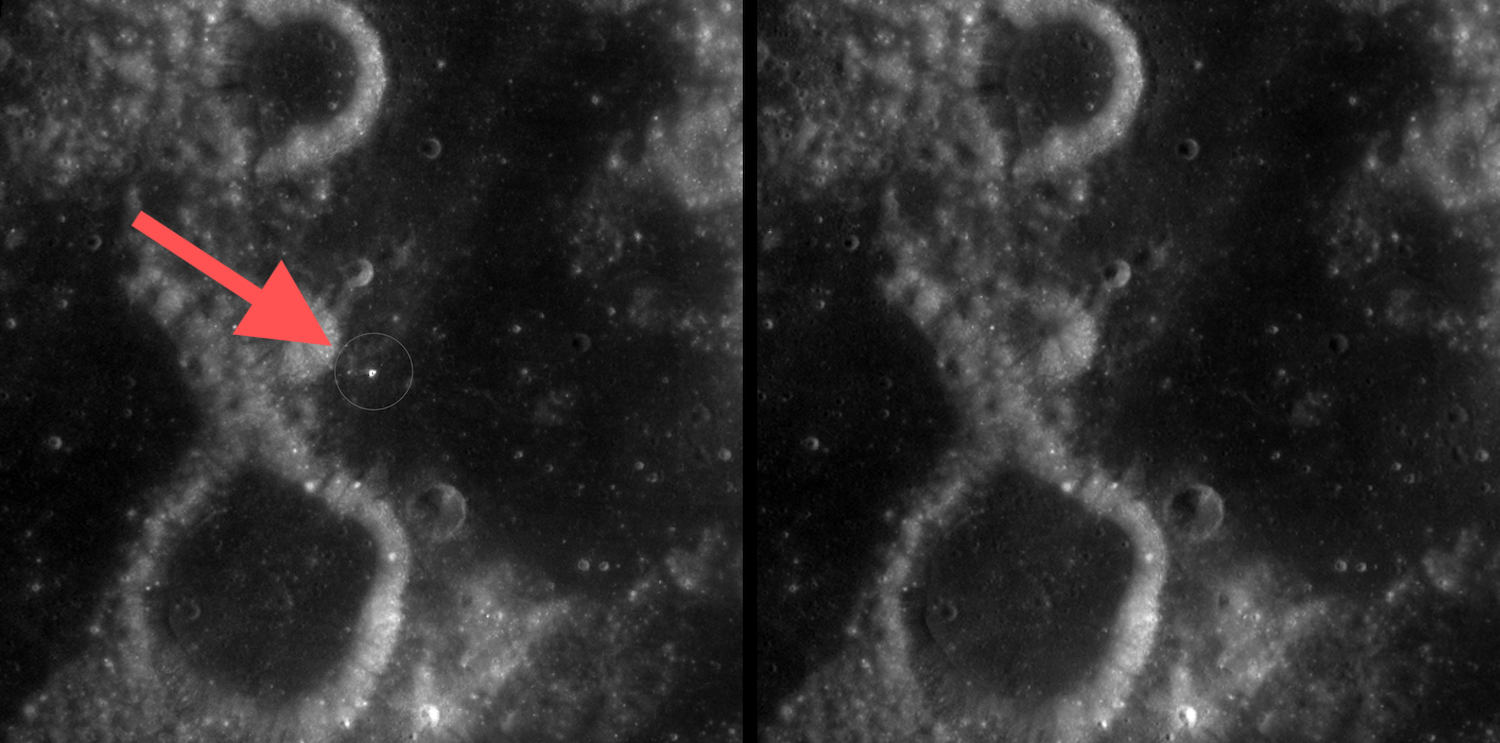
The timeline of the impact and subsequent identification highlights the technical rigor required for planetary monitoring. The LRO, which has been orbiting the moon since 2009, captures thousands of images annually. These images are compared against a historical baseline to identify changes in the topography, such as new craters or shifts in regolith.
- April 11, 2024: The start of the LRO imaging window during which the surface was documented as pristine.
- May 22, 2024: The end of the imaging window, by which time the impact had already occurred.
- October 24, 2025: Robert Wagner identifies the anomaly during a deep-dive data analysis.
- September 15, 2026: Official publication of findings in Science Advances, confirming the event as a rare, major lunar impact.
The process of verification is arduous. Specialized algorithms are utilized to highlight variations in shadows and lighting to detect potential changes. However, these tools frequently produce "false positives" caused by shifting sunlight angles or sensor noise. To isolate the McGetchin crater, Wagner performed a pixel-by-pixel verification, looking for the specific distribution of regolith smatterings—the "splatter" pattern left behind by the ejected lunar dust. This pattern confirmed that the crater was not a digital artifact but a genuine, violent geological event.
Supporting Data and Thermal Analysis
Beyond visual identification, the LRO utilized the Diviner Lunar Radiometer Experiment, a thermal instrument capable of measuring surface temperatures. The data revealed a significant thermal anomaly: a four-mile-wide region surrounding the crater that measured approximately 16 degrees Fahrenheit cooler than the surrounding terrain during the lunar night.
This temperature drop is a key diagnostic tool for planetary scientists. When a high-energy impact occurs, it churns up the lunar regolith, creating a "fluffy" or porous layer of debris. Because this freshly disturbed soil is less dense than the compacted, older lunar surface, it has lower thermal inertia, meaning it loses heat more rapidly once the sun sets. The presence of this thermal signature provides independent, physical evidence that the crater was formed recently, as the regolith has not yet had time to settle or "weather" back into its original, more heat-retentive state.
Scientific Context: The Lunar Bombardment Rate
The moon is continuously pelted by material from space. Astronomers estimate that roughly 140 coffee-table-sized asteroids or cometary fragments strike the moon every year. These smaller impacts typically generate craters around 30 feet in diameter. The rarity of the McGetchin impact stems from the size of the projectile; a rock the size of a multi-story building hitting the moon is an order of magnitude more significant than the background rate of strikes.
Since its launch, the LRO has been instrumental in refining our understanding of the current lunar impact rate. The orbiter has successfully identified over 1,000 new craters and over 100,000 smaller surface changes, including secondary strikes from debris flung out by primary impacts. These observations are crucial for developing models of how the moon’s surface evolves over millions of years, which in turn helps scientists estimate the ages of various lunar landscapes based on crater density.
Implications for Future Exploration
The McGetchin crater offers a unique "laboratory" for researchers. Because the impact happened so recently, it remains in a pristine state. Scientists are currently planning high-resolution imaging campaigns using the LRO’s Narrow-Angle Camera, which can capture details at a resolution of three feet per pixel. These images will allow geologists to study the morphology of the crater walls, the distribution of ejecta, and the structural integrity of the subsurface layers exposed by the blast.
Furthermore, this event serves as a stark reminder of the risks involved in future lunar colonization. As NASA and international partners work toward establishing permanent human outposts on the moon, understanding the frequency and severity of these impacts is not merely a matter of academic interest; it is a critical safety requirement. Infrastructure, habitats, and lunar EVA (extravehicular activity) operations must be planned with the understanding that the lunar surface is a dynamic, shifting environment.
A New Chapter in Planetary Science
The identification of the McGetchin crater is a testament to the longevity and productivity of the LRO mission. By maintaining a continuous observational presence, NASA has been able to bridge the gap between abstract statistical models of impact rates and concrete, empirical evidence.
"It was by far the most obvious impact debris pattern I’ve ever seen in one of these images," Wagner noted in his retrospective of the discovery. The event has effectively reset the standard for what constitutes a "major" event in modern lunar science. As the scientific community prepares to publish further studies on the impact’s energetics, the McGetchin crater stands as a landmark discovery—a vivid reminder that while the moon may appear serene from Earth, it remains a frontline participant in the chaotic and violent history of our solar system. The data gathered from this event will inform lunar mission planning for decades to come, providing the most accurate assessment yet of the dangers posed by the near-Earth and lunar environment.
