
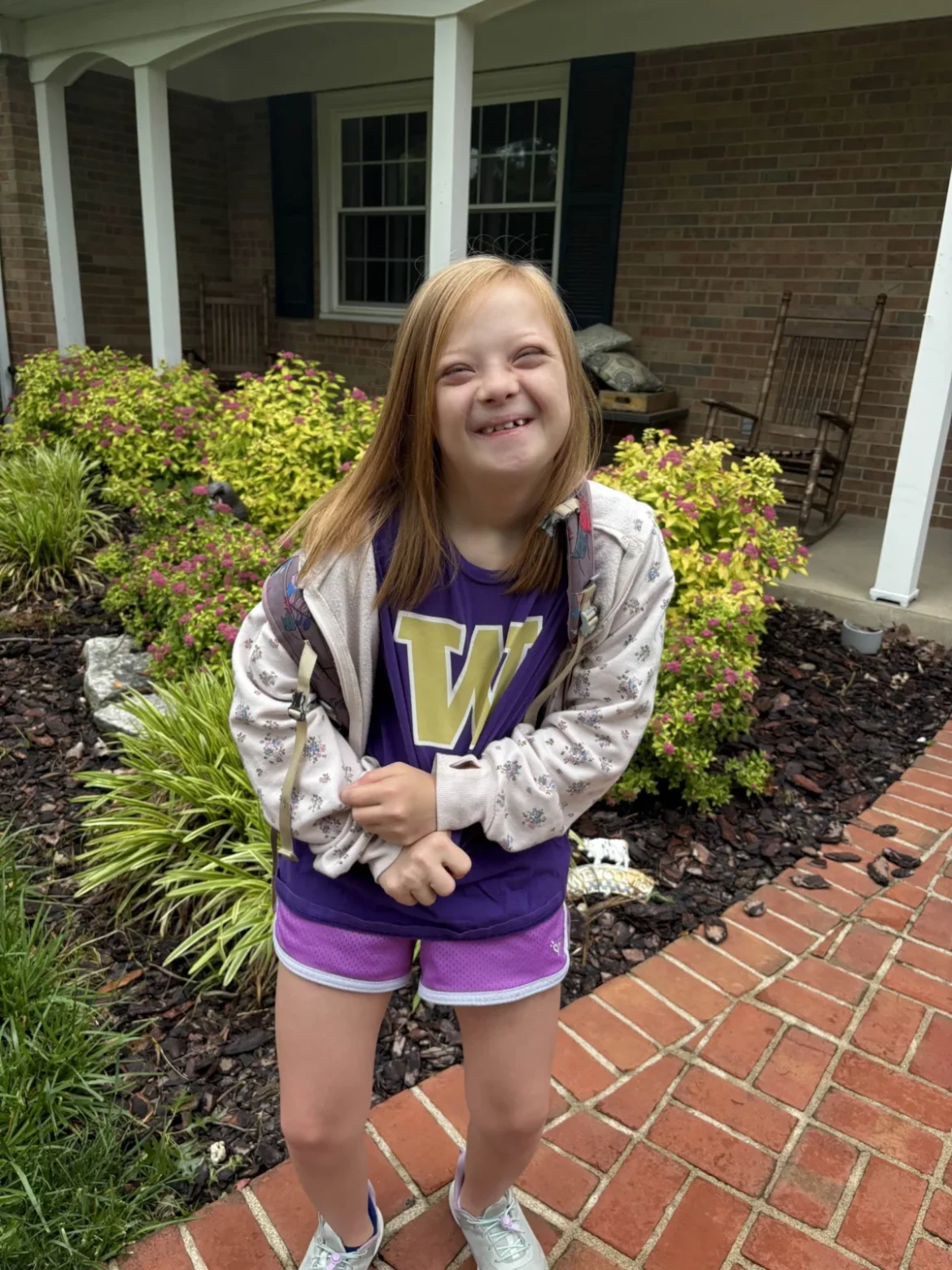
The meeting at Cincinnati Christian Schools (CCS) began with a prayer, a moment of solemnity that quickly transitioned into a life-altering ultimatum for Mike Grimmer and Linda Kelly. After three months of what they believed was a successful academic placement for their 15-year-old granddaughter, Annabelle, the administration informed the couple that her presence was no longer sustainable. Annabelle, who lives with Rett syndrome—a complex genetic condition involving severe developmental and cognitive delays—had been thriving in a specialized program designed for students who struggle in traditional classrooms. Her enrollment had been facilitated by the Jon Peterson Special Needs Scholarship, a state-funded voucher program providing up to $29,750 annually to cover tuition. However, the school’s director of academic support services delivered a stark reality: Annabelle’s physical and educational needs were deemed "too extensive" for the current staff. The school offered a conditional path forward, but it came with a $25,000 annual surcharge to cover a one-on-one aide—a cost the family was not prepared to bear.
The Illusion of Comparable Protections
The experience of the Kelly family highlights a growing, often misunderstood, tension within the American educational landscape. As state-level private school voucher programs proliferate across the nation, an increasing number of families are opting out of the public school system in search of more tailored environments. Yet, in this transition, these families frequently inadvertently waive the robust legal safeguards guaranteed under the Individuals with Disabilities in Education Act (IDEA).
Unlike public schools, which are legally mandated to provide a Free Appropriate Public Education (FAPE) and adhere to the strictures of an Individualized Education Program (IEP), private schools operate under a different set of rules. They are not federal recipients of IDEA mandates, and critically, there is no standardized requirement for these institutions to disclose that students lose their federal disability rights upon enrollment. This regulatory gap creates a "buyer beware" environment where parents, seeking the best for their children, are often unaware that they are trading civil rights protections for the autonomy of private education.
A Chronology of a Failed Placement
The trajectory of Annabelle’s time at Cincinnati Christian Schools serves as a case study in the risks of the current system. The family’s preparation for her enrollment had been meticulous. Upon applying in August 2025, the Kellys provided full medical histories, exhaustive academic evaluations, and the comprehensive learning plan she had utilized in the public sector. Annabelle even attended three trial days to ensure a proper fit, and multiple conferences with teachers prior to the November meeting had suggested a positive, inclusive trajectory.
When the school reversed its position in November, citing "evolving needs," the family was blindsided. According to Linda Kelly, Annabelle’s condition had not changed; the only variable that had shifted was the school’s internal assessment of the labor and resources required to support her. Despite the family’s attempts to negotiate or propose alternative support models, the school remained firm, effectively forcing the student out of the institution. When asked for comment, CCS Superintendent Raymond Kochis declined an interview but maintained via written statement that the institution works with families when a student’s needs exceed the initial scope of support, a claim that contradicts the account provided by the guardians.

The Broader Data Landscape
The movement toward private school vouchers is accelerating. By the 2025-26 school year, more than 200,000 students nationwide were utilizing vouchers specifically designed for those with disabilities or were enrolled in the country’s most expansive voucher initiatives. This represents a significant jump from the 180,000 students enrolled just one year prior.
States have been aggressive in their pursuit of school choice. Ohio, Florida, Indiana, and Texas are among the leaders in this shift. In Texas, for instance, the Education Freedom Accounts program has prioritized students with disabilities, resulting in more than one in four participants holding a documented disability as of June 2026. However, the rigor of these programs is inconsistent. While some states like Ohio have policies that require schools to provide written justifications for denying enrollment, these "safeguards" are often toothless. There are frequently no systemic consequences for schools that fail to provide adequate support or for those that neglect to follow the IEPs they are supposed to uphold.
The Regulatory Void: The Role of IDEA
Signed into law in 1975, the Individuals with Disabilities in Education Act is the bedrock of special education in the United States. It dictates that every child aged three to 21 with a disability must be provided a free, appropriate education, and wherever possible, educated alongside nondisabled peers. Today, 8 million public school students rely on these protections.
When a student uses a state voucher to enter a private school, they are classified as "parentally placed." This status is the primary pivot point for the loss of rights. Under this classification, the private institution is not obligated to honor an IEP or provide the services stipulated therein. Disability rights advocates, such as the Council of Parent Attorneys and Advocates (COPAA), have been lobbying for years to attach IDEA compliance to any school receiving public funds, whether through state or federal vouchers. Their efforts faced a major setback last year when Congress passed the nation’s first federal voucher program without including the requested language requiring participating private schools to adhere to IDEA protections.
"If there are public funds being spent, public protections need to be afforded," says Chris Roe, director of state policy at COPAA. "At the very least, states that provide voucher programs should be required to inform parents of the rights they are giving up."
The Reality of "School Choice" for Special Needs
The allure of private education for parents of children with disabilities often stems from frustration with the public system’s own failures. Parents who have spent years battling school districts for adequate services often view vouchers as an escape hatch. However, the reality is frequently different. Nicole White, whose daughter Kate has Down syndrome, experienced this firsthand.

After initially finding success at the St. Rita School for the Deaf—where administrators promised they could support Kate’s specific needs—the reality shifted as the student aged. Budget cuts led to the elimination of essential occupational and physical therapy services on-site. By 2022, White was forced to pull her daughter out of the private school, returning her to the public district. "I was looking at the students ahead of her… and there were four students in the graduating class," White noted. "I didn’t want that for Kate, but I wanted the support that St. Rita’s gave its students. So what do I do? Where do I go?"
St. Rita’s administration noted that the Jon Peterson scholarship does not cover the full cost of education, placing the burden of supplemental therapies on families through private insurance or out-of-pocket payments. This reflects a recurring theme: private schools, even those that specialize in disability services, are not bound by the same resource mandates as public institutions.
The Path Forward and Lessons Learned
For Annabelle, the journey ended back at her local public school, Princeton High School. Initially wary due to her perception of how special education functioned two decades ago, her grandmother was surprised to find a modern, inclusive environment where Annabelle is now making steady progress on her IEP goals. She is currently thriving in a diverse classroom environment, particularly in her gym class—a testament to the progress of integrated public education.
The implications for the future of American education are profound. As the federal government moves toward broader school choice initiatives, the lack of transparency regarding disability rights remains a critical failure point. Without federal oversight or mandatory disclosure of the waiver of civil rights, thousands of families may continue to be misled by the promise of private "choice." The evidence suggests that for the most vulnerable students, the "freedom" promised by vouchers may ultimately prove to be a loss of the very protections that ensure their right to learn.
Moving forward, disability advocates are shifting their strategy. With federal legislation finalized, the focus is now on state capitals. Advocates are pressing for state-level mandates that force private schools to provide clear data on their special education outcomes and to adhere to the spirit—if not the letter—of the IDEA as a condition for receiving taxpayer-funded scholarships. Until such accountability is implemented, the "catch" within the voucher system will continue to be borne by those least able to afford the consequences.
