

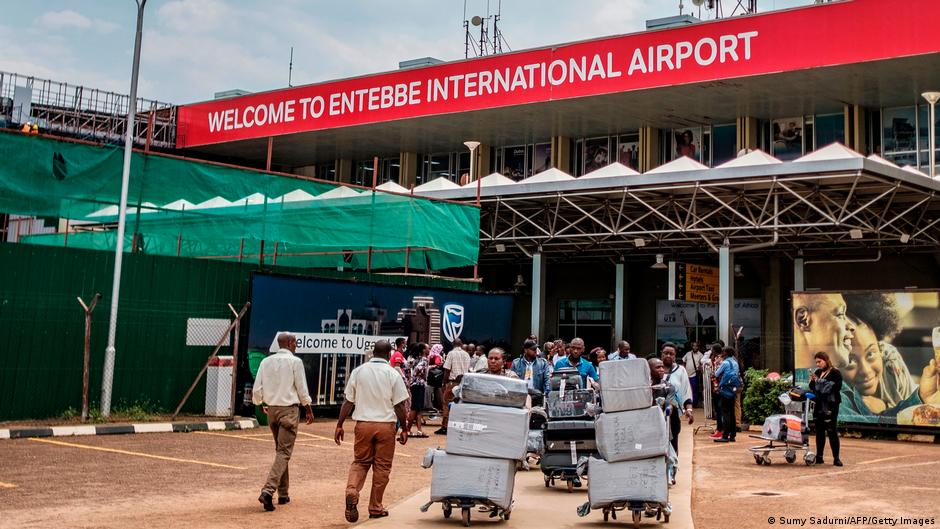
The global public health community is currently grappling with a high-stakes epidemiological mystery as health officials from Nigeria, Kenya, and the Africa Centers for Disease Control and Prevention (Africa CDC) investigate a potential connection between two independent Ebola virus disease (EVD) cases. At the center of this investigation is Entebbe International Airport in Uganda, a major transit node where both the first confirmed Kenyan Ebola patient and a newly diagnosed Nigerian patient are believed to have passed on October 3. As regional health authorities scramble to reconstruct the movements of these individuals, conflicting reports regarding travel histories have complicated the effort to pinpoint the origin of the infections and the potential for secondary transmission.
A Chronology of Emerging Threats
The current investigation began in earnest following the death of a patient in Nairobi, Kenya, on October 5. The individual, who had traveled from the Democratic Republic of Congo (DRC) through Uganda before arriving in Kenya, was the first confirmed case in the region for this outbreak cycle. Following this, Nigerian health authorities confirmed an imported case of Ebola in the capital, Abuja, involving a woman who had recently returned from a trip to East Africa.
The timeline of these events is critical to understanding the scope of the potential exposure:
- October 3: Both the subsequently confirmed Kenyan and Nigerian patients are identified as having transited through Entebbe International Airport.
- October 5: The first confirmed Ebola patient in Kenya passes away in a Nairobi hospital.
- October 7: The Nigerian patient begins exhibiting symptoms consistent with EVD.
- October 11: The Nigerian patient visits a private medical facility, where initial screening and subsequent laboratory testing confirm the diagnosis.
- October 20: The Ugandan Ministry of Health issues a statement maintaining that it has no active confirmed cases and suggesting that if the Nigerian patient did visit the DRC, she did so prior to her transit through Uganda.
- October 24: The Swiss Federal Department of Foreign Affairs publicly contradicts the Ugandan account, stating that the Nigerian patient—a Swiss national—did not visit the DRC during her travels.
Conflicting Narratives and Diplomatic Tensions
The discrepancy regarding the Nigerian patient’s travel history has become a significant point of contention. Uganda’s health authorities had initially hypothesized that the patient, who is married to a Swiss diplomat based in Abuja, may have conducted business in the eastern DRC before passing through Uganda. This narrative served to distance the Ugandan health system from the immediate source of the infection.
However, the intervention from the Swiss government has effectively dismantled this theory, leaving a vacuum in the epidemiological reconstruction. "She and her husband did not travel to the Democratic Republic of the Congo," the Swiss Federal Department of Foreign Affairs stated in an official communication to international news agencies. This denial forces investigators to look elsewhere for the point of exposure. If the patient did not enter the DRC, the likelihood that she contracted the virus during her time in Uganda or at the Entebbe transit hub increases, a possibility that the Ugandan Ministry of Health has been keen to address with caution, emphasizing that "travel through Uganda does not establish that infection occurred here."
The Complexity of Contact Tracing
The investigation is further hampered by the challenges of modern contact tracing in a highly mobile region. In Kenya, health officials are currently engaged in a desperate search for a contact of the deceased patient—a Ugandan national whose identity is known but whose physical location remains elusive. The complexity is compounded by the fact that the individual was using a South Sudanese telephone number, highlighting the porous nature of communication and travel across East African borders.
According to Dr. Patrick Amoth, Kenya’s director-general for health, the inability to reach this individual poses a risk, though it does not confirm infection. "We know him by name and passport number and from his phone, but we are not able to reach him," Amoth noted. This gap in the data chain illustrates the systemic difficulty in monitoring the movement of individuals who may have been exposed to the virus, particularly when they move across jurisdictions with varying levels of integrated surveillance.
Epidemiological Context and Virus Transmission
Ebola, a severe and often fatal disease caused by the Ebolavirus, is transmitted through direct contact with the blood or body fluids of an infected person. A critical factor in the current investigations is the incubation period, which ranges from two to 21 days. Crucially, the World Health Organization (WHO) maintains that individuals are not considered infectious until the onset of symptoms.
This biological reality is central to the debate over the Entebbe transit point. If both patients were asymptomatic while at the airport on October 3, the risk of transmission to others or between each other is theoretically low. However, the exact timing of the onset of symptoms for both patients is subject to intense scrutiny. Investigators are now tasked with determining whether the patients shared a common space, such as a lounge or specific terminal area, and if any breach in standard infection prevention and control (IPC) protocols occurred.
Broader Implications for African Public Health
The current crisis serves as a stark reminder of the vulnerability of international travel hubs to the rapid spread of viral pathogens. While screening measures—such as thermal imaging and symptom questionnaires—are in place at most major African airports, they are not infallible. An infected traveler in the early, asymptomatic stages of the disease can easily bypass these measures, necessitating robust and rapid cross-border data sharing.
The Africa CDC has scheduled an "extraordinary virtual meeting" for October 28, bringing together national health ministers and regional experts. The objective is to standardize reporting protocols and improve the speed of information exchange. The stakes are high; public anxiety in Nigeria is already mounting, with citizens recalling the devastating potential of the 2014-2016 West African Ebola epidemic. In Abuja, the presence of the virus has led to a noticeable shift in behavior, with increased use of sanitizers and a pervasive sense of unease among the populace, who are balancing the fear of a viral outbreak with the ongoing struggle against economic instability.
Fact-Based Analysis: Assessing the Risk
The situation is currently defined by what is unknown. The absence of a clear transmission chain has led to three primary hypotheses being explored by the scientific community:
- Multiple Independent Exposures: The patients may have been exposed to the virus at different times and locations, and the timing of their presence in Uganda is a coincidence.
- Shared Point of Exposure: There may be an unidentified, common environmental or social link in the region that both patients visited.
- Undetected Transmission: There is a possibility, however slim, of an undetected cluster of cases along a major transit route, suggesting that the virus has been circulating in a way that has evaded official surveillance.
From a policy perspective, the events of the last three weeks have underscored the need for a more integrated regional response. When health ministries provide conflicting information, it creates gaps in the global response strategy, potentially allowing the virus to establish a foothold in new areas. The reliance on individual country reports, while necessary for sovereignty, must be augmented by neutral, third-party verification from bodies like the Africa CDC or the WHO to ensure that data-driven decisions can be made.
Looking Ahead: Preparedness and Response
As the investigation continues, the focus remains on containment. Nigeria has successfully identified 44 contacts associated with its imported case, and these individuals are currently being monitored for symptoms. In Kenya, the search for the missing contact continues, with regional authorities coordinating to track the individual’s movements through South Sudan and Uganda.
The overarching lesson for the continent is that Ebola preparedness cannot be limited to border closures or screening at entry points. It requires deep, persistent investment in primary healthcare, diagnostic capacity, and the social infrastructure necessary to conduct contact tracing effectively in a transient population. Until the source of the Nigerian patient’s exposure is confirmed and the missing contacts are traced, the region remains in a state of heightened vigilance. The upcoming Africa CDC meeting will be a litmus test for the continent’s ability to coordinate a unified, transparent, and science-led response to one of the most dangerous pathogens known to humanity. The global community watches closely, cognizant that in an interconnected world, the containment of a viral outbreak is only as strong as the weakest link in the regional security chain.
