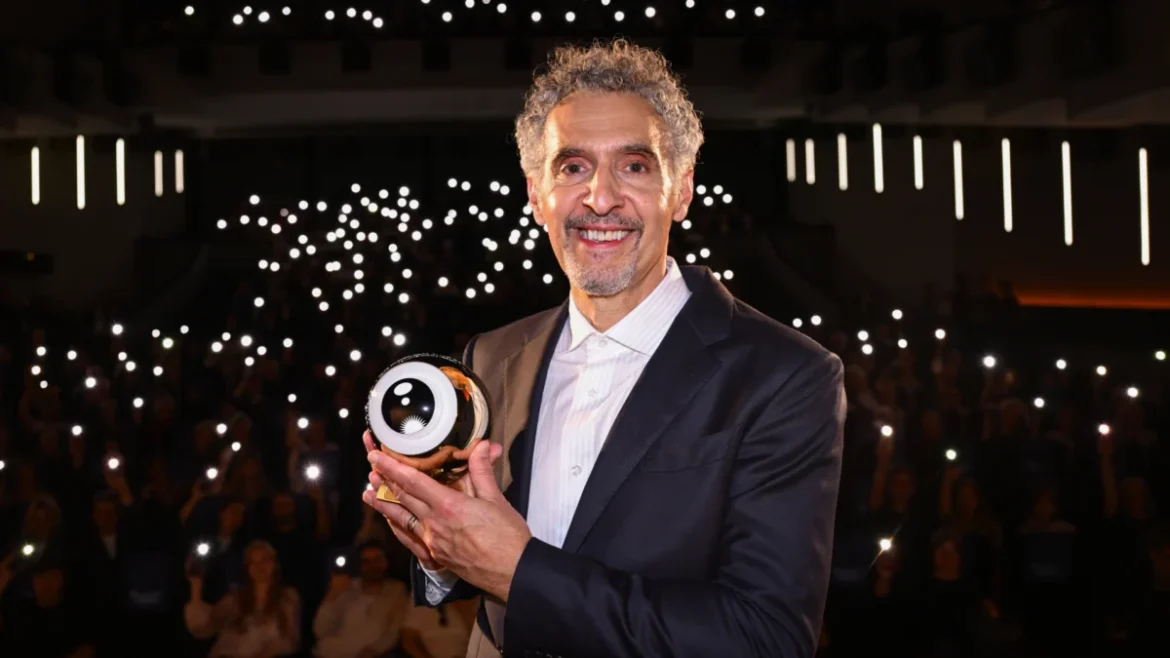
Fresh off receiving the prestigious Golden Eye award at the 22nd annual Zurich Film Festival, veteran American actor and filmmaker John Turturro took center stage on Sunday for an extensive, career-retrospective masterclass. Fresh from a weekend of celebration in Switzerland, the Emmy-winning performer engaged in a wide-ranging conversation with Deadline’s Melanie Goodfellow. Sitting beside his newly minted golden trophy, Turturro discussed his upbringing in an immigrant household, his decades-long creative partnership with Spike Lee, his transition into directing, and the mounting awards buzz surrounding his latest cinematic venture, Noah Segan’s The Only Living Pickpocket in New York.
The masterclass offered a rare glimpse into the mindset of one of Hollywood’s most enduring character actors, a performer who has consistently built an impressive filmography spanning four decades without ever locking down an official Academy Award nomination. As the Zurich Film Festival runs its 22nd edition from September 24 to October 4, Turturro finds himself keeping company with fellow high-profile festival honorees Julianne Moore and Tom Hiddleston, cementing his status as a titan of contemporary cinema.
Main Facts of the Zurich Masterclass and Festival Recognition
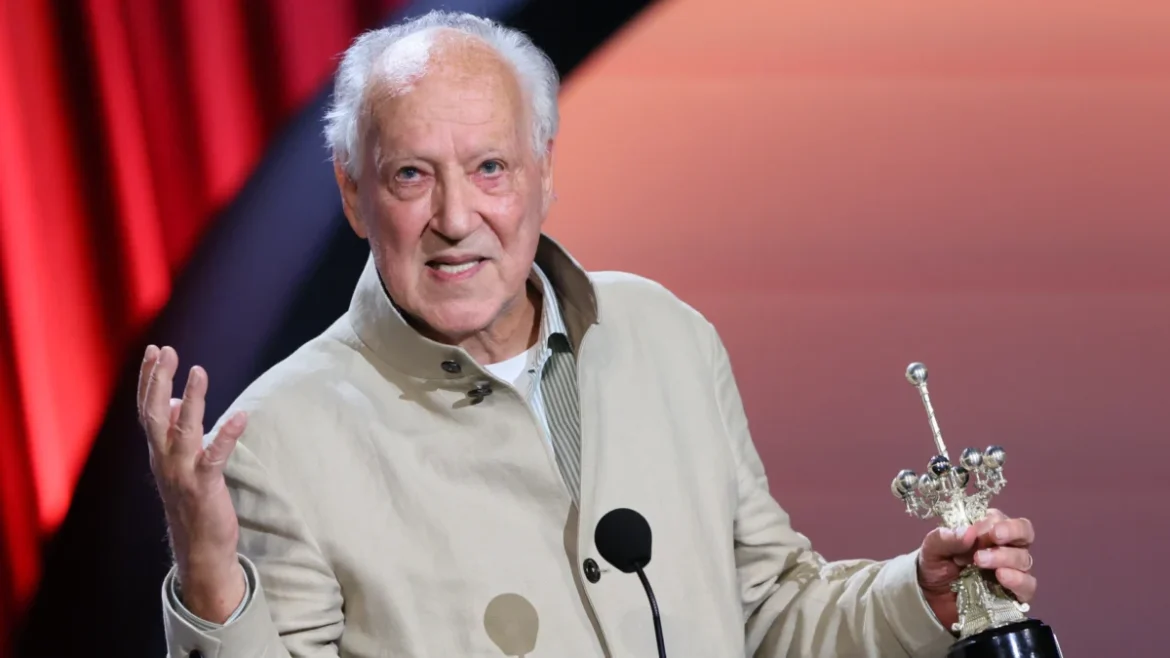
The focal point of Turturro’s weekend appearance was undoubtedly his reception of the Zurich Film Festival’s Golden Eye award on Saturday night. Accepting the honor, Turturro delivered a poignant reflection on his longevity in the industry, quoting Italian novelist Cesare Pavese.
"Pavese once said that the only great thing in life is to begin," Turturro told the rapt audience. "I still consider myself a beginner in many ways. I’m very fortunate. I wanted to make a living doing something that interested me and to do interesting work—to share that with an audience, and that wouldn’t diminish their intelligence at the same time."
The momentum continued into Sunday’s masterclass, where the conversation pivoted heavily toward his standout performance in The Only Living Pickpocket in New York. Directed by Noah Segan, the film features Turturro as Harry, a seasoned, meticulous pickpocket whose carefully structured world collapses within a tense 36-hour window after a job goes dangerously wrong. The indie feature, which first made waves on the festival circuit following its successful premiere at the Sundance Film Festival, has rapidly positioned Turturro at the center of early Best Actor Oscar prognostications.
Addressing the prospect of navigating a major awards campaign for the film, Turturro maintained a grounded, pragmatic perspective. "I never really have gone the whole hog with it," he admitted regarding the grueling awards season circuit. "But now I’m the lead in the film, so I’m going to support the film because I love the film." He added that the media attention and awards conversations act as a practical mechanism, noting, "It’s helpful to help you do the next thing."
Chronology of a Storied Four-Decade Career
Turturro’s journey to the Zurich stage is built upon a foundation of risk-taking, independent cinema, and unforgettable collaborations with some of the most revered auteurs in motion picture history. His career timeline reads as a masterclass in American film evolution:
The Early Years and Spike Lee Collaborations (Late 1980s–Early 1990s): Turturro first broke into international consciousness through his work with director Spike Lee. His intense, memorable performances in landmark films like Do the Right Thing (1989) and Jungle Fever (1991) established him as an actor capable of embodying complex, racially and socially charged characters with absolute authenticity.
The Coen Brothers Partnership and Cannes Triumph (1990s): Concurrently, Turturro formed an essential creative alliance with Joel and Ethan Coen. He appeared in a string of defining independent and studio features, including Miller’s Crossing (1990), Barton Fink (1991), O Brother, Where Art Thou? (2000), and The Big Lebowski (1998)—in which he immortalized the eccentric, purple-jumpsuit-wearing bowling fiend Jesus Quintana. For his tour-de-force psychological performance as the titular playwright in Barton Fink, Turturro was awarded the Best Actor prize at the 1991 Cannes Film Festival.
Expanding Horizons and Television Renaissance (2010s–Present): Over the last decade, Turturro has successfully bridged the gap between prestige cinema and high-concept television. His work in HBO’s critically acclaimed crime miniseries The Night Of (2016)—where he portrayed the eczema-stricken, cynical defense attorney John Stone—earned him widespread critical acclaim and an Emmy nomination. More recently, he has captured modern audiences through his nuanced portrayal of Irving Bailiff in Apple TV+’s hit sci-fi workplace thriller Severance.
Supporting Data and Behind-the-Scenes Insights
During the hour-long session with Goodfellow, Turturro provided fascinating behind-the-scenes accounts of his most beloved television projects. Delving into The Night Of, a series that ultimately captured five Emmy Awards, Turturro revealed that he deliberately avoided watching the original British television series (Criminal Justice) upon which it was based. "It was originally a BBC thing, which I actually never watched because I didn’t want to be influenced," he explained. While he expressed an eagerness to return for subsequent seasons of the HBO drama, he noted that creative differences among the production team regarding the narrative direction ultimately stalled those plans.
Talk of television naturally bled into Apple TV+’s Emmy-winning phenomenon Severance. Turturro delighted fans by coyly confirming his return for the upcoming third season alongside co-star Adam Scott. "Yeah," he conceded after a comedic pause. "As long as they give me interesting things to do, then I’m interested."
Much of the conversation surrounding Severance focused on Turturro’s deep personal and professional relationship with legendary co-star Christopher Walken, whose character, Burt Goodman, shares a touching, quiet romance with Turturro’s Irving. Turturro recalled advocating specifically for Walken during the show’s casting phase. When producers suggested pairing him with younger actors for the romantic subplot, Turturro pushed back. "’Well no, I’ve worked with Chris Walken,’ I said, ‘I want Chris, because I love Chris. And I don’t have to act that I love him because I love him.’"
Turturro noted that Walken initially found the metaphysical, corporate-dystopian premise of Severance somewhat confusing. "He didn’t understand a lot of the show," Turturro laughed. "I said, ‘Don’t worry about it. You just look at me.’ We have so much fun because I directed him like three times, and we’ve acted, and we’ve worked together a lot. And he’s a wonderful theater actor… He’s also very sensitive, but he has a childlike joy in his work, and when that happens, anything is possible."
Official Responses and Artistic Evolution
Reflecting on his progression as a craftsman, Turturro expressed genuine surprise at the rapturous critical reception The Only Living Pickpocket in New York received at Sundance. "Finally," he recalled thinking, "I’m in something that people will see."
He attributes his sustained relevance and artistic growth not to physical stamina, but to the accumulation of life experience. "My job is I like to try to improve, and I feel like being an actor is one of the few things you can improve in," Turturro stated. "You may not be able to run as fast as you did when you were younger, but I have a lot of life experience, and as you get older, you accumulate that, and you can distill things in a way that you couldn’t do when you were young, because you didn’t really experience all those things. And now I’ve experienced life, death, loss, being a parent, being married—what it is to really love someone versus falling in love. That’s a huge difference."
Furthermore, Turturro addressed the types of roles he gravitates toward, noting a stark contrast between Hollywood expectations and European cinematic sensibilities. He confessed that he frequently finds himself offered more grounded, "normal" roles in European productions than in American studio systems, revealing that he has turned down scripts "again and again" that rely on gratuitous violence directed toward women.
Broader Impact and Implications
As the Zurich Film Festival highlights Turturro’s contributions to global cinema with its Golden Eye award, the timing underscores a broader shift in the entertainment landscape. Veteran character actors who spent decades working in the shadows of traditional leading men are increasingly being recognized as the anchor points of prestige television and independent cinema.
Turturro’s potential entry into the Academy Awards race via The Only Living Pickpocket in New York represents more than just a personal milestone for an unnominated veteran; it signals an industry appetite for grounded, character-driven storytelling over purely commercial blockbusters. By balancing high-profile streaming television (Severance) with boundary-pushing independent features, Turturro demonstrates that artistic curiosity, rather than box-office calculation, remains the ultimate metric of a lasting career.
With the 22nd Zurich Film Festival drawing international attention through October 4, Turturro’s masterclass stands out as a masterclass in humility, artistic integrity, and the enduring power of human experience translated to the screen.