
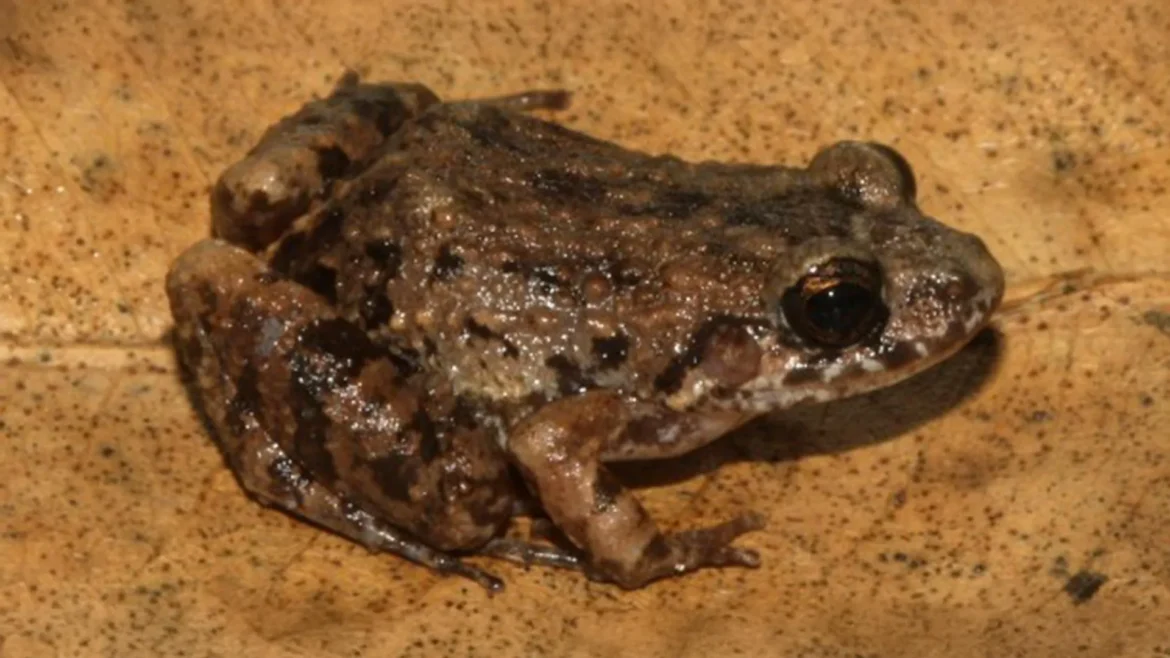
Deep within the seasonally inundated forests of the western Amazon, a quiet revolution in biological discovery is unfolding. Researchers have officially identified and described a previously unknown species of frog, Adenomera varcena, a discovery that underscores the profound and often overlooked complexity of the world’s largest tropical rainforest. This identification is not merely an addition to a taxonomic catalog; it represents a significant shift in our understanding of how amphibians adapt to the volatile, water-driven ecosystems of the Upper Juruá River region in Acre, Brazil.
The identification of Adenomera varcena serves as a stark reminder that the Amazonian landscape, long perceived as a monolith of biodiversity, is actually a patchwork of hyper-specific ecological niches. By utilizing a sophisticated multi-disciplinary approach—integrating genomic sequencing, bioacoustic analysis, and comparative morphology—a team of scientists has successfully disentangled this species from its close relatives, proving that the secrets of the Amazon are often hidden in plain sight.
A Chronology of Discovery and Taxonomic Rigor
The path to identifying Adenomera varcena began with extensive field expeditions in the remote western reaches of the Amazon. Between 2017 and 2022, research teams from the Center for Research on Biodiversity Dynamics and Climate Change (CBioClima) conducted surveys in forest fragments surrounding the Moa and Crôa rivers, near the municipality of Cruzeiro do Sul.
Historically, this region has been under-sampled compared to the central or eastern Amazon. The research team, led by Célio F. B. Haddad of São Paulo State University (UNESP) and Thiago R. Carvalho of the Federal University of Minas Gerais (UFMG), focused on the unique floodplain forests, or varzeas, which are subjected to dramatic water-level fluctuations throughout the year.
The process of formally describing the species followed a rigorous scientific protocol:
- Initial Collection (2018–2020): Researchers gathered specimens from the Upper Juruá River basin, noting morphological variations that stood out from common Adenomera lineages.
- Acoustic Recording: Recognizing that mating calls are often the primary barrier to interbreeding, the team spent weeks in the field capturing the specific, slow-rhythm vocalizations of the frogs.
- Genetic Sequencing: Using molecular phylogenetics, the team compared the mitochondrial DNA of the new specimens against a database of known Adenomera species. The results confirmed a distinct evolutionary lineage.
- Formal Publication (2024): The peer-reviewed findings were published in the journal Ichthyology & Herpetology, cementing Adenomera varcena as a recognized species in the scientific record.
Decoding the Cryptic: Morphology and Sound
The term "cryptic diversity" refers to the phenomenon where two or more species are morphologically similar—often appearing identical to the untrained eye—but are genetically and behaviorally distinct. Adenomera varcena is a textbook example of this biological phenomenon.
For years, these frogs were misidentified as common species within the Adenomera genus, which typically inhabit dryland (terra firme) environments. However, closer inspection revealed a key physical marker: the total absence of a dark, pigmented spot on the underside of the forearm, a trait common in its closest relatives.
More importantly, the frog’s acoustic signature provided the definitive evidence for its status. In the humid, cacophonous environment of a tropical forest, the mating call is the "key" to the lock of reproductive isolation. Adenomera varcena produces a rhythmic, short, and slow-paced call that acts as a behavioral barrier, ensuring that the species remains genetically distinct from neighbors that might otherwise appear nearly indistinguishable. This acoustic divergence is not merely a biological curiosity; it is the mechanism that maintains the species’ integrity in a dense, competitive environment.
Ecological Implications and the Habitat Puzzle
The discovery of Adenomera varcena carries significant weight in the study of amphibian ecology. The genus Adenomera has long been associated with non-flooded, dryland forests. The discovery of this species in seasonal floodplains suggests a previously unknown evolutionary adaptation.
This environment—where the forest floor may be submerged for several months at a time—presents extreme challenges for terrestrial amphibians. The frog’s ability to thrive in such a dynamic, shifting ecosystem suggests unique reproductive strategies, possibly involving specialized nesting in flood-resistant areas. Understanding how Adenomera varcena manages to time its life cycle with the pulse of the Amazon’s flood cycle is now a priority for the research team.
The Looming Shadow of Climate Change
While the identification of a new species is a cause for celebration, it also introduces a sense of urgency. The floodplain forests of the western Amazon are increasingly vulnerable to shifting precipitation patterns. Climate change is expected to alter the intensity and duration of the annual floods in the Juruá River region.
"Since we do not yet know in detail the species’ ecological requirements and its natural history, it is difficult to predict the impacts of climate change," notes Professor Thiago R. Carvalho. "The species has a clear preference for this specific ecosystem, and any alteration in flood dynamics may directly influence its reproductive success. We are essentially racing against a clock; we are discovering species that are already standing on the precipice of environmental volatility."
The concern is that the species may suffer from "silent extinction." Because its habitat is so specialized, even minor shifts in water tables or forest humidity could lead to local extirpation before scientists have the chance to fully map the population’s range or demographic health.
The Taxonomic Crisis in Brazil
The work of the CBioClima team highlights a broader systemic issue in conservation biology: the "taxonomic impediment." As habitat destruction through deforestation, agriculture, and urban expansion accelerates, the rate at which species are being lost is significantly higher than the rate at which they are being described.
Professor Célio F. B. Haddad emphasizes that formal description is the primary tool for legal protection. "Currently, the pace of ecosystem destruction outpaces the capacity of taxonomic studies to keep up," Haddad explains. "Species that haven’t been described are essentially invisible to environmental policy. They are omitted from threatened fauna lists and remain legally vulnerable because, on paper, they do not exist."
This administrative invisibility means that habitats housing undocumented species are often cleared for development without any environmental impact assessment. By identifying Adenomera varcena, the researchers have effectively provided a legal shield. Now that the frog is documented, it can be included in regional conservation strategies, environmental monitoring, and extinction risk assessments conducted by agencies like the IUCN (International Union for Conservation of Nature) and Brazil’s own environmental ministries.
A Multidisciplinary Conservation Strategy
The project’s success was made possible by a collaborative network of institutions, including the University of São Paulo (USP), the Federal University of Uberlândia (UFU), and the University of Ecuador (PUCE-Quito). This collaborative model is increasingly essential for modern taxonomy, which requires expensive laboratory infrastructure, specialized bioacoustic equipment, and international logistical support.
Looking ahead, the team intends to use the data gathered during the Adenomera varcena project to lobby for greater protections for the Upper Juruá River region. The region serves as a microcosm for the broader Amazonian crisis: high biodiversity, high levels of endemism, and high susceptibility to anthropogenic change.
The discovery of Adenomera varcena is a powerful testament to the value of fundamental scientific research. It reminds the global community that the Amazon is not merely a carbon sink or a logging resource, but a complex, living library. Every time a new species is identified, a page of that library is saved from being lost to history. The challenge remains to ensure that the rest of the book is read and understood before it is closed by the irreversible pressures of a changing climate and human encroachment. For now, in the quiet, flood-prone corners of the western Amazon, a small, distinctively calling frog remains a vital piece of the puzzle, representing the millions of other secrets the rainforest has yet to reveal.
