
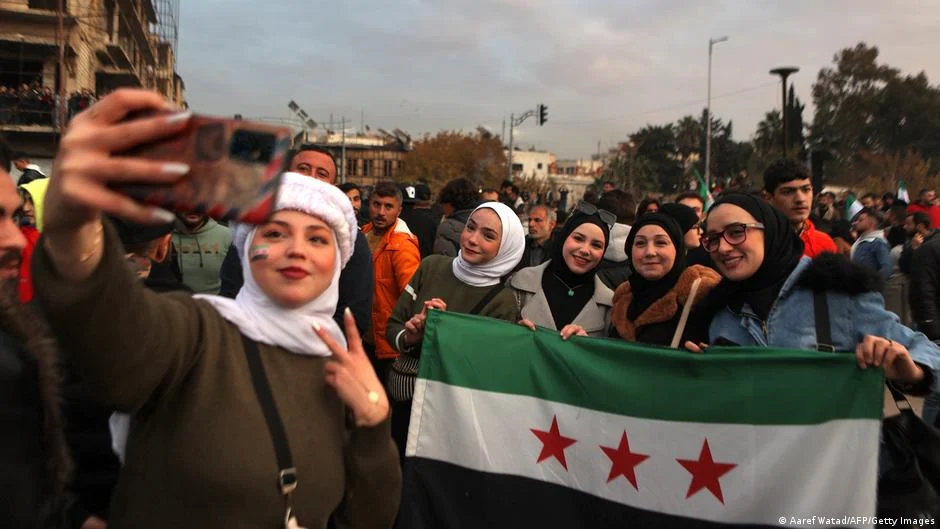
The landscape of higher education in Syria has undergone a seismic shift this October, as the Ministry of Education unveiled a series of restrictive admissions policies for two newly established institutions: the National University of Defense Sciences and the Syrian University for Security Sciences. These mandates, which effectively bar women from a vast majority of technical and security-related courses, have ignited a fierce debate regarding the trajectory of gender equality in a country attempting to redefine its social and political foundations following decades of conflict.
For students like 23-year-old Lin Najab, a high-achieving mechatronics engineering student in Damascus, the policy change is more than a bureaucratic adjustment; it is a direct impediment to her professional trajectory. Having long planned to pursue a master’s degree in her chosen field, Najab now finds her academic future uncertain. "My original plan was to pursue a master’s degree," she explained, noting that the new directives have forced her to reconsider her entire career path, including the daunting prospect of relocating to another province—a move fraught with both logistical and social challenges in a conservative society.
A Chronology of Policy Shifts
The establishment of these new colleges in mid-2026 was initially presented by the government as a modernization effort for state infrastructure. However, the subsequent release of specific admission criteria in October 2026 revealed a clear exclusionary framework.

- Mid-2026: The Syrian government announces the creation of the National University of Defense Sciences and the Syrian University for Security Sciences, citing a need to consolidate specialized training for state security and defense personnel.
- Early October 2026: The Ministry of Education publishes the official admission bylaws, which explicitly designate the majority of technical, security, and defense-related courses as "male-only" enrollment zones.
- Mid-October 2026: Human Rights Watch and other advocacy groups issue formal statements condemning the policies as discriminatory and a violation of international human rights standards.
- Late October 2026: Reports emerge detailing similar gender-based segregation in secondary and technical education, including nursing, midwifery, and specialized industrial training programs in Aleppo, Rmeilan, and Homs.
The Scope of Exclusion
The restrictions are not limited to defense colleges. Across the country, a broader trend of gender-based tracking has emerged. While the defense and security sectors have moved to exclude women, other specialized vocational institutes have moved to exclude men. For instance, nursing schools, midwifery programs, and kindergarten teacher training have become strictly female-only environments.
Conversely, technical training in oil and gas management—critical industries for Syria’s economic recovery—has been heavily restricted or closed to women in provinces such as Deir el-Zour and Baniyas. This "siloing" of the workforce by gender is viewed by sociologists as a deliberate attempt to enforce traditional social roles under the guise of technical specialization.
Data and Representation: A Stagnant Trend
The current legislative and academic environment reflects a broader struggle for female representation in Syria. Despite a stated government target of 20% female representation in the national parliament, current data indicates that women hold only 22 of the 210 available seats, hovering just above 10%. This persistent gap between stated goals and actual outcomes serves as the backdrop for the current controversy over education.
Advocates point to the 2024 study by the Middle East Institute (MEI) as evidence that the exclusion of women from security roles is a structural, not merely practical, issue. The study highlighted that while many countries in the Middle East have integrated women into their security apparatuses, these roles are frequently confined to administrative or symbolic functions. By formally banning women from even the educational phase of these sectors, the Syrian state is effectively codifying a glass ceiling that has historically been more informal.

Official Rationales and Public Divide
The government’s position, largely defended by conservative proponents, relies on the argument of "physical capability." Qamar al-Yaser, a resident of rural Damascus, articulated this perspective, suggesting that the harsh environments of security and defense work are fundamentally unsuited for women. "These sectors require a strong physique, they need big efforts, travel, and organization in the field," she argued, maintaining that such conditions are incompatible with the traditional domestic role of women.
However, critics argue that these justifications are merely a veil for deeper ideological control. The recent alteration of school textbooks for the 2026-2027 academic year provides compelling evidence for this view. Observers noted that images of women with uncovered hair were systematically replaced with images of women wearing headscarves. Furthermore, depictions of men dancing and artistic representations of the human form were censored or removed. These revisions, occurring simultaneously with the university bans, suggest a centralized push toward a more socially conservative, or even fundamentalist, curriculum.
The Legal and Human Rights Perspective
International observers have been swift to criticize the move. Human Rights Watch (HRW) stated that these discriminatory rules violate Syria’s international legal obligations. By barring women from institutions that facilitate government employment, the state is effectively creating a two-tiered citizenship where women are systematically blocked from professional advancement in sectors that provide the highest levels of job security and influence.
Dina Arakji, a researcher specializing in Middle Eastern security, argues that such policies have a "chilling effect" on society. "Allowing women to join the military and security institutions is not just about the numbers," Arakji noted. "It is about shifting the societal perspective on what is considered a ‘traditional’ role. When the state reinforces the idea that these roles are for men only, it emboldens families and social circles to further restrict the agency of young women."

The "Streisand Effect" and Future Implications
The backlash to these policies has created an unexpected dilemma for the transitional authorities. As Nadra Bunni, an analyst at the Middle East Institute Switzerland, noted, the public outcry over the education bans has forced a conversation that the government may not have anticipated. The critical question, according to Bunni, is whether this backlash will lead to a reversal of the policies, or if it will signal to the citizenry that the government is indifferent to public opinion.
This dynamic is being referred to by some observers as a potential "Streisand effect," where the government’s attempt to restrict access and control narratives has instead resulted in heightened public scrutiny of their broader governing agenda.
Broader Societal Impact
The long-term implications for the Syrian labor market are severe. By restricting access to specialized training in oil, gas, and technical engineering, the government risks creating a skills shortage. When a significant portion of the population—namely women—is barred from entering high-demand, high-skill sectors, the national economy suffers.
For students like Najab, the immediate consequence is the loss of the meritocratic ideal. "Gender doesn’t define ability," she said. "It should be about high academic standards, the ones I’m trying to meet. In Syria, we need better education and good graduates, so let’s see where the best people are, regardless of gender."

As the 2026-2027 academic year progresses, the tension between the state’s drive for institutional control and the aspirations of its educated youth continues to mount. The policy of gender-segregated education is not merely an isolated academic rule change; it serves as a litmus test for the type of society that will emerge from Syria’s long-standing transition. Whether that future will be one of inclusive professional opportunity or one defined by restrictive gender hierarchies remains the central point of contention for a generation of Syrians seeking to shape their country’s path.
