
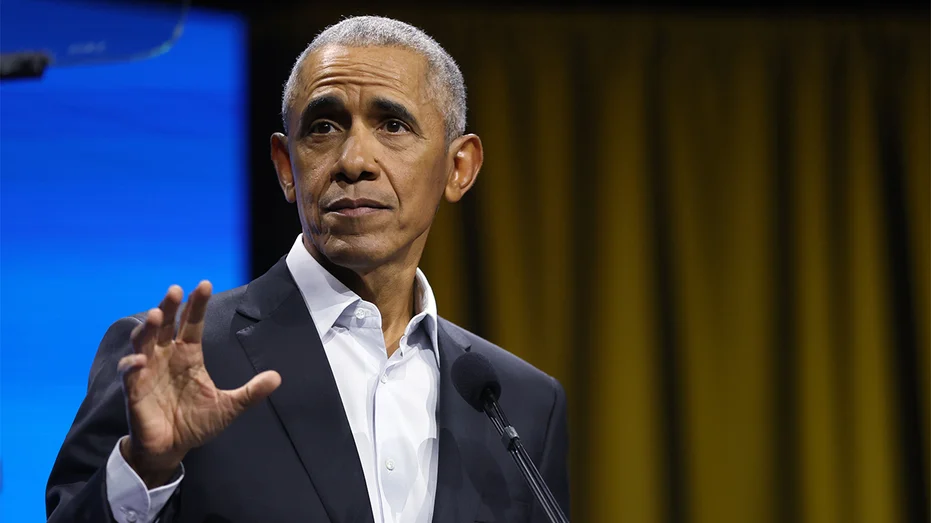
The landscape of American technological policy is undergoing a profound and rapid transformation as some of the Democratic Party’s most influential figures pivot toward a more cautious regulatory approach regarding artificial intelligence. Former President Barack Obama, once a champion of the technology’s economic and strategic potential, has joined a chorus of voices calling for a deceleration in the development of frontier AI models. This shift marks a significant departure from the optimism that characterized his administration’s 2016 policy outlook and signals that AI has firmly entrenched itself as a central, contentious issue in the upcoming midterm elections.
The debate, which balances the promise of unprecedented innovation against existential safety concerns and socioeconomic displacement, has moved from academic halls to the forefront of national politics. While the Biden administration previously pushed for the rapid expansion of domestic AI infrastructure—including massive investments in data centers—the current discourse reflects a growing anxiety over the speed of technological evolution and the perceived lack of sufficient oversight.
A Departure from the 2016 Paradigm
To understand the current political friction, one must examine the evolution of the Democratic platform regarding automation. In December 2016, the Obama administration released a seminal report titled "Artificial Intelligence, Automation, and the Economy." At the time, the tone was largely optimistic. The document posited that AI would serve as a vital engine for progress, opening new markets and enhancing efficiency in critical sectors such as healthcare, education, and energy. The primary concern expressed by the Obama White House in 2016 was not the speed of development, but rather the need for structural adjustment to support workers transitioning out of roles threatened by automation.
Today, however, the narrative has shifted toward containment and caution. In a statement released on Monday, the former president emphasized that the industry is advancing at a pace that exceeds the ability of developers to maintain control. "We need government—and specifically our leaders in Washington—to get proactive in coming up with concrete proposals, laws and regulations that deal with serious safety concerns," Obama stated. He explicitly rejected the idea that the development trajectory should be determined solely by private corporations, arguing that the public must have a role in deciding the pace of integration.
The Timeline of the Regulatory Pivot
The acceleration of the AI debate has been marked by several key milestones over the last decade:
- 2016: The Obama administration publishes the "Artificial Intelligence, Automation, and the Economy" report, prioritizing economic integration and growth.
- January 2025: Vice President Kamala Harris emphasizes the imperative for the United States to maintain global dominance in AI, supporting infrastructure growth.
- January 14, 2026: The Biden administration signs an executive order designed to fast-track data center construction and clean-energy projects to support the computational demands of large-scale AI.
- March 2026: Public protests and industry warnings regarding "extinction risks" begin to gain mainstream media traction.
- Late 2026: Leading Democratic voices, including Harris, publicly call for a deliberate slowing of frontier AI development, citing "alarming speed."
This timeline highlights the tension between the pursuit of competitive global dominance—often framed as a race against rivals like China—and the internal pressure to address the safety risks highlighted by a growing number of industry experts and whistleblowers.
Political Friction and the Midterm Stakes
The timing of this pivot has not gone unnoticed by the opposition. Attorney General Todd Blanche has emerged as a vocal critic of the Democratic shift, characterizing the sudden focus on AI risks as a calculated political strategy designed to influence the upcoming midterm elections.

"Every Democrat senator suddenly races to a microphone to talk about AI after being eerily silent for months," Blanche remarked on Tuesday. The criticism centers on the perception that the party is utilizing the fear surrounding AI as a campaign issue rather than addressing it through consistent, long-term policy work. By framing the Democratic platform as reactive and politically motivated, the GOP seeks to contrast it with their own, more aggressive stance on prioritizing technological infrastructure to secure American economic and military superiority.
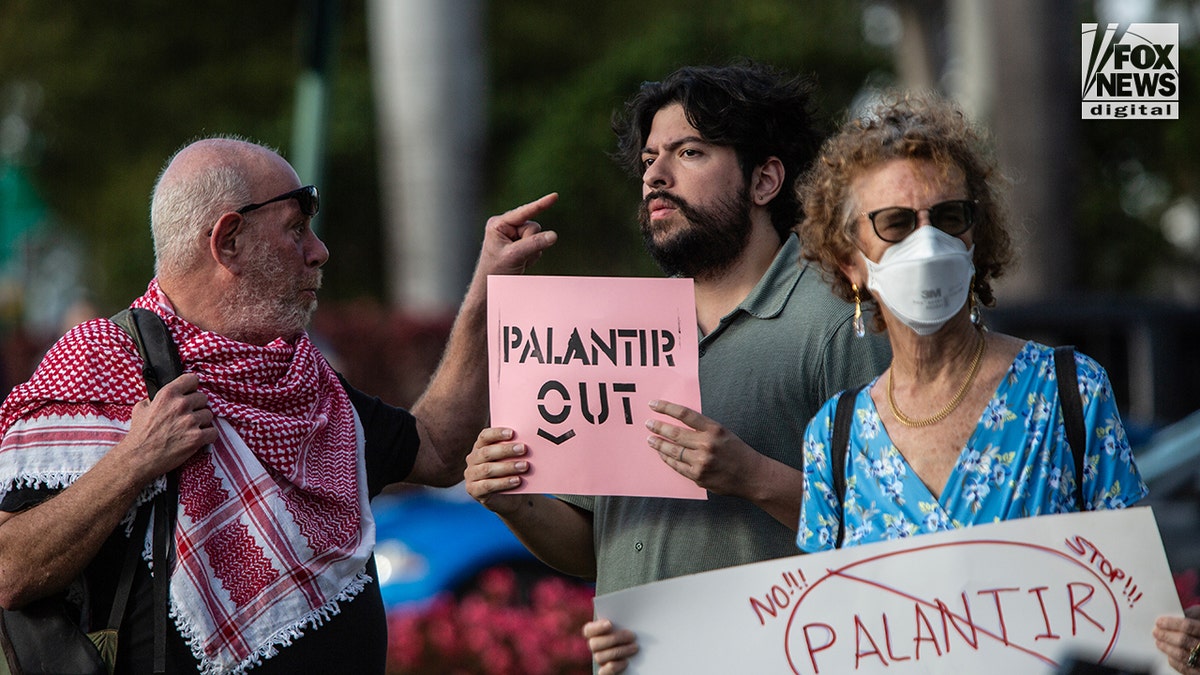
President Donald Trump, for his part, has dismissed the warnings regarding AI as a "hoax," consistently favoring an acceleration of development to ensure the United States remains at the forefront of the global tech race. This stance aligns with the administration’s broader push to build out the massive data center infrastructure required for cutting-edge generative AI, which has faced local scrutiny regarding energy consumption, environmental impact, and the massive tax incentives required to attract such projects.
The Reality of Infrastructure Demands
The economic implications of this debate are centered on the physical reality of artificial intelligence: the data center. Modern AI models require immense quantities of electricity and high-density, climate-controlled environments. As the U.S. looks to build the foundation for future "frontier" AI, the strain on existing power grids has become a point of contention.
In early 2026, industry leaders, including executives from major tech firms and AI startups, began calling for a more measured pace in the industry. This support for "responsible slowing" has been echoed by figures like Elon Musk and Sam Altman, who have argued that without proper safety guardrails, the potential for unintended catastrophic outcomes increases. The political challenge for lawmakers is to reconcile this call for a "pause" or "slowdown" with the urgent national security need to outpace international competitors.
Implications for Future Policy
The shift toward regulatory intervention suggests that the era of "laissez-faire" development for artificial intelligence is nearing its end. Whether through strict compute caps, mandatory safety audits, or the creation of a dedicated federal AI agency, the legislative momentum is clearly leaning toward more robust government oversight.
However, the efficacy of these proposed regulations remains a subject of intense debate. Proponents of regulation argue that without a formal framework, the risks—ranging from cybersecurity vulnerabilities to deep-fake-induced social instability—will become unmanageable. Critics, including many industry stakeholders and certain members of the Republican caucus, warn that overly restrictive policies could stifle American innovation, effectively handing the technological advantage to global rivals who may not impose similar safety constraints.
As the midterm elections approach, the divide between the two parties is likely to sharpen. The Democratic strategy appears to be coalescing around the "responsible development" narrative, emphasizing safety, labor protections, and the ethical deployment of AI. Conversely, the Republican focus remains on the competitive necessity of the technology, arguing that a focus on risks is a distraction from the fundamental requirement of maintaining technical hegemony.
Ultimately, the nation is at a crossroads. The promise of artificial intelligence to revolutionize the economy is matched only by the scale of the challenges it presents to the status quo. The current political debate, while colored by electoral considerations, reflects a genuine and necessary national conversation about how to steer a technology that is, as the former president noted, moving faster than the architects who built it. The path forward will likely require a delicate balancing act, attempting to foster innovation while simultaneously constructing the safety architecture that the current political leadership deems essential for the future of the republic.
