
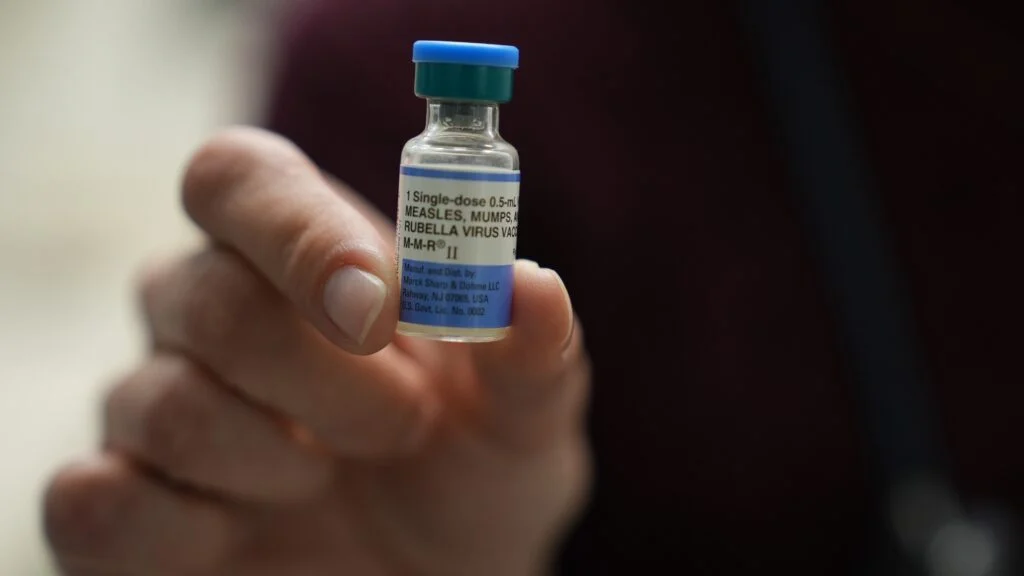
Pennsylvania has officially confirmed a fourth death linked to a surging measles outbreak, marking a somber milestone in what has become the deadliest year for the virus in the United States in over three decades. The latest victim, an 18-year-old resident of Mifflin County, succumbed to acute disseminated encephalomyelitis (ADEM), a rare but devastating neurological complication that can arise following a measles infection. This tragedy underscores the mounting public health crisis as the state struggles to contain a pathogen that had been declared eliminated in the U.S. nearly a quarter-century ago.
The death of the teenager follows a series of fatalities that have shaken the Commonwealth. Only days prior, a 40-year-old woman from Jefferson County died due to complications arising from the virus. These adult casualties join the heartbreaking losses recorded last month in Lancaster County, where two infants—who were medically ineligible for the vaccine due to their age—died after contracting the disease. According to the Pennsylvania Department of Health, none of the four individuals had received the MMR (measles, mumps, and rubella) vaccine, a preventive measure that has historically served as the primary bulwark against the virus.
A Rapidly Escalating Public Health Emergency
The current situation in Pennsylvania is symptomatic of a broader national decline in vaccination coverage. With nearly 700 confirmed cases across 38 counties, the state is grappling with its worst measles outbreak in 35 years. The velocity of the spread is alarming; health officials report that approximately 100 new cases have been identified within the last seven days alone.
This resurgence is not confined to a single demographic or region. While the early phase of the outbreak saw clusters in specific communities, the virus has now permeated a wide geographic swath of the state, challenging the resources of local health departments and primary care providers. Epidemiologists warn that without a significant increase in community immunity—achieved only through widespread vaccination—the window to break the chain of transmission is rapidly closing.
Chronology of a Resurgence
The path to this crisis has been gradual but persistent, characterized by a steady erosion of the immunization threshold required for herd immunity. The U.S. officially achieved measles elimination in 2000, a status defined by the absence of continuous disease transmission for 12 months. Maintaining this status required vaccination rates consistently above 95 percent.
However, recent data from the Centers for Disease Control and Prevention (CDC) indicate that national rates have dipped below this critical safety margin. The following timeline outlines the progression of the current crisis:
- 2000: The United States is declared measles-free by the World Health Organization.
- 2023–2024: National vaccination rates show a marked decline, driven by a combination of pandemic-related service disruptions and a rise in vaccine hesitancy.
- August 2026: Two infants in Lancaster County, Pennsylvania, die from measles complications, signaling the start of a major state-level outbreak.
- September 2026 (Early): Reported cases in Pennsylvania climb toward the 500-mark as the virus spreads across rural and suburban counties.
- September 12, 2026: A 40-year-old Jefferson County resident dies, marking the third measles-associated death in the state.
- September 15, 2026: An 18-year-old Mifflin County resident becomes the fourth fatality, further highlighting the severity of the outbreak.
Official Responses and Public Health Strategies
In response to the rising death toll, Dr. Debra Bogen, Pennsylvania’s Secretary of Health, has issued urgent appeals for public cooperation. "My thoughts are with the two families who lost loved ones to this highly contagious virus, as Pennsylvania faces the worst measles outbreak in more than three decades," Dr. Bogen stated during a press briefing. She emphasized that the state’s primary mission remains the containment of the virus through the promotion of the MMR vaccine.
"We remain committed to working with our partners across Pennsylvania to stem this outbreak and prevent more deaths," she added. "That means ensuring people have the facts about measles and access to the MMR vaccine, which kept measles outbreaks at bay for decades."
The state health department is currently coordinating with local health systems to bolster vaccination clinics, specifically targeting areas with lower uptake rates. However, officials acknowledge that the challenge is not merely one of access, but of public trust. The dissemination of medical misinformation has complicated outreach efforts, forcing public health workers to combat not only the biological virus but a "social contagion" of skepticism regarding vaccine safety.
The National Landscape and Policy Implications
The situation in Pennsylvania is a microcosm of a national health emergency. The United States has recorded seven measles-associated deaths in the last two years—a figure that exceeds the total number of deaths from the virus over the previous three decades combined. This statistical anomaly has prompted international health authorities to take notice.
In November, representatives from international health bodies, including the Pan American Health Organization, are scheduled to meet to assess the status of measles in the U.S. and Mexico. There is a significant possibility that the United States will be stripped of its "measles-free" designation, a move that would represent a historic regression in American public health policy.
The underlying causes for this decline are multifaceted. Public health experts point to three primary drivers:
- Administrative Barriers: Legislative changes that have made it easier for parents to obtain non-medical, personal-belief exemptions for school vaccinations.
- Resource Allocation: Recent federal funding cuts to local immunization programs have limited the ability of health departments to conduct proactive outreach in underserved or rural communities.
- Communication Failures: The amplification of anti-vaccine rhetoric by high-profile political figures, including current administration health officials like Robert F. Kennedy Jr., has introduced unprecedented levels of doubt regarding the established safety profiles of childhood vaccines.
Analysis: The Cost of Complacency
The current measles outbreak serves as a stark reminder of the fragile nature of public health achievements. Measles is one of the most contagious diseases known to science; an infected individual can spread the virus to up to 90 percent of those nearby who lack immunity. The fact that four people have died in a single state in a matter of weeks is a testament to the dangers of under-vaccination.
From a clinical perspective, the deaths underscore that measles is not merely a "childhood illness" to be weathered. While the mortality rate is generally low, the risk of severe complications—such as pneumonia, encephalitis (brain inflammation), and the rare but fatal ADEM—increases significantly in individuals who have not built up immune defenses. The recent deaths of an 18-year-old and a 40-year-old demonstrate that the virus remains a threat to all age groups.
As the U.S. approaches the end of 2026, the trajectory of the outbreak remains uncertain. Public health advocates argue that the only viable path forward is a robust, evidence-based campaign to re-establish the importance of the MMR vaccine. Without a concerted effort to reverse the trend of declining vaccination rates, the prospect of measles becoming endemic once again in the United States is no longer a distant theoretical threat, but an immediate, life-altering reality.
The coming months will be critical. If vaccination rates do not improve, the medical community fears that the current death toll will only be the beginning of a larger, more protracted struggle against a disease that was once considered a relic of the past. For families in Pennsylvania and beyond, the message from public health authorities is clear: the most effective defense against a preventable tragedy is the vaccine itself.
