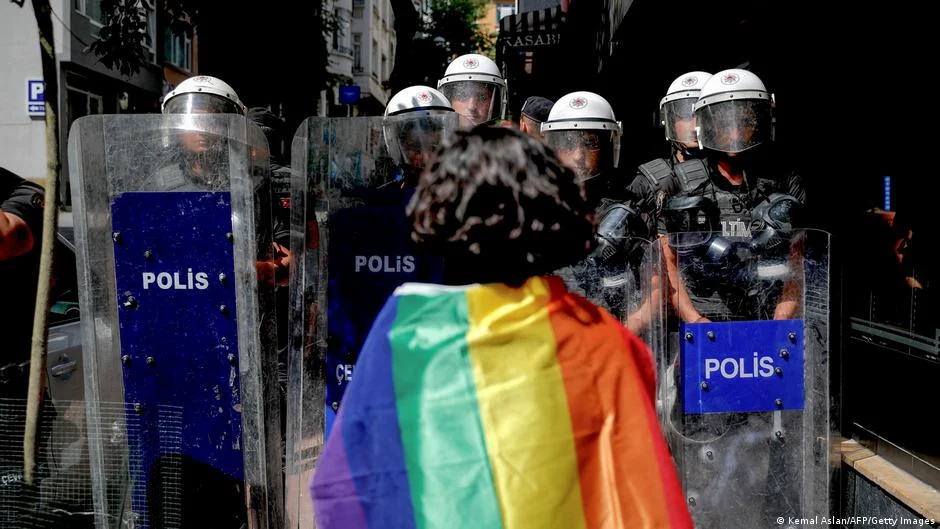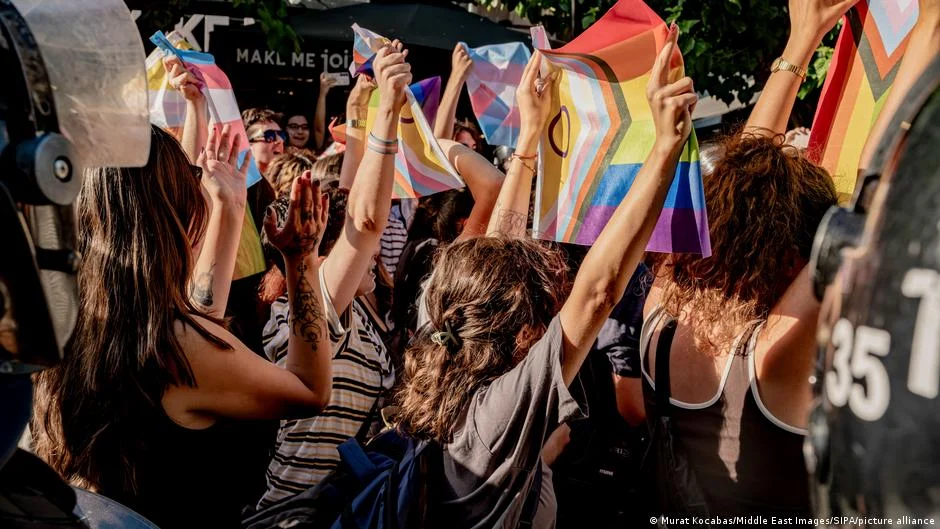
The recent wave of police raids targeting gay bars and private residences in Turkey, resulting in hundreds of arrests, serves as a stark manifestation of a growing global trend in which authoritarian-leaning governments increasingly utilize anti-LGBTQ+ rhetoric to consolidate political power and marginalize minority communities. These operations, framed by state officials as essential measures to protect "traditional family values," are symptomatic of a broader, systemic assault on gender and sexual rights that spans from the Balkans to the United States and beyond.
A Chronology of Intensifying Repression
The recent crackdown in Turkey is not an isolated event but rather the latest escalation in a multi-year effort by the Turkish state to restrict the visibility and organization of LGBTQ+ individuals. Historically, the Turkish government has maintained a tenuous relationship with Pride marches and queer advocacy groups, oscillating between periods of relative tolerance and sudden, harsh suppression.
In recent years, the trajectory has shifted decisively toward state-sanctioned hostility. In 2022 and 2023, authorities frequently banned Pride events in major cities under the guise of "public order" and "protecting moral values." By 2025 and 2026, the rhetoric transitioned from administrative hurdles to criminalization. The most recent weekend raids targeted not only commercial social spaces but also the offices of prominent advocacy organizations, such as Kaos GL. This shift suggests a move away from containment toward the active dismantling of civil society networks that support LGBTQ+ citizens.
The Weaponization of Traditional Values
The justification provided by Turkish Justice Minister Akin Gurlek—that the state is acting under its constitutional duty to "protect families and children"—is a tactic increasingly employed by governments facing internal socio-economic pressures. By framing LGBTQ+ existence as an "illegal activity" or a "criminal organization" that threatens the youth, the state creates an "us versus them" binary.
Dr. Koen Slootmaeckers, an expert in international politics at City St George’s, University of London, notes that this discourse is far from accidental. "It is not uncommon; we have seen it before, but the intensity is reaching new heights," Slootmaeckers observed. According to his analysis, the strategy relies on conflating LGBTQ+ identity with criminality or social instability. By doing so, leaders can divert public attention from failing economic policies, corruption allegations, or geopolitical crises. When political power becomes threatened, targeting a vulnerable minority serves as an effective, if cynical, distraction.
Global Data and the Rainbow Map
The erosion of rights is quantifiable. The annual Rainbow Map, compiled by the International Lesbian, Gay, Bisexual, Trans and Intersex Association (ILGA-Europe), provides a sobering overview of this regression. Turkey currently ranks 47th out of 49 countries surveyed, reflecting a legal environment that offers almost no protection for LGBTQ+ citizens and, in many cases, actively facilitates discrimination.
However, the concern among human rights observers extends beyond the bottom-ranked nations. The decline of countries previously considered more moderate is equally alarming. Serbia, once viewed as a state undergoing a gradual liberal transition, has slipped to 29th place. This regression is not merely statistical; it is experiential. A 2024 survey by the European Union Agency for Fundamental Rights (FRA) highlighted that 80% of LGBTQ+ individuals in the region avoid holding hands with their partners in public for fear of violence. This "chilling effect" demonstrates how state-sponsored rhetoric filters down to the societal level, fostering a climate of fear that limits the daily autonomy of citizens.
The Influence of International Narratives
The rollback of gender and sexual rights is not contained within individual borders; it is a transnational phenomenon. A 2026 report by the civil rights nonprofit Civicus highlights that the global narrative regarding LGBTQ+ rights has been heavily influenced by shifts in policy and rhetoric in the United States. Under the administration of President Donald Trump, the emboldening of socially conservative policies has provided a blueprint for other nations to justify their own regressions.
From the criminalization of same-sex relationships in Burkina Faso and Trinidad and Tobago to the legislative restrictions in Eastern Europe, the pattern is remarkably consistent. Oppressive regimes often look to these international precedents to validate their own crackdowns, suggesting that the international community’s commitment to human rights is no longer a deterrent, but a target for subversion.
The Balkan Conflict: Guardrails and Reality
The situation in the Balkans presents a unique case study in how international aspirations—specifically the desire for European Union accession—interact with domestic authoritarianism. Most Balkan nations are in various stages of attempting to join the EU, a process that theoretically requires adherence to strict human rights standards.
"In the Balkans, most countries still want to join the EU, so there are some kind of guardrails on how far they can go," Dr. Slootmaeckers explains. However, these guardrails are often tested. In 2022, Serbian President Aleksandar Vucic attempted to cancel the pan-European EuroPride event in Belgrade, citing tensions surrounding Kosovo. This event proved that even when states are bound by international agreements, they will prioritize domestic political maneuvering—and the sacrifice of minority rights—if they believe it will shield them from broader political fallout.
Societal Implications and the Dismantling of Civil Society
The long-term implications of these crackdowns are severe. When civil society organizations like Kaos GL are raided and their staff arrested, the infrastructure for legal aid, mental health support, and community building is destroyed. This creates a vacuum where LGBTQ+ individuals are left without resources, further isolating them from society.
Critics argue that this exclusion is precisely the goal. By stripping these communities of their advocacy arms, the state ensures that the narrative remains exclusively in the hands of the ruling power. The "politics of fear" described by activists is intended to normalize the exclusion of any group that challenges the state’s vision of a "traditional" nation.
Fact-Based Analysis of the Path Forward
The current landscape suggests a deepening of the divide between nations that uphold universal human rights and those that categorize them as "Western" impositions or "expensive frivolities." For the international community, the challenge lies in how to maintain pressure on regimes that are increasingly adept at using "family values" as a shield against international criticism.
The normalization of transphobia and homophobia, coupled with the erosion of democratic institutions, indicates that the current period of instability is unlikely to resolve in the short term. As the 2026 Civicus report concludes, women and LGBTQ+ individuals are facing the most coordinated attack in decades. The success of these movements in resisting such pressures will depend heavily on the resilience of local grassroots organizations and the willingness of international bodies to treat LGBTQ+ rights not as a peripheral issue, but as a core component of the global democratic order.
As for Turkey and other nations following similar trajectories, the immediate future remains uncertain. For those living in the crosshairs of state policy, the threat of further raids and legal harassment remains a daily reality, underscoring the urgent need for a more robust and unified international response to the global retreat of human rights.