
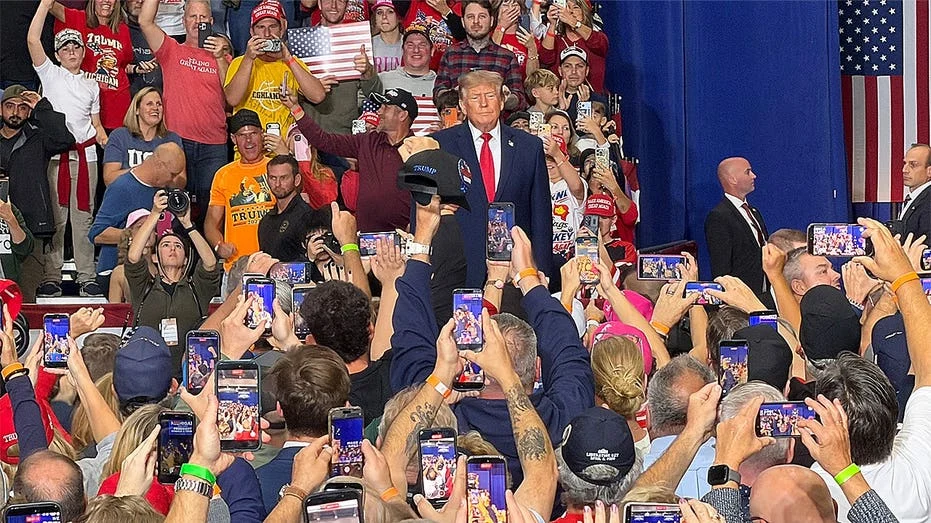
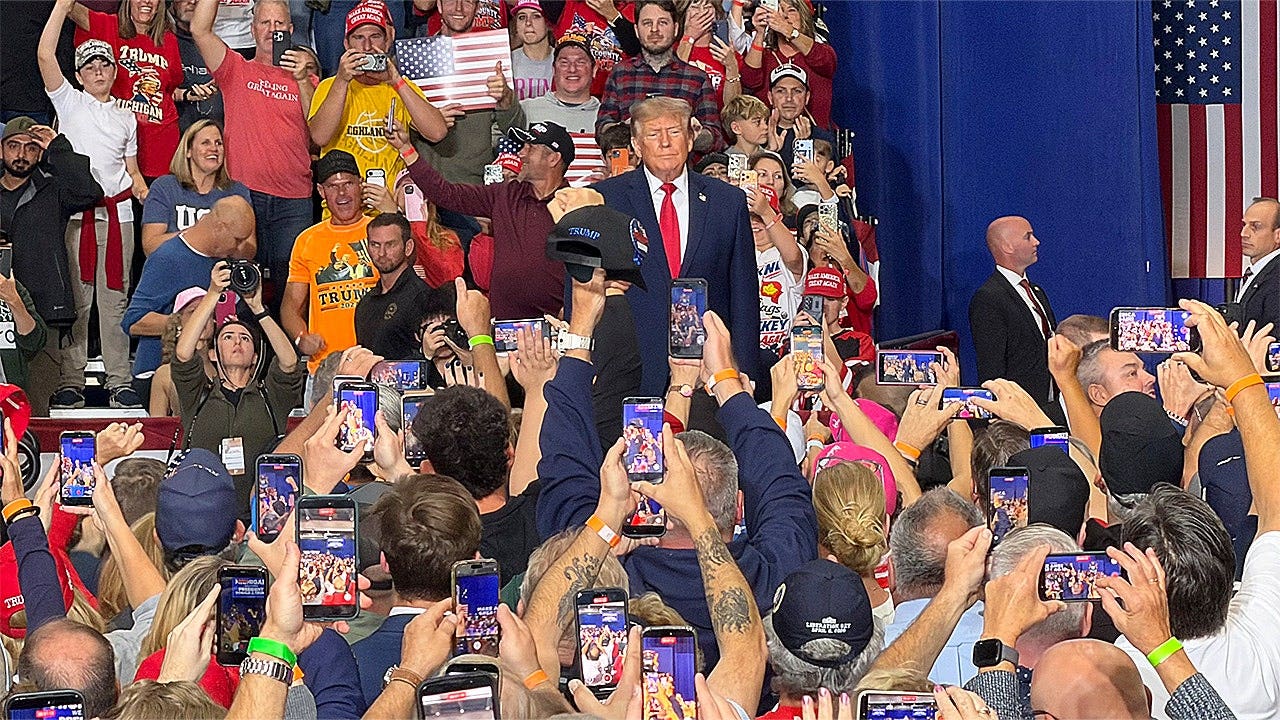
PORT HURON, Michigan — In the industrial heartland of Michigan, where the shores of Lake Huron serve as a backdrop for the state’s fluctuating political fortunes, the intensity of the MAGA movement remains a defining feature of the 2026 midterm landscape. As the Republican Party navigates the complex challenges of maintaining legislative majorities in Washington, a persistent segment of the electorate in Port Huron continues to offer unwavering support to President Donald Trump. This alignment persists despite a national political climate marked by inflationary pressures, the complications of a military conflict in Iran, and shifting demographic sentiments.
For the nearly 20 voters interviewed in the queue for a recent rally in this small city, the prevailing economic anxieties—ranging from the cost of gasoline and diesel to the rising price of essential groceries—have not translated into a withdrawal of support for the former president. Instead, these voters characterize their commitment as a long-term investment in a specific vision for American governance, framing current hardships as temporary sacrifices for national stability.
The Economic Landscape and Voter Sentiment
The American economy in late 2026 faces a unique set of pressures. Persistent inflation, which has seen the cost of living rise significantly over the past 24 months, has become a primary focal point for voters across the political spectrum. In Port Huron, the consensus among Trump supporters is that the current administration’s policies are necessary, albeit painful, measures to rectify what they perceive as the structural failures of previous years.
Carol Mocan, a resident of Warren, Michigan, articulated a perspective common among those waiting in line. "He has our best interests at heart," Mocan stated. "He loves our country and he is doing the right things for us to get back on track." This sentiment of "short-term pain for long-term gain," as phrased by Marysville resident Linda Taggart, suggests that the base remains insulated from the traditional political volatility that typically punishes an incumbent party during midterm cycles.
For many attendees, the concept of "fixing" the economy involves a period of friction. Bob Kemp, a local resident, noted that in any repair process, the situation often deteriorates before showing improvement. This narrative of a "correction" period allows supporters to reconcile their personal financial struggles with their continued political loyalty.
Geopolitical Engagements: The Iran Conflict
A central pillar of the current political discourse is the ongoing war with Iran. The administration’s hawkish stance toward Tehran has been a major campaign talking point, and for the MAGA faithful, the conflict serves as a litmus test for presidential resolve. President Trump’s rhetoric at the rally—specifically his insistence that Iran must never possess a nuclear weapon—was met with high approval.
The strategic rationale provided by the administration has resonated deeply with the base. Ken Gunnels, a visitor from Clio, Michigan, reflected on the existential stakes: "I believe Iran was a genuine threat to this country. If a nuclear bomb went off in one of our major cities, I don’t think any of us would have any idea the repercussions… that this country would suffer from that." This perception of external threats appears to override domestic economic concerns for many voters, who view the president’s interventionist policies as a mandatory defense of American sovereignty.
The Shift in Party Affiliation
The interviews conducted in Port Huron also highlighted a significant migration of voters away from the Democratic Party. Steve Scouten, a resident of Burtchville, explicitly noted his history as a former Democrat, stating, "Never again. They’re too far to the left." This sentiment is mirrored by others who characterize the modern Democratic platform as "socialist."
This ideological divide is not merely based on policy but on a perceived cultural chasm. Voters frequently cited the protection of traditional values, the enforcement of strict immigration policies, and the exclusion of transgender individuals from women’s sports as essential priorities. The discourse at the rally suggested that for these voters, the Republican Party is viewed as the final bastion for protecting individual rights, religious values—often summarized by references to the Ten Commandments—and the rule of law.
Data and Political Implications
The political climate heading into the midterms is undeniably challenging for the GOP. Historical trends indicate that the party in power in the White House almost always loses seats during midterm elections. This trend is exacerbated by current polling data. A recent Fox News national poll placed President Trump’s overall approval rating at 36%, a record low for his tenure in that survey.
However, the aggregate data masks the intensity of the support within his core base. Among those who identify as MAGA voters, approval ratings remain at approximately 95%. This dichotomy presents a paradox for political analysts: while the broader electorate may be expressing dissatisfaction with the current trajectory of the country, the president’s core constituency remains highly energized and largely immune to the traditional political erosion that often follows a period of inflation and international conflict.

Priority Issues: Immigration and Tax Policy
Beyond the war in Iran and the economy, immigration policy remains a cornerstone of the MAGA platform. For many in Port Huron, the border is not just a policy issue but a symbolic front line. Steve Scouten and his associates emphasized that the enforcement of immigration laws, particularly the expansion of Immigration and Customs Enforcement (ICE) operations, is a key metric by which they measure the success of the administration.
Furthermore, the president’s economic proposals—specifically the elimination of taxes on tips, overtime pay, and Social Security benefits—have gained significant traction. For working-class families in Michigan, these proposals are seen as direct relief, regardless of broader macroeconomic arguments about their feasibility or long-term impact on the national deficit.
Analysis: The Stability of the MAGA Coalition
The consistency of the MAGA base in Michigan suggests that the Republican Party has successfully shifted its appeal toward a populist model that prioritizes cultural identity and national security over traditional neoliberal economic orthodoxy. By framing the current economic downturn as a temporary consequence of necessary global engagements and internal "housecleaning," the administration has maintained a firewall around its most loyal supporters.
The implications for the midterm elections are significant. If the enthusiasm observed in Port Huron can be replicated in other battleground districts, the GOP may find itself defying historical norms. However, the reliance on a highly mobilized, intensely loyal base also presents a risk: it may leave the party vulnerable if it fails to capture the support of independent voters who are more sensitive to the immediate effects of inflation and the cost of living.
Conclusion: A View from the Ground
As the rally concluded and the crowd dispersed, the prevailing mood was one of defiance and optimism. The attendees of the Port Huron event do not see themselves as being in a state of political crisis; rather, they view themselves as participants in a necessary struggle to preserve a specific vision of America.
For the Democratic opposition, the challenge remains clear: to convince a skeptical, inflation-weary public that their alternative vision for the country is superior. For the Republican Party, the task is to ensure that the intensity of their base is enough to overcome the broader headwinds facing an incumbent administration. As the final weeks before the election approach, the Michigan electorate stands as a microcosm of a nation deeply divided, yet remarkably settled in its ideological loyalties. The result in November will not only determine the balance of power in Washington but will also serve as a referendum on the strategies and priorities that have defined the current administration’s tenure.
