
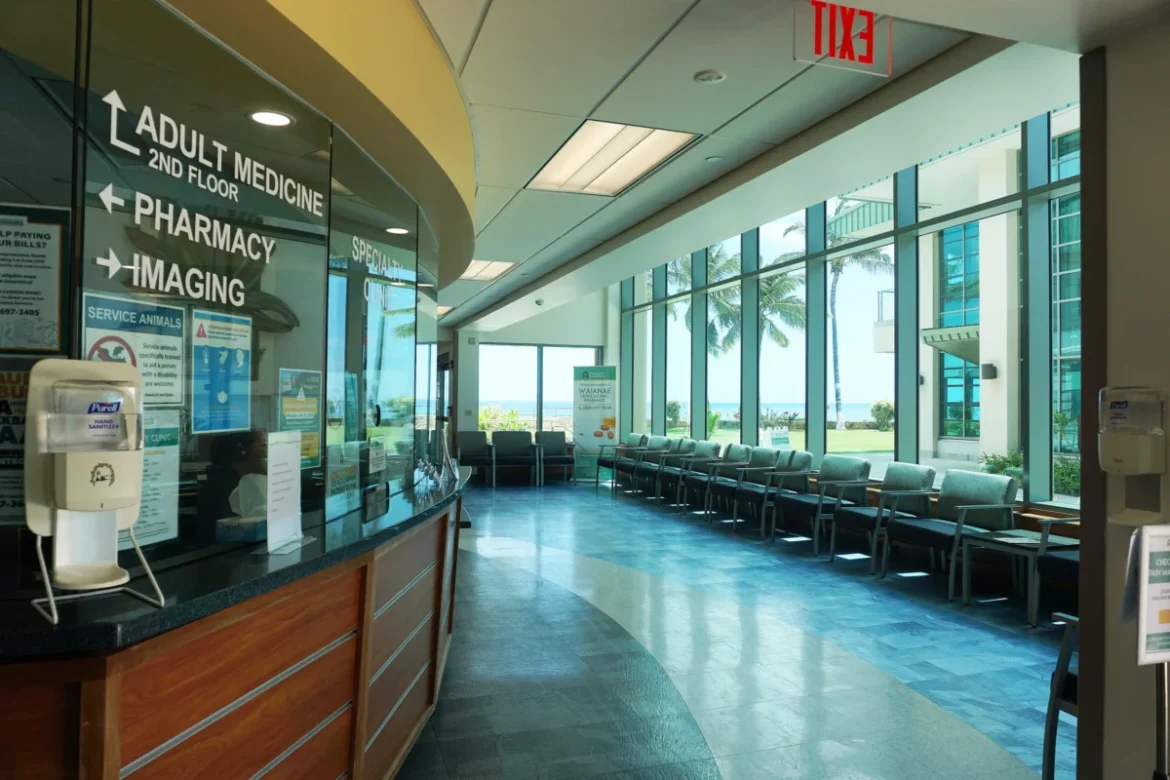
WAIANAE, Hawaiʻi — Native Hawaiians are confronting a profound healthcare crisis following their exclusion from exemptions to strict new Medicaid work requirements, an omission that clinicians, advocates, and lawmakers warn will severely disrupt access to care for an already vulnerable and marginalized population.
Under President Donald Trump’s signature One Big Beautiful Bill Act, set to take effect in January, most adult Medicaid beneficiaries across 43 states and the District of Columbia will be required to work, attend school, participate in a training program, or perform at least 80 hours of volunteer work per month. While the federal legislation carves out specific exemptions for Native Americans and Alaska Natives, it entirely omits Native Hawaiians, leaving roughly 390,000 Medicaid enrollees in Hawaiʻi—15 percent of whom identify as Native Hawaiian—to navigate the stringent new mandates.
Healthcare providers and community leaders say the policy change threatens to dismantle years of carefully built trust, deepen systemic health disparities, and create insurmountable hurdles for individuals already grappling with a crushing cost of living, severe geographic isolation, and intergenerational socioeconomic trauma.
The Exclusion Rooted in Federal Recognition
The debate over the Medicaid exemption largely centers on a complex legal and historical distinction: federal recognition. Unlike Native American tribes and Alaska Native villages, which maintain a formal government-to-government relationship with the United States as distinct sovereign entities recognized under federal law, Native Hawaiians do not hold the same status.
Meredith Nichols, Hawaiʻi’s Medicaid administrator, noted that state officials reached out to the Centers for Medicare & Medicaid Services (CMS) to request that Native Hawaiians be included in the Indigenous exemptions. However, the federal agency did not respond to the specific request. Nichols stated that state inquiries regarding similar policy inclusions consistently stall over the issue of federal recognition.
In June, Hawaiʻi health administrators traveled to Washington, D.C., to meet with Trump administration officials. Several officials unsuccessfully pushed to incorporate a Native Hawaiian exemption into the legislation, an amendment that would ultimately require congressional approval.
White House spokesperson Kush Desai did not respond to multiple requests for comment. Meanwhile, CMS spokesperson Timothy Foster confirmed in a statement that the agency met with 16 health centers in Hawaiʻi to discuss broader Medicaid policy shifts, but declined to answer questions regarding the Native Hawaiian exemption.
U.S. Rep. Jill Tokuda (D-Hawaiʻi) views the omission not as a mere administrative oversight, but as part of a broader, systemic pattern. She characterizes the exclusion as a targeted effort to undermine the Indigenous status of Native Hawaiians, pointing to a convergence of recent federal policy shifts and legal challenges.
"These are not one-offs," Tokuda said. "This is a targeted, coordinated attack to undercut the Indigenous status of Native Hawaiians."
Historical Context and Chronology of Indigenous Policy
To fully understand the gravity of the Medicaid work requirement exclusion, healthcare advocates emphasize the need to examine the unique historical trajectory of Native Hawaiians. Following the U.S.-backed illegal overthrow of the Hawaiian Kingdom in 1893, the social, economic, and political structures of Native Hawaiians were fundamentally disrupted.

Recognizing the displacement of Indigenous people from their ancestral lands, Congress passed the Hawaiian Homes Commission Act in 1921. This legislation placed more than 200,000 acres of land into a trust designated for Hawaiian homesteads, with the explicit goal of rehabilitating the Native Hawaiian population by returning them to the land.
Despite this century-old trust, the road to land security has been plagued by bureaucratic delays and structural backlogs. Nearly 30,000 Native Hawaiians remain on waiting lists for homestead land, while the 2020 Census recorded more than 34,000 individuals living on established Hawaiian homelands. Many of these homestead communities are geographically isolated and situated far from Honolulu, the urban core where the vast majority of specialized medical services, hospitals, and healthcare infrastructure are concentrated.
Federal policy toward Native Hawaiian healthcare has historically lagged behind that of American Indians and Alaska Natives. While the Indian Health Service (IHS) and tribal facilities receive full federal reimbursement for healthcare services provided to Native Americans and Alaska Natives, Native Hawaiian healthcare systems receive standard, baseline reimbursement rates equivalent to the rest of Hawaiʻi.
A brief policy shift occurred under the 2021 American Rescue Plan Act, signed by former President Joe Biden, which provided two years of full federal reimbursement to qualifying Native Hawaiian health centers for Medicaid services. However, all qualifying centers were strictly located within the state of Hawaiʻi—leaving out a significant and growing portion of the diaspora. According to recent U.S. Census Bureau data, nearly 700,000 Native Hawaiians now reside in the United States, with approximately 47 percent living in Hawaiʻi and the remainder distributed primarily across the contiguous U.S. states of California, Washington, Nevada, Texas, and Oregon.
Immediate Ramifications for Healthcare Access
The impending work requirements threaten to severely restrict access to essential medical care, particularly for rural and outer-island residents.
Kapono Chong-Hanssen, medical director of Hoʻōla Lāhui, the Native Hawaiian healthcare system on Kauaʻi that also serves the isolated island of Niʻihau—whose 170 full-time residents are predominantly Native Hawaiian—warns that many patients will inevitably fall out of compliance and lose coverage.
"It just flies in the face of everything that we’re trying to do," Chong-Hanssen explained, noting that the administrative burden of proving work, training, or volunteer hours will alienate patients. Because of historical disenfranchisement and deep-seated institutional mistrust, Native Hawaiian patients are statistically more likely to disengage entirely from complex healthcare systems when faced with rigid bureaucratic barriers.
Beyond primary and preventative care, Medicaid in Hawaiʻi covers crucial logistical support, including medical transportation expenses for patients forced to travel between islands for specialized treatment. A routine round-trip flight between Kauaʻi and Oʻahu can cost hundreds of dollars, an insurmountable expense for low-income families without insurance coverage.
On the west side of Oʻahu, the Waianae Coast Comprehensive Health Center serves the island’s largest concentration of Native Hawaiians, operating near four distinct Hawaiian homestead communities. Rich Bettini, the center’s CEO, along with Vice President Leinaala Kanana, have spent recent months preparing patients for the transition by setting up digital "pods" across the campus. These stations connect patients via phone with staff members who assist them in navigating state Medicaid applications and data submissions.
Despite these localized efforts, administrative compliance is only part of the challenge. Bettini points out that Hawaiʻi’s exceptionally high cost of living, coupled with depressed local wages, has driven a severe housing affordability crisis. Native Hawaiians and Pacific Islanders comprise roughly 60 percent of Oʻahu’s homeless population.
The health center estimates that approximately 2,800 of its patients will be directly impacted by the new federal work mandates, half of whom are Native Hawaiian.
"The annual cost of living for a family of four on Oʻahu is $100,000-plus, while the average income of our patients is under $30,000 a year," Bettini said. "That is an enormous gap."

Compounding Socioeconomic and Health Disparities
The policy change arrives at a time when Native Hawaiians already experience persistent health disparities compared to the white population and other demographic groups. Data compiled by KFF and health research organizations show that Native Hawaiians face higher risks during pregnancy, elevated infant mortality rates, and disproportionately higher rates of being uninsured. Furthermore, Native Hawaiians maintain the second-lowest life expectancy among all ethnic groups in Hawaiʻi, trailing only other Pacific Islander populations.
These health outcomes are deeply intertwined with socioeconomic inequities, including a lack of reliable transportation, limited local employment opportunities on outer coasts and islands, and a severe scarcity of affordable childcare options. For single parents or primary caregivers working low-wage, inflexible service jobs, meeting a mandatory 80-hour monthly threshold while managing chronic health conditions can quickly become impossible, resulting in Medicaid disenrollment and deferred care.
A Broader Legal and Political Landscape
While health advocates recognize the Medicaid work requirements as a severe blow, some leaders argue that the community’s resources must be strategically prioritized amidst an unprecedented wave of policy challenges.
Keolamaikalani Dean, CEO of the King Lunalilo Trust, which provides supportive services for Native Hawaiian elders, described the Medicaid policy as harmful but noted that community advocates are currently forced to triage multiple simultaneous threats.
"It’s horrible as a policy, but there are bigger fish to fry," Dean said, suggesting that advocacy efforts might yield greater long-term dividends if directed toward securing permanent full Medicaid reimbursement parity for Native Hawaiian health systems—similar to the statutory funding model enjoyed by the Indian Health Service.
Native Hawaiian organizations are currently operating under intense pressure as they defend existing federal funding streams against proposed cuts. In the Trump administration’s proposed 2027 federal budget, planned reductions to Native Hawaiian programs explicitly cite the group’s lack of formal federal recognition as a "tribal nation" as justification for the rollbacks.
These budgetary challenges coincide with a wave of federal lawsuits filed by conservative legal groups. These actions target long-standing foundational pillars of Native Hawaiian support, including constitutional challenges to blood-quantum requirements for Hawaiian homestead lands, legal attacks on Native Hawaiian educational institutions like the Kamehameha Schools, and lawsuits seeking to dismantle university scholarships specifically designated for Native Hawaiians pursuing healthcare careers.
Papa Ola Lōkahi, a statewide nonprofit umbrella organization overseeing Native Hawaiian health systems, declined to comment for this report as it navigates ongoing litigation involving healthcare career scholarships.
As January approaches, healthcare providers along the Waianae coast and across the islands are bracing for an administrative shock wave. Without congressional intervention or administrative adjustments from federal health agencies, thousands of low-income Native Hawaiians face the imminent prospect of losing their healthcare coverage—deepening a historical cycle of health inequity that local clinicians have spent decades trying to reverse.
