
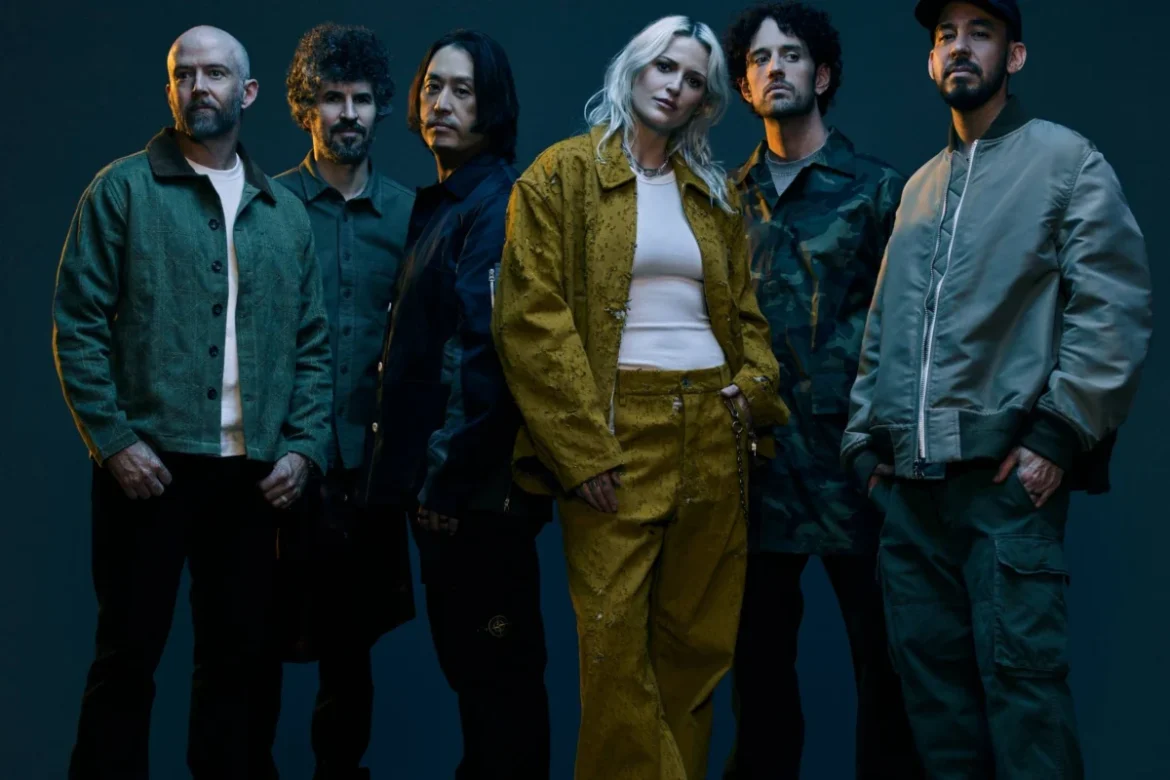
The resurgence of Linkin Park stands as one of the most compelling and commercially triumphant narratives in modern rock history. Following an indefinite hiatus triggered by the devastating 2017 death of iconic frontman Chester Bennington, the pioneering alternative rock band has achieved a masterclass in legacy preservation and artistic reinvention. Their triumphant 2024 comeback album, From Zero, yielded three No. 1 singles on Billboard’s Mainstream Rock Airplay chart and earned the band two prestigious Grammy Award nominations. Now, the group is pulling back the curtain on the vulnerable, complex, and emotionally charged process of rebuilding their musical empire with a new feature-length documentary film, Linkin Park: Unshatter.
Directed by band co-founder, DJ, and creative director Joe Hahn, the documentary is slated for a limited theatrical release on September 30, arriving just five days after the debut of its companion concert album, Unshatter (Live in Sao Paulo). Subtitled The Hardest Part of Ending Is Starting Again, the nearly two-hour film serves as both a visceral concert experience and an intimate, fly-on-the-wall chronicle of the band’s clandestine return to the studio. By pairing the explosive energy of their record-breaking stadium performances in Brazil with raw archival footage and candid discussions among the surviving members, Linkin Park aims to provide transparency to a fanbase that has weathered immense grief alongside them.
The Chronology of a Crisis and Healing
To understand the magnitude of Linkin Park’s return, one must examine the timeline of fracture and resilience that preceded it. Formed in Agoura Hills, California, in 1996—initially under the monikers Xero and Hybrid Theory—the band achieved stratospheric global success at the turn of the millennium. Their 2000 debut album, Hybrid Theory, became a defining artistic statement of the nu-metal era, eventually earning Diamond certification from the RIAA and paving the way for a career spanning more than 100 million records sold worldwide, five No. 1 albums on the Billboard 200, and 19 Top 5 singles on the Mainstream Rock chart.
That relentless momentum ground to a sudden and tragic halt on July 20, 2017, when Chester Bennington died by suicide at the age of 41. The date carried an additional layer of heartbreak for the broader rock community, coinciding with the birthday of Soundgarden frontman Chris Cornell, a close friend and mentor who had also died by suicide two months prior. The surviving members—Mike Shinoda, Joe Hahn, Brad Delson, Dave “Phoenix” Farrell, and Rob Bourdon—withdrew from the public eye, entering an indefinite hiatus that left the future of one of the 21st century’s most successful rock acts entirely uncertain.
For years, the prospect of a reunion seemed not only distant, but emotionally fraught. As Hahn recalls, the band members had been caught in a relentless cycle of touring and recording since their early twenties, abruptly transitioning from youthful success to middle-aged introspection under the shadow of profound loss. The initial steps toward reconciliation were tentative, rooted initially in private conversations rather than commercial ambitions. When Shinoda, Farrell, and Hahn finally began communicating regularly, the dialogue was underpinned by a shared sense of empathy, mutual respect, and the weight of their unique shared history.
Behind the Lens: Directing Unshatter
Initially, the concept for the project was modest: capture a straightforward live recording of Linkin Park’s November 15, 2024, concert in Sao Paulo, Brazil—a date that coincided precisely with the global release of From Zero. However, Hahn quickly realized that a standard concert film would fail to capture the profound psychological and collaborative effort required to resurrect the band.
Opting to direct the project himself rather than bringing in an outside filmmaker, Hahn sought to avoid manufactured drama or sensationalism—pitfalls common in rock documentaries, such as the tense band therapy sessions popularized by Metallica’s 2004 film Some Kind of Monster. Instead, Hahn leaned into radical honesty, allowing the natural chronology of healing and creation to dictate the narrative.
The documentary prominently features documentary footage captured by longtime videographer Mark Fiore, a childhood friend of bassist Dave Farrell who has documented the band since its earliest underground days. Hahn describes Fiore as an indispensable, almost ghostly presence whose continuous rolling camera work allowed the band to drop their guards entirely. Consequently, Unshatter documents pivotal historical milestones: the initial closed-door creative discussions among Shinoda, Farrell, and Hahn; the recruitment of new vocalist Emily Armstrong and drummer Colin Brittain; and the writing sessions that ultimately birthed From Zero.

The film also captures high-profile endorsements from peers within the rock community, including a memorable scene featuring Blink-182’s Mark Hoppus visiting the studio and expressing visible awe upon hearing the band’s new material in development.
Personnel Changes and Transparent Choices
The formation of the modern iteration of Linkin Park has not been without significant lineup evolution, details of which are addressed thoughtfully within the documentary. The film acknowledges the departure of founding drummer Rob Bourdon, who chose not to participate in the reunion, and details guitarist Brad Delson’s decision to contribute extensively to the writing and recording of From Zero in the studio while ultimately opting out of the physical demands of international touring.
Most notably, the introduction of co-vocalist Emily Armstrong and drummer Colin Brittain is framed not as an attempt to replace Bennington, but as the birth of a new chapter for an established collective. The film includes subtle historical nods to the band’s past—including brief, reverent footage of Bennington during the end credits—while maintaining an unyielding focus on the present and the future.
Broader Impact and Industry Implications
The commercial success of From Zero and the rollout of Unshatter carry significant implications for the contemporary rock landscape. In an era where legacy rock acts frequently rely on nostalgia tours with revolving-door lineups or tribute-style performances, Linkin Park has successfully charted a middle path: honoring a irreplaceable foundational legacy while generating genuinely fresh, chart-topping material that resonates with both legacy fans and a younger demographic.
Furthermore, the band’s handling of mental health advocacy, grief, and public vulnerability has set a new standard for how major musical enterprises navigate internal trauma. By transforming what could have been a permanent dissolution into an ongoing dialogue about survival and artistic renewal, Linkin Park has reframed the narrative surrounding how rock bands can age and evolve in the public eye.
Looking Ahead: The Next Chapter
As Linkin Park: Unshatter rolls out to theaters worldwide, the band is already looking toward the horizon. Despite the whirlwind success surrounding their 2024 and 2025 promotional cycles, the members have resisted the urge to rest on their laurels.
According to Hahn, the creative engine that produced From Zero remains active. Following a brief, mandatory period of rest, the band has already returned to writing new music. While no official release timetable has been established, Hahn emphasizes a renewed sense of urgency and creative synergy within the camp, ensuring that fans will not face another prolonged, multi-year radio silence.
For Linkin Park, the journey from the depths of silence back to the pinnacle of the charts has proven that the hardest part of ending is, indeed, starting again—and that the music, above all, remains the driving force keeping them together.

