
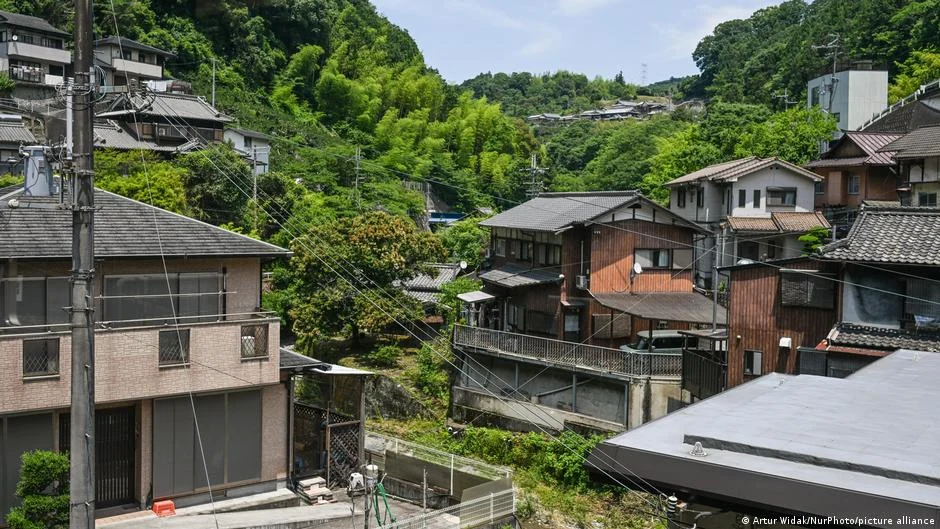
In a quiet southern suburb of Yokohama, a two-story house stands as a stark monument to a pervasive, yet often unspoken, challenge facing Japan’s real estate market. Its metal shutters are permanently drawn, obscuring downstairs windows, while upstairs, the sliding paper window covers hang in tatters. The garden, once meticulously manicured, is now a wild tangle of overgrowth. From a purely structural perspective, this property could be revived into a perfectly habitable home with a moderate investment of effort and capital. Yet, it remains stubbornly vacant, a testament to a deeply ingrained cultural aversion. This house, like countless others across the archipelago, is a "jiko bukken," a stigmatized property, shunned for at least five years, its emptiness echoing a past tragedy.
A "jiko bukken" is a property where an "incident" has occurred, rendering it culturally undesirable to most Japanese buyers and renters. These incidents can range from the profound to the poignant: a suicide, a fatal fire, or what is euphemistically termed a "lonely death" (kodokushi) – the death of an elderly person living alone, often remaining undiscovered for days or weeks. Murders, though rarer, also invariably brand a property with this indelible mark. The societal unease surrounding such events transforms a mere dwelling into a financial liability and a cultural pariah, creating a unique niche market for those brave or pragmatic enough to navigate its complexities.
The Cultural Roots of Aversion: Purity, Death, and Misfortune
The profound reluctance of Japanese people to inhabit "jiko bukken" is deeply rooted in the nation’s spiritual and cultural fabric, particularly the intertwined beliefs of Shintoism and Buddhism. In Shinto, Japan’s indigenous religion, concepts of purity (hare) and impurity (kegare) are central. Death, especially violent or unnatural death, is traditionally considered a source of profound kegare. This impurity is believed to linger, tainting the space and potentially bringing misfortune, illness, or spiritual unrest to new occupants. While modern Japan is largely secular, these ancient beliefs exert a powerful, often subconscious, influence on daily life and decision-making, including significant choices like housing.
Kazutoshi Kodama, president of Kachimode Co., a specialist property firm established in December 2022, articulates this cultural perspective succinctly: "Japanese people sometimes regard death as impure. Death equates to impurity and misfortune. Consequently, they believe that coming into close contact with death will bring them misfortune. And that means quite a lot of Japanese are reluctant to go near such properties, let alone rent or buy one." This sentiment is not merely superstition; it’s a deeply held cultural conviction that impacts everything from personal comfort to social standing.
Buddhist traditions, while emphasizing cycles of rebirth and veneration of ancestors, also contribute to the apprehension. A person who dies violently or alone may be perceived as having an unresolved spirit, or a "yurei," which could haunt the premises. While purification rituals and memorial services are common for natural deaths, the nature of incidents in a "jiko bukken" often suggests a more troubled end, making potential residents wary of disturbing lingering spirits.
The Economic Strain and a Niche Business Opportunity
For property owners, a "jiko bukken" represents a significant financial drain. The market value plummets, and rental income becomes elusive. In a major city with high rental demand, Kodama estimates an owner might have to slash rent by 30%. In less competitive areas, this reduction can be as much as 50%. The problem isn’t just reduced income; it’s prolonged vacancy. "And there are some properties which, although advertising for tenants, remain vacant as long as 500 days," Kodama notes. "I am aware of a property that remained vacant for over 1,000 days. In short, they simply become vacant properties and the concept of a price reduction just does not apply." The cost of maintaining an empty property, coupled with lost revenue, can be crippling for owners, often trapping them in an unenviable situation.
This persistent market inefficiency, however, presents a unique business opportunity for entrepreneurs like Kodama. Kachimode Co. specializes in "assisting owners or properties with a history of incidents with the management of their rental properties." Their core service is an innovative blend of forensic investigation and psychological reassurance: the "ghost investigation." Far from being dismissed as pseudoscientific, demand for this service is soaring, reflecting the widespread anxiety surrounding stigmatized properties.
Kachimode’s "Ghost Investigation": A Blend of Science and Serenity
Kachimode’s "ghost investigation" is a meticulously documented overnight stay designed to scientifically debunk, or at least contextualize, any perceived paranormal activity. From 10 p.m. until 6 a.m. the following morning, Kachimode’s team occupies the rooms where incidents occurred, deploying a battery of high-tech equipment. This includes continuous video and audio recording, electromagnetic wave surveys, precise measurements of room temperature, humidity, and atmospheric pressure, thermography to detect unusual heat signatures, and comprehensive noise surveys.
The stated aim is clear: "to verify that rooms where people have died have been thoroughly refurbished and are now clean, and to prove that poltergeist phenomena, the presence of ghosts and other mysterious occurrences do not occur." The service is unique in Japan, with Kodama collaborating with a university professor specializing in monitoring supernatural phenomena, lending an academic veneer to the process. An overnight investigation costs 88,000 yen (approximately €474 or $542), culminating in a comprehensive report provided to the owner. This report serves as crucial documentation for real estate agents, offering a quasi-scientific assurance to prospective tenants or buyers that the property is free of lingering "bad spirits."
Kodama admits that his equipment has, on occasion, picked up anomalies: video cameras inexplicably stopping recording, microphones malfunctioning. However, he emphasizes: "That said, in the vast majority of cases, what was perceived as an ‘impurity’ could not be replicated and was dismissed as a one-off occurrence." Yet, he acknowledges the persistent cases: "However, there are also properties where various mysterious phenomena occur consistently over a long period of more than a year." These are the truly challenging properties, those most difficult to cleanse, either scientifically or culturally.
Legal Obligations and Public Databases
Exacerbating the problem for owners is the legal requirement for real estate agents to disclose a property’s history to interested parties. This transparency, while safeguarding consumers, effectively blacklists "jiko bukken." Japanese real estate law, under the Civil Code and the Real Estate Brokerage Act, mandates disclosure of "material facts" that could influence a buyer’s or renter’s decision. This includes deaths on the property, particularly those resulting from unnatural causes such as suicide, murder, or accident. While the duration of this disclosure obligation can sometimes be debated (e.g., whether it applies indefinitely or only for a certain number of subsequent occupants), for serious incidents, the stigma and the disclosure often remain perpetual.
Further compounding the issue is the existence of websites like Oshimaland. This publicly accessible online database meticulously maps the location of stigmatized properties across Japan, often detailing the reason for their blacklisting. Most listings indicate accidental fires, lonely deaths, or suicides, but some carry a more ominous note: "Obtain details from real estate agent," hinting at more gruesome or notorious incidents. This digital transparency ensures that the past of a "jiko bukken" is difficult to conceal, cementing its status in the public consciousness.
The Broader "Akiya" Crisis: Stigmatized Properties in a Nation of Empty Homes
The issue of "jiko bukken" is intricately linked to a much larger and more pressing national crisis: Japan’s burgeoning number of "akiya," or empty homes. According to a government survey in late 2024, there were an astonishing 9 million vacant homes across Japan, accounting for 13.8% of all accommodation in the country. This figure is projected to grow further, with some estimates suggesting that nearly one-third of all homes could be vacant by 2040.
The "akiya" phenomenon is a multifaceted problem driven by Japan’s rapidly aging population, declining birthrate, and significant internal migration from rural areas to major urban centers. Post-war housing booms led to an oversupply of homes, particularly in the countryside. As younger generations move to cities for work and education, ancestral homes are often left empty. Inheritance laws can complicate matters, with multiple siblings often disagreeing on the disposal of a property, or the property itself being deemed not worth the cost of demolition or renovation. Property taxes on vacant land are higher than on land with a structure, disincentivizing demolition and perpetuating the existence of decaying homes.
Within this broader "akiya" crisis, "jiko bukken" represent a particularly challenging subset. While many "akiya" are simply old and dilapidated, those with a history of death carry an additional, often insurmountable, cultural burden. Joey Stockerman, a co-founder of AkiyaMart, a platform promoting the sale of vacant properties, particularly in rural Japan, confirms this: "There are a lot of empty properties across Japan and even, surprisingly, in city centers. There are lots of reasons – families disagreeing over how to dispose of a property or they just don’t think it is worth selling – but there are a lot of stigmatized properties as well." He adds, "Japanese people are often very superstitious. Renting places where someone has died can be really hard, and they do not want properties that are close to graveyards either as there are strong feelings here about death."
Innovative Solutions and Enduring Challenges
Addressing the "jiko bukken" problem requires more than just financial incentives; it demands a nuanced understanding of cultural sensibilities. AkiyaMart, recognizing this, has recently introduced a unique offering: a package that includes a Shinto priest from a nearby temple to perform a service to "cleanse" a property of any "bad spirits." This initiative taps directly into the traditional Shinto practice of o-harai (purification rituals) and jichin-sai (groundbreaking ceremonies), which are performed to purify spaces and seek blessings from deities. "It’s a bit quirky, but there has been interest," Stockerman notes, highlighting the potential for culturally sensitive solutions.
However, even with innovative approaches, the challenges remain substantial. Stockerman recounts the experience of a business acquaintance who saw a "jiko bukken" in a Tokyo suburb as a prime investment opportunity. He snapped it up for less than $5,000, roughly 5% of its true market value, hoping to capitalize on the deep discount. Yet, the investment did not pan out as anticipated. The real estate agent, bound by legal and ethical obligations, refused to gloss over its history. The property remained empty for two years before a tenant was finally found, underscoring that even significant price reductions and strategic acquisitions cannot always overcome deeply ingrained cultural resistance and disclosure requirements.
Implications and the Future Outlook
The persistence of "jiko bukken" and the broader "akiya" crisis carries significant economic and social implications for Japan. Economically, these properties represent stagnant assets, contributing to blight in neighborhoods, reducing potential property tax revenues for local governments, and creating inefficiencies in the housing market. Socially, they exacerbate issues of urban decay in some areas and hinder efforts to revitalize depopulated rural regions. The "lonely deaths" that often precede a "jiko bukken" designation are themselves a stark indicator of an aging society struggling with social isolation.
Despite the complexities, figures like Kazutoshi Kodama remain optimistic about the future of specialized services in this sector. With over 15 years in real estate, Kodama believes that ridding a home of its unpleasant past will be a growth industry. "Properties where we do find mysterious phenomena are the ones that are typically shunned," he concedes. "They are difficult to let or sell. But there are still ways to manage even these properties, and we work with owners to do that." He concludes, "I think this sector has potential. Because there are people in need."
The challenge of "jiko bukken" in Japan is a unique microcosm of the country’s broader demographic and cultural shifts. It highlights the enduring power of tradition and superstition in a hyper-modern society, the economic costs of cultural taboos, and the entrepreneurial spirit that emerges to bridge these gaps. As Japan continues to grapple with its aging population and an ever-increasing inventory of vacant homes, the role of companies like Kachimode and AkiyaMart, with their blend of scientific investigation, cultural sensitivity, and market pragmatism, will only become more critical in unlocking the value, and perhaps the peace, within these stigmatized properties.
