
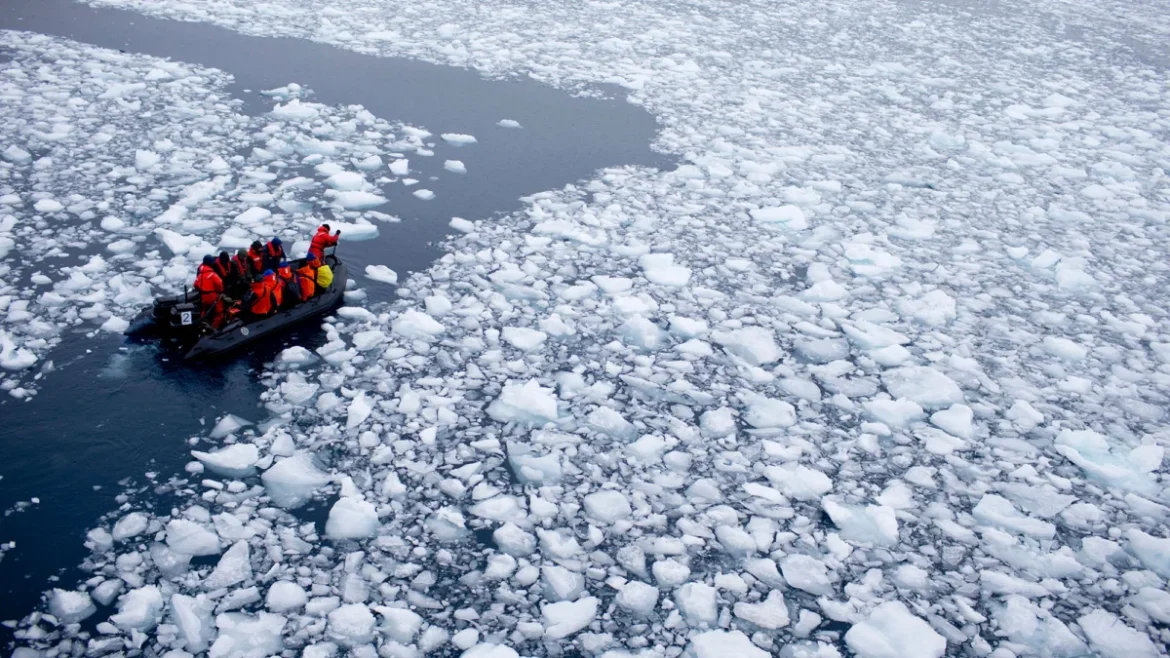
For nearly four decades, the frozen landscape of the Southern Ocean presented a scientific paradox. While the Arctic experienced a steady and alarming decline in sea ice due to global warming, the sea ice surrounding Antarctica appeared to be stubbornly expanding. From the late 1970s until 2014, the extent of Antarctic sea ice reached several record highs, puzzling climatologists who were tracking a planet in the midst of a thermal surge. However, in 2016, this trend did not just slow down; it shattered. In a matter of months, the ice contracted with unprecedented speed, reaching historic lows that have persisted for nearly a decade.
The cause of this sudden "regime shift" has remained one of the most pressing mysteries in polar science. Now, a new study led by researchers at Stanford University, published in the journal Proceedings of the National Academy of Sciences (PNAS), has identified the culprit. By utilizing a sophisticated network of autonomous underwater robots, scientists have determined that a combination of ocean salinity, shifting wind patterns, and a "violent" release of trapped subsurface heat triggered the collapse. The findings suggest that the Southern Ocean acts as a massive thermal battery, one that has recently begun to discharge its stored energy with devastating consequences for the global climate.
The Mystery of the Antarctic Paradox
To understand the gravity of the 2016 collapse, one must first look at the unique behavior of the Southern Ocean in the decades prior. Unlike the Arctic, which is an ocean surrounded by land, Antarctica is a continent surrounded by an open, deep ocean. This geography allows sea ice to expand outward until it reaches warmer latitudes.
From 1979 through 2015, Antarctic sea ice grew at a rate of roughly 1% per decade. While modest, this growth occurred despite rising global atmospheric temperatures. Scientists initially theorized that this expansion was driven by changes in wind patterns that pushed ice further away from the continent, or perhaps by an influx of freshwater from melting glaciers, which freezes more easily than salty seawater.
However, the events of 2016 turned these theories on their head. In a single season, the gains of the previous thirty years were erased. The sea ice reached an all-time record low in 2017, only to be surpassed by even lower records in 2022 and 2023. This sudden shift indicated that the stabilizing mechanisms of the Southern Ocean had been compromised, exposing the ice to the warmth of a changing planet.
Argo Floats: The Silent Sentinels of the Deep
Traditional methods of monitoring the Antarctic—primarily satellite imagery—are excellent at measuring the surface of the ice but are unable to peer beneath the waves to see what the water is doing. To solve the mystery, Earle Wilson, a polar oceanographer at Stanford University, and his team turned to the Argo program.
Argo floats are a global network of nearly 4,000 robotic instruments that drift through the world’s oceans. These torpedo-shaped devices, roughly the size of a human, are designed to perform "profiles" of the water column. Every ten days, a float sinks to a depth of 2,000 meters (about 6,500 feet), then slowly rises to the surface, measuring temperature and salinity at various intervals. Once it reaches the surface, it transmits its data to satellites before beginning the cycle again.
For years, these floats drifted through the frigid, turbulent waters of the Southern Ocean, collecting data in regions where human-manned research vessels rarely venture, especially during the brutal Antarctic winter. This data provided the Stanford team with a high-resolution "biopsy" of the ocean’s internal structure before, during, and after the 2016 collapse.
The Science of Stratification and the Heat Reservoir
The data revealed a complex process known as ocean stratification. In most of the world’s oceans, the warmest water sits at the surface because it is heated by the sun. In the Southern Ocean, the situation is inverted. The air over Antarctica is so intensely cold that it chills the surface water to near-freezing temperatures. Below this frigid surface layer sits a massive reservoir of relatively warm, salty water known as Circumpolar Deep Water.
During the decades of sea ice expansion, increased precipitation and glacial runoff made the surface waters fresher. Because fresh water is less dense than salt water, it formed a "cap" or a lid on the ocean. This lid prevented the warmer, saltier water below from mixing with the surface.
"The ocean plays a huge role in modulating how sea ice can vary from year to year, decade to decade," explained Earle Wilson. "What we saw leading up to 2016 was a period where the ocean was becoming increasingly stratified. The fresh surface layer was trapping heat in the depths, allowing it to build up like a pressurized steamer."
The 2016 Tipping Point: Winds and Churn
The buildup of heat in the deep ocean was a ticking time bomb. The detonator was the atmosphere. Around 2016, atmospheric conditions shifted, likely influenced by the strengthening of the Southern Annular Mode (SAM)—a ring of westerly winds that circle Antarctica.
These winds intensified and shifted their position, creating a phenomenon known as Ekman suction. As the winds pushed surface waters away from the continent, they forced the deeper, warmer water to well up to the surface. This process, known as vertical mixing or "churn," broke the fresh-water seal that had protected the ice for decades.
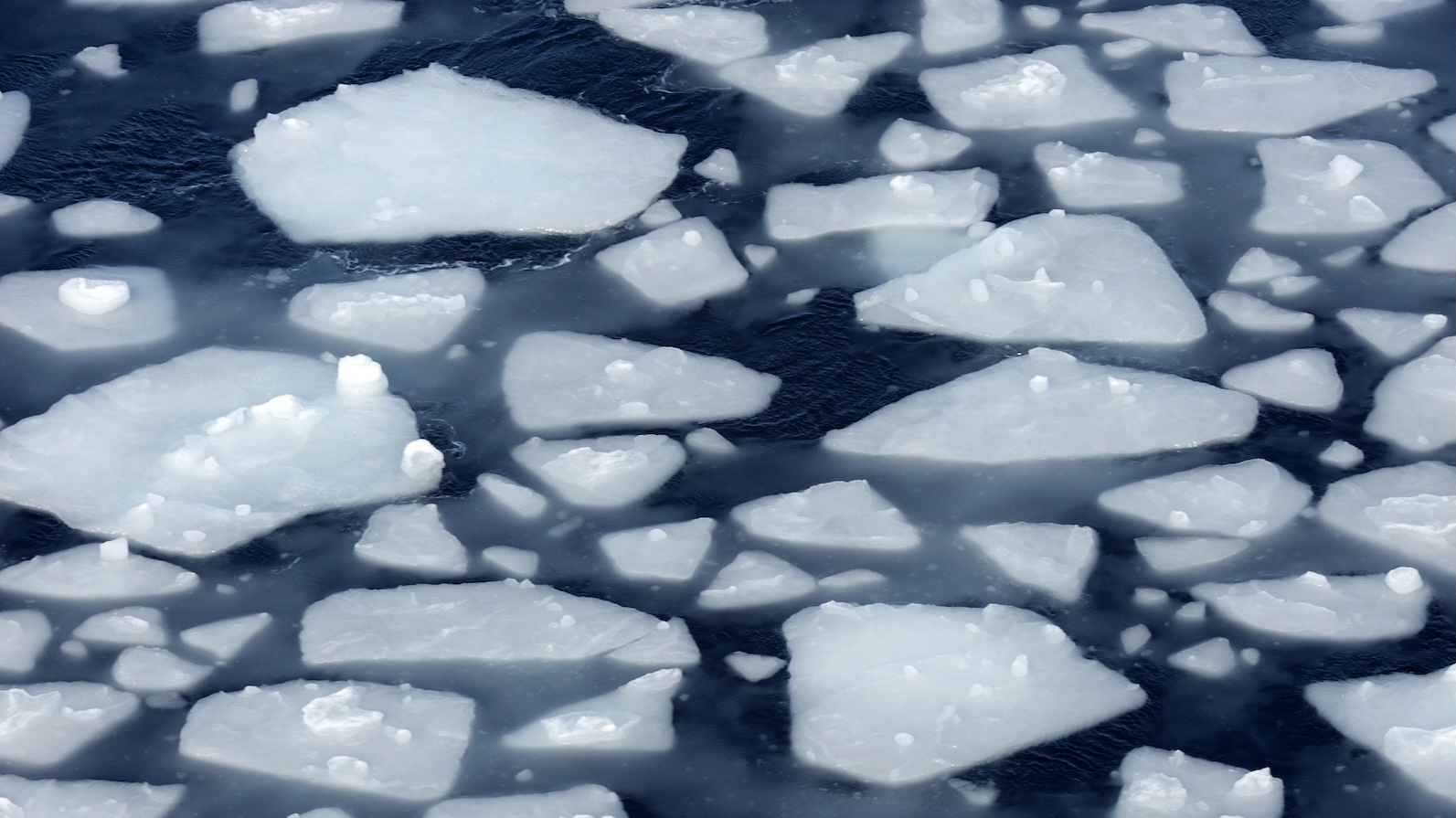
"What we witnessed was basically this very violent release of all that pent-up heat from below," Wilson said. Once this heat reached the surface, it did more than just melt existing ice; it prevented new ice from forming during the winter months. The "oceanic heat flux"—the amount of heat moving from the water to the ice—increased dramatically, leading to the rapid contraction observed by satellites.
Chronology of a Climate Crisis
The timeline of Antarctic sea ice behavior can be categorized into three distinct phases:
- 1979–2014: The Expansion Phase. Sea ice extent shows a slow but steady increase. The ocean is highly stratified, with a fresh surface layer shielding the ice from deep-ocean warmth.
- 2015–2016: The Destabilization. Atmospheric wind patterns begin to shift. The "lid" of fresh water begins to thin as deeper heat begins to migrate upward.
- 2016–Present: The Low-Ice Regime. The 2016 "heat release" event triggers a collapse. Since then, the Southern Ocean has remained in a state of low sea ice, with 2023 marking the lowest winter maximum ever recorded—a "five-sigma" event, meaning it was statistically improbable in a stable climate.
Broader Implications for Global Sea Levels
The loss of sea ice is not merely a local environmental change; it is a global threat. While sea ice itself does not contribute to sea level rise when it melts (much like an ice cube in a glass of water), it serves as a critical defensive barrier for the Antarctic ice sheet—the massive glaciers sitting on land.
Antarctica’s ice sheet contains enough water to raise global sea levels by approximately 190 feet (58 meters). This land-based ice is held in place by floating ice shelves. Sea ice acts as a buffer for these shelves, dampening the impact of ocean waves and protecting them from the erosive power of the open sea. When sea ice disappears, ice shelves become more vulnerable to fracturing and melting from below.
Furthermore, sea ice plays a vital role in the Earth’s albedo effect. Bright white ice reflects up to 80% of the sun’s energy back into space. When that ice is replaced by dark open water, the ocean absorbs that heat instead, creating a feedback loop that further warms the region and accelerates melting.
Zachary Labe, a climate scientist at Climate Central who was not involved in the Stanford study, emphasized the importance of this research. "This paper helps to further develop the point that deeper ocean warmth is a significant player," Labe said. "We are seeing a transition where both atmospheric and oceanic warming are working in tandem to erode the Antarctic ice system."
The Need for Enhanced Monitoring
The findings from the Argo floats have highlighted a significant gap in global climate monitoring. While the Argo network has been a triumph of international scientific cooperation, the polar regions remain difficult to monitor consistently. Sea ice can crush or trap floats, and the extreme cold can interfere with sensors.
"Overall, we need more international support to continue building observing networks across the Antarctic polar region," Labe noted. "This is critical given the rapid changes we are beginning to observe… with potentially significant consequences for global sea level rise."
The Stanford study utilized a specific subset of the program known as "Deep Argo," but scientists are calling for even more specialized sensors that can measure carbon dioxide absorption and biological productivity in the Southern Ocean, which acts as one of the world’s largest carbon sinks.
Conclusion: A Permanent Shift?
The central question remains: Has the Southern Ocean reached a permanent tipping point, or will the sea ice eventually recover?
The research suggests that the system has entered a new state of variability. While there may be years where the ice sees marginal growth, the underlying trend is increasingly dictated by the massive amount of heat now circulating in the upper layers of the ocean. The "freshwater lid" that once protected the ice has been compromised, and as the planet continues to warm, the atmospheric winds that trigger the "churn" are expected to remain strong.
"The long-term, multi-decade trend will be negative," Earle Wilson concluded. "That would be my guess, but we don’t know for sure."
What is certain is that the deep-diving robots of the Argo program have pulled back the curtain on a hidden world, revealing that the fate of the world’s coastlines is inextricably linked to the salt and heat swirling miles beneath the Antarctic ice. As the Southern Ocean continues to release its stored energy, the global community must prepare for the consequences of a continent that is no longer as frozen as it once seemed.
