
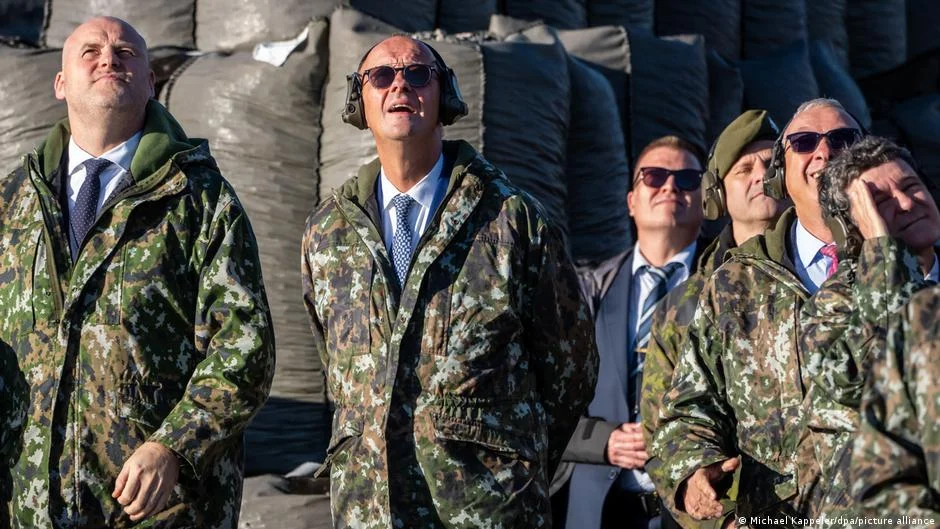
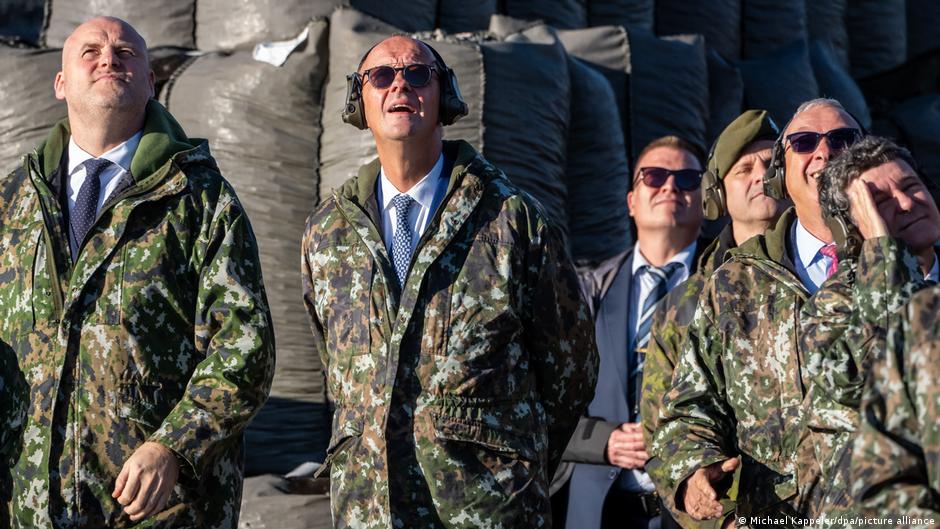
The Finnish city of Rovaniemi, internationally celebrated as the "Gateway to the Arctic" and the mythical home of Santa Claus, has transformed into a high-stakes arena for geopolitical maneuvering. As the autumn foliage casts a vibrant backdrop over the Arctic Circle, the region has shifted from a zone of peripheral interest to a central theater of European security. At the invitation of Finnish Prime Minister Petteri Orpo, European leaders gathered to confront a harsh new reality: the traditional model of Arctic cooperation has been effectively dismantled, replaced by a climate of deepening mistrust, military buildup, and economic competition.
The summit serves as a pivotal moment for the European Union as it prepares to update its 2021 Arctic Strategy. With the High North experiencing rapid warming and renewed interest from global powers, the bloc is seeking to reconcile its climate commitments with the urgent need to secure its northern flank against an increasingly assertive Russia and an ambitious China.
A Chronology of Declining Arctic Cooperation
The transformation of the Arctic from a "zone of peace" to a potential conflict flashpoint did not happen overnight. For decades following the end of the Cold War, the Arctic Council and various multilateral forums facilitated scientific and environmental collaboration between the West and Russia.
- 1996: The Ottawa Declaration establishes the Arctic Council, cementing a collaborative framework for environmental protection and sustainable development.
- 2014: The annexation of Crimea by Russia introduces the first major tremors in Arctic cooperation, though scientific and climate-related dialogue persists.
- 2021: The EU releases its inaugural comprehensive Arctic Strategy, focusing on sustainable development and climate mitigation.
- 2022: Russia’s full-scale invasion of Ukraine triggers an immediate freeze in Arctic Council activities. The "Arctic Seven" (Canada, Denmark, Finland, Iceland, Norway, Sweden, and the US) pause participation in meetings involving Russia.
- 2023–2024: Finland and Sweden formally join NATO, ending decades of military non-alignment and creating a continuous NATO-aligned frontier along the Russian border.
- 2025/2026: The current diplomatic pivot towards military mobility and critical infrastructure investment begins, with the EU planning a formal update to its Arctic policy for October 2026.
The Security Calculus: A New Military Frontier
The summit’s atmosphere was underscored by the presence of Finnish fighter jets conducting demonstrations over the base, a stark reminder of the 1,340-kilometer border Finland shares with Russia. EU foreign policy chief Kaja Kallas did not mince words during the proceedings, highlighting the reactivation of Cold War-era Soviet military installations across Russia’s northern coastline.
"Russia is not merely maintaining its presence; it is actively weaponizing the High North," Kallas noted. The intelligence briefings provided to attendees underscored concerns regarding missile testing and the deployment of advanced electronic warfare systems capable of disrupting satellite navigation and communications across the region.
German Chancellor Friedrich Merz, navigating domestic political turbulence to attend the summit, emphasized that the Arctic has become a "geopolitical hotspot." His assessment aligns with the broader consensus among European leaders: Russia’s "hybrid activities"—ranging from GPS jamming to the surveillance of subsea infrastructure—have moved beyond theoretical threats to daily operational realities.
Economic and Resource Dependencies
Beyond the immediate military threat, the summit addressed the looming scramble for critical raw materials. As the global transition toward renewable energy accelerates, the Arctic’s vast, untapped reserves of rare earth elements, nickel, and cobalt have gained significant strategic value.
Prime Minister Orpo argued that the EU must ensure its "strategic autonomy" by diversifying its supply chains. Currently, much of the world’s critical mineral processing is dominated by Chinese entities. The summit’s joint declaration emphasizes the need for "dual-use" infrastructure—transport networks, port facilities, and digital connectivity that serve both civilian trade and military logistical requirements.
However, this push for development faces a significant hurdle: the environmental sensitivity of the region. Balancing the extraction of resources with the European Union’s ambitious Green Deal goals remains a point of internal friction.
The Emerging Triple-Bloc Divide
The geopolitical structure of the region is becoming increasingly fractured. Arctic observer Markku Heikkila suggests that the region is currently undergoing a tripartite division. The first bloc is led by an isolated and militarized Russia. The second consists of European nations and their allies, who remain committed to a rules-based international order, environmental stewardship, and the rights of Indigenous populations.
The third, and perhaps most unpredictable, element is the evolving posture of the United States. Observers at the summit expressed growing concern over how recent shifts in Washington’s foreign policy priorities—specifically under the Trump administration—are straining the unity of the Western alliance.
The proposal to purchase Greenland or the suggestion of incorporating Canada into the United States have been viewed by Nordic partners as erratic moves that undermine the cohesion of the Arctic Council. Furthermore, the US stance on climate change—a cornerstone of European Arctic policy—has created a widening policy chasm. "The US is currently torpedoing any mention of climate change in multilateral Arctic settings," noted Timo Koivurova of the University of Lapland. "This is not just a diplomatic disagreement; it is a fundamental shift that hampers our ability to manage the most significant threat to the region."
Climate Change: The Unstoppable Catalyst
While military and economic discussions dominated the headlines, the physical reality of a warming Arctic remains the most significant long-term variable. The Arctic is warming at approximately four times the global average. Scientists project that the central Arctic Ocean could be largely ice-free during the summer months between 2040 and 2050.
The implications of this are twofold. First, it accelerates the opening of new, shorter shipping routes, such as the Northern Sea Route, which could drastically alter global trade logistics. Second, it fundamentally changes the security perimeter of the Arctic states. As the ice recedes, areas previously inaccessible become reachable, necessitating new surveillance and patrol capabilities.
"Everything we do in the Arctic now is inherently linked to climate change," Koivurova explained. "We are forced to respond to the changing physical landscape even as we struggle to maintain the political architecture to manage it."
Strategic Resilience and the Path Forward
The summit concluded with a clear mandate from Prime Minister Orpo: "We should strengthen Arctic resilience by strategic investments in infrastructure, icebreaking capabilities, and technological innovation."
The EU’s plan to update its 2021 Arctic Strategy is expected to prioritize these "dual-use" investments. By focusing on cross-border connectivity and satellite technology, the bloc aims to create a more integrated northern defense and economic network.
As the delegates departed Rovaniemi, the contrast between the tranquil, snow-dusted landscape and the heated, urgent nature of their discussions was palpable. While the world may associate Rovaniemi with the whimsy of the Santa Claus Post Office, the city has successfully cemented its role as the nerve center for Europe’s most critical strategic pivot.
The challenges facing the High North are no longer distant prospects; they are immediate. Whether the European Union can maintain its unity in the face of an increasingly volatile Russia, a rising China, and an unpredictable transatlantic partner remains the defining question for the region. For now, the Arctic has moved from the periphery to the very heart of the European project, signaling a future where the North will demand as much attention as the Mediterranean or the Eastern Flank.
