
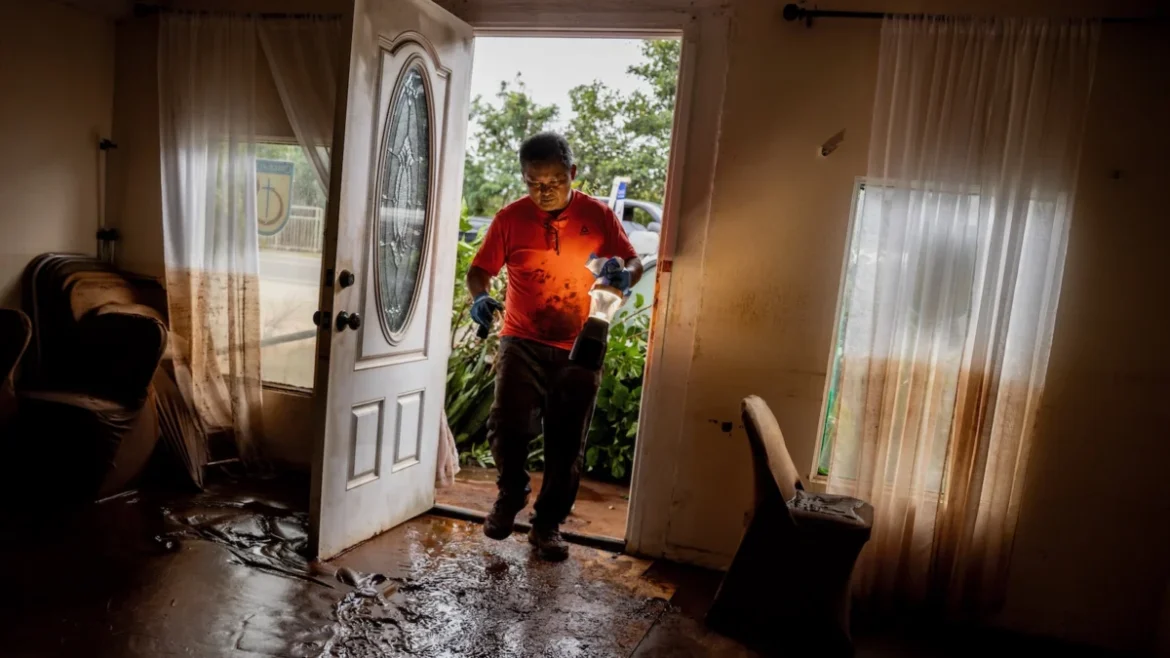
The Afsluitdijk, a monumental 32-kilometer causeway that has shielded the Netherlands from the North Sea since 1932, stands as a testament to human engineering and a primary defense against the existential threat of rising sea levels. For nearly a century, this massive bulwark has performed its duty, but the compounding effects of climate change and the natural degradation of infrastructure meant that by the early 21st century, the dam required a massive overhaul. The price tag for such a revitalization reached into the hundreds of millions of dollars—a sum that would typically strain the immediate liquid assets of any government. To address this, the Dutch government entered into a landmark agreement with a consortium of private contractors, signing a 25-year contract that allowed for payments to be distributed over decades. This structural shift from upfront public expenditure to a long-term private financing model has become a blueprint for a new era of climate resilience.
As climate risks intensify globally, cities are facing a stark financial reality. Protecting urban centers from the dual threats of encroaching oceans and increasingly volatile weather patterns is estimated to cost hundreds of billions of dollars—expenditures that far exceed the current budgetary capacities of most municipal and national governments. A new report released by C40, a global network of mayors representing nearly 100 of the world’s leading cities, argues that the only viable path forward is the aggressive integration of private sector investment into public adaptation projects. The report, unveiled during the World Bank’s spring meetings, serves as a call to action for cities to move beyond traditional tax-based funding and toward more creative, "bankable" financial models.
The Financial Disparity in Global Climate Adaptation
The scale of the challenge is underscored by sobering economic data. Research highlighted in the C40 report indicates that for low- and middle-income countries alone, the cost of climate adaptation could range between $256 billion and $821 billion by the year 2050. Despite these looming costs, the current flow of capital toward urban adaptation is remarkably thin. At present, no more than 1 percent of all global climate funding is directed toward urban adaptation efforts. This creates a massive "adaptation gap" between the infrastructure cities need to survive and the funds they have available to build it.
The primary hurdle in closing this gap is the inherent nature of adaptation projects. Unlike mitigation efforts—such as transitioning to renewable energy or improving building efficiency—adaptation projects rarely offer a direct, easily quantifiable revenue stream. While a solar farm generates electricity that can be sold, a sea wall or a stormwater drainage system primarily offers "avoided costs." In financial terms, avoiding future damages is traditionally difficult to collateralize or use as a basis for a loan.
Dan Zarrilli, the former chief resilience officer for New York City and current chief climate and sustainability officer at Columbia University, notes that the lack of a clear return on investment (ROI) makes adaptation a "harder sell" for traditional banks. "Avoiding future damages is not a financing stream you can take to the bank in the way that you can energy efficiency and decarbonization," Zarrilli explained. To attract private capital, projects must be restructured to be "bankable," meaning they must offer a predictable financial benefit or be bundled with other revenue-generating assets.
A Chronology of Infrastructure Evolution: The Dutch Model and Beyond
The evolution of the Afsluitdijk serves as a chronological anchor for this shifting financial landscape.
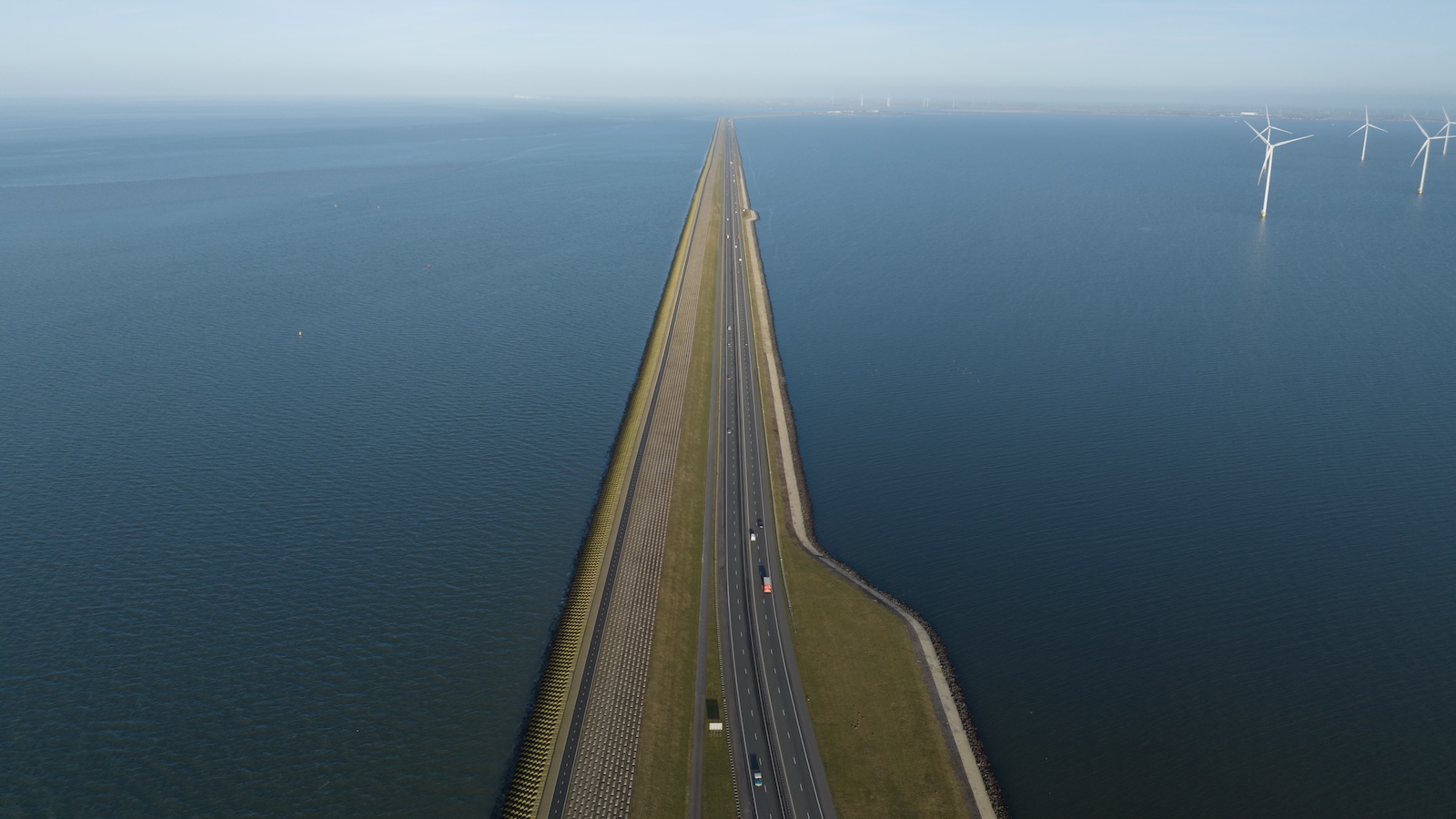
- 1932: The original Afsluitdijk is completed, transforming the Zuiderzee into the freshwater IJsselmeer and providing a critical defense against flooding.
- 2006-2010: Dutch authorities recognize that the dam no longer meets modern safety standards due to projected sea-level rise and increased storm intensity.
- 2018: The Dutch government enters into a Public-Private Partnership (PPP) with the Levvel consortium (including companies like BAM, Van Oord, and Rebel).
- 2019-2023: Major construction takes place, involving the placement of 75,000 innovative "Quattroblock" concrete elements to reinforce the dyke.
- 2024: The project serves as a primary case study for the C40 report, demonstrating how long-term service contracts can bridge the gap between immediate infrastructure needs and long-term fiscal solvency.
This timeline illustrates a shift from the 20th-century model of "build and maintain via taxes" to a 21st-century model of "finance and operate via partnership." The Dutch government did not just pay for a wall; they paid for a 25-year service of flood protection, shifting some of the performance risks to the private sector.
Case Studies in Innovation: From Dakar to Washington D.C.
The C40 report provides ten distinct case studies that demonstrate how cities are already experimenting with private sector collaboration to solve specific climate vulnerabilities. These examples show that while there is no "one-size-fits-all" solution, creativity in project design can unlock significant capital.
Kuala Lumpur’s SMART Tunnel: In Malaysia, designers addressed two urban crises—frequent flooding and traffic congestion—with a single project. The Stormwater Management and Road Tunnel (SMART) serves as a motorway during dry weather but can be converted into a massive drainage channel during heavy rains. By pairing a necessary public utility (flood control) with a revenue-generating asset (a toll road), the project became attractive to private investors who could recoup their investment through vehicle tolls.
Mexico’s Coral Reef Insurance: In the state of Quintana Roo, a unique insurance policy was developed to protect the Mesoamerican Reef. Because the reef acts as a natural barrier against storm surges, its health is vital to the local tourism industry. A trust fund, supported by the tourism industry and local government, pays for an insurance policy that triggers an immediate payout if a major hurricane hits. This money is then used for rapid reef restoration, ensuring the natural infrastructure continues to protect the coastline.
Washington D.C.’s Environmental Impact Bonds: The District of Columbia Water and Sewer Authority (DC Water) pioneered the use of Environmental Impact Bonds (EIBs) to fund green infrastructure. These bonds operate on a performance-based model: if the green infrastructure (such as permeable pavement and rain gardens) performs better than expected in managing stormwater, the investors receive a higher return. If it underperforms, the investors take a lower return. This allows the public sector to experiment with innovative solutions while sharing the risk with private capital.
Risks, Equity, and the "Capitalist" Dilemma
While the push for private investment is presented as a necessity, it is not without significant risks. Critics and some climate advocates warn that the profit motive inherent in private finance could lead to a focus on short-term gains rather than long-term resilience. Furthermore, there is a risk that private investors will only be drawn to "prestigious" projects in wealthy areas, leaving vulnerable and low-income communities behind.
Debbie Hillier, head of the Zurich Climate Resilience Alliance, cautioned that while there is scope for private investment, it should not be viewed as a panacea. "What we don’t want is to assume the private sector can do everything," Hillier said. "They cannot and they will not."
The report also acknowledges that governments must maintain rigorous oversight. Public-private partnerships require clear procurement rules and strong social and environmental safeguards to ensure that the public interest remains the priority. Barbara Barros, the global head of adaptation finance for C40, addressed the ideological tension head-on. "It seems very capitalist, but the goal is to protect our citizens," she stated, emphasizing that the ultimate aim is the safety of the most vulnerable populations.
The Shifting Political and Global Context
The timing of this report is particularly relevant given the shifting political landscape in the United States and other Western nations. Historically, the federal government has been the primary source of funding for large-scale climate adaptation in the U.S. However, under different political administrations, federal support has fluctuated. Dakota Fischer, who works on adaptation issues for the Natural Resources Defense Council (NRDC), noted that as federal support becomes less predictable, smaller municipalities are being forced to think more creatively.
Smaller towns and rural areas, such as those in the American Midwest that face frequent inland flooding, often lack the tax base or the credit rating to attract major international investors. Fischer pointed out that while the C40 report provides excellent examples for "megacities," the challenge remains for smaller communities to find their own versions of these financial models. One potential solution mentioned in the report is "bundling"—grouping several smaller adaptation projects together to create a larger, more attractive package for institutional investors or multilateral development banks like the World Bank.
Analysis of Implications: A New Era of Urban Governance
The shift toward private financing marks a fundamental change in how urban governance is practiced. For decades, the role of a city government was to provide services through tax revenue. In the climate-constrained future, the role of the city official may shift toward that of a "financial architect," designing complex deals that balance public safety with private profitability.
The success of this transition will depend on three critical factors:
- Shared Vocabulary: As Dan Zarrilli noted, the public and private sectors must develop a "shared vocabulary" and build trust early in the project development phase.
- Risk Sharing: Successful projects must clearly define how risks—both financial and environmental—are shared between parties.
- Scalability: The models proven in cities like Amsterdam and Washington D.C. must be adapted and scaled for the Global South, where the adaptation gap is most acute and the available capital is most scarce.
The C40 report does not suggest that the private sector will replace the role of the state. Rather, it argues that in the face of a trillion-dollar climate crisis, the state can no longer go it alone. By leveraging the creativity and capital of the private sector, cities may find the "right balance" needed to build the defenses that will keep them above water in the coming century. As Barbara Barros concluded, it will take years for cities to fully pivot their thinking, but the narrative is already beginning to change. The alternative—waiting for public funds that may never arrive—is a risk that few cities can afford to take.
