

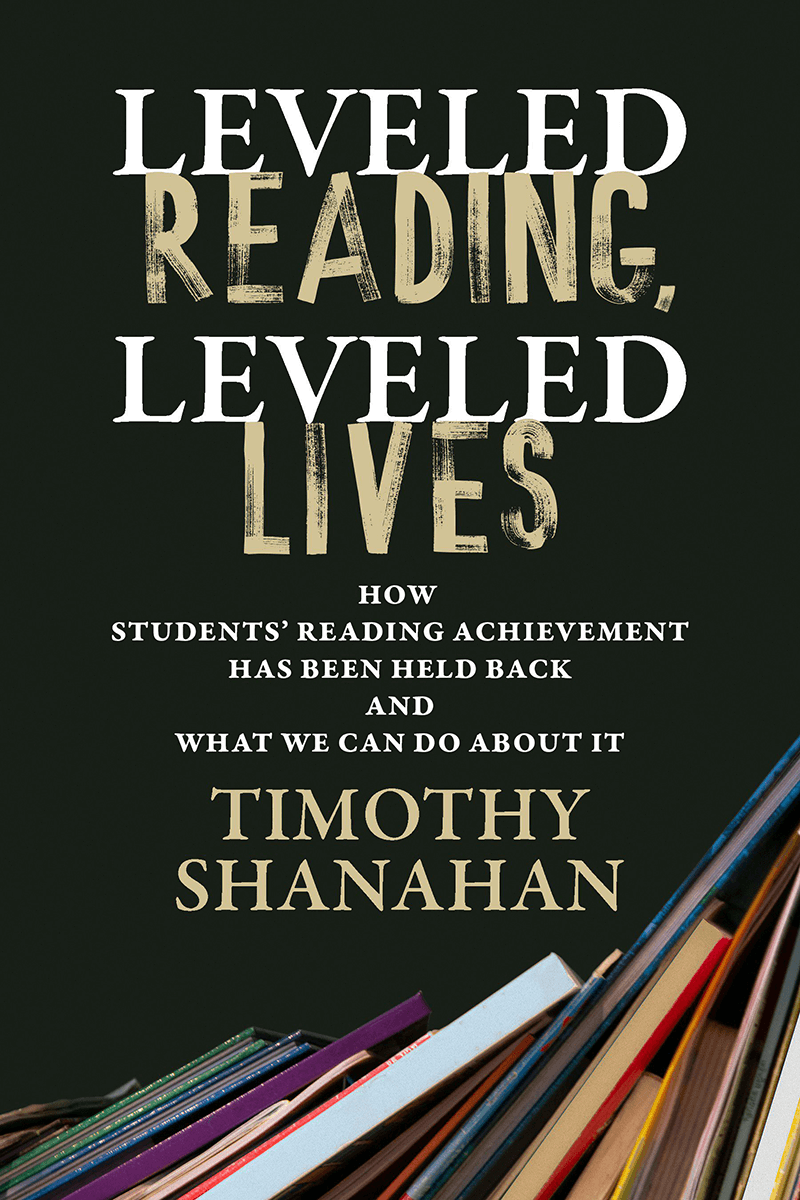
The debate over how best to teach reading in American classrooms has intensified following a high-profile exchange between prominent literacy researchers and advocates regarding the long-term efficacy of leveled reading programs. At the center of the discourse is the 2025 publication of Timothy Shanahan’s book, Leveled Reading, Leveled Lives: How Students’ Reading Achievement Has Been Held Back and What We Can Do About It, which has reignited discussions among educators, policymakers, and literacy specialists about the impact of matching students with prescribed reading levels.

For decades, the prevailing methodology in primary and secondary education involved assessing a student’s individual reading ability and assigning them texts specifically tailored to that measured level. Proponents of this approach historically argued that providing accessible reading material empowers struggling readers, builds confidence, and establishes a foundational bridge to grade-level content. However, Shanahan’s work contends that confining students to restricted reading levels has inadvertently contributed to stagnant or declining reading comprehension scores nationwide, as highlighted by standardized metrics like the National Assessment of Educational Progress (NAEP).
The publication of Shanahan’s book drew a sharp public critique from Louise Baigelman, founder of the literacy organization Storyshares, who argued that an outright rejection of leveled texts ignores the daily realities faced by teachers and the millions of older students who struggle with foundational literacy. In response, Shanahan defended his positions in Education Next, asserting that Baigelman misconstrued his central thesis. This ongoing intellectual clash highlights deep-seated divisions over how to balance instructional rigor with student accessibility in the modern classroom.

Background Context and the Evolution of Reading Instruction
To understand the current friction, it is necessary to examine the historical trajectory of reading pedagogy in the United States. For more than a century, American classrooms widely adopted leveled reading frameworks, most notably systems like the Fountas and Pinnell text-level gradient, which categorized books across a broad spectrum of alphabetized or numbered tiers. These systems aimed to ensure that students were neither overwhelmed by advanced syntax and vocabulary nor unchallenged by overly simple materials.

However, the emergence of the "Science of Reading" movement in recent years challenged many of these traditional practices. Critics pointed out that subjective leveling systems often lacked rigorous validation and relied heavily on ambiguous comprehension strategies rather than concrete phonetic and linguistic skills. As standardized test scores showed persistent gaps—with recent NAEP data indicating that significant percentages of fourth and eighth graders score below basic reading proficiencies—educational reformers began scrutinizing instructional methods.
Shanahan’s book captures this critical shift. His central argument posits that while students can learn through leveled reading regimens, the practice ultimately creates a ceiling on achievement. By shielding students from complex, grade-level texts, educators may inadvertently deny them exposure to sophisticated vocabulary, complex syntactic structures, and rich content knowledge necessary for academic and professional success.

Baigelman’s Critique: The Realities of Classroom Implementation
In her critique of Shanahan’s work, Baigelman argues that a blanket dismissal of leveled texts fails to account for the massive populations of older students who function as beginning readers. Citing data such as the 2024 Educational Testing Services (ETS) report, The Decoding Threshold, Baigelman emphasizes that a substantial portion of middle and high school students lack the advanced decoding skills required to access multi-syllabic words and complex morphological structures.

Baigelman contends that leveled reading is not inherently antithetical to rigor when implemented correctly. She draws analogies to other sequential disciplines, noting that students do not advance to calculus without algebra, nor do martial artists earn advanced belts without mastering basics. Within structured literacy, scaffolded tools such as decodable texts serve an indispensable function.
Furthermore, Baigelman challenges the practical application of Shanahan’s proposals in contemporary classrooms. Using a hypothetical scenario of a ninth-grade English language arts teacher in an urban district with vastly disparate reading levels, she questions the feasibility of utilizing a single, highly complex anchor text—such as Brave New World—for students whose reading abilities span several grade bands. Without supplemental, accessible texts for independent practice and intervention, Baigelman argues, struggling students risk complete disengagement.

Shanahan’s Rebuttal: Addressing Misconceptions and Reaffirming Rigor
Responding directly to Baigelman’s critique, Shanahan expressed concern that her interpretation fundamentally misstated the scope and arguments of his book. He clarified that his primary objection is not directed at the existence of leveled books, but rather at the practice of "leveled reading"—specifically, the systematic assignment of below-grade-level texts for core classroom instruction.

Shanahan noted that his research explicitly carves out exceptions for beginning readers in kindergarten and first grade, where decodable texts and controlled vocabulary are critical for establishing phonics foundations. However, he cautioned against conflating foundational decoding deficits with overall reading comprehension strategies for older students. He argued that restricting secondary students to elementary-level texts permanently limits their intellectual development and restricts their exposure to complex ideas and specialized background knowledge.
Addressing the logistical challenges raised by critics, Shanahan maintained that effective pedagogy relies on exposing students to challenging texts supported by high-quality teacher instruction, vocabulary pre-teaching, and syntactic scaffolding. He asserted that relying on below-grade materials as a default instructional strategy has historically failed to close achievement gaps, pointing to decades of flat national performance metrics as evidence that the status quo is insufficient.
Broader Implications for Literacy Policy and Practice
The public debate between Shanahan and Baigelman underscores a broader tension within educational reform: the challenge of reconciling empirical research with the practical realities of classroom teaching. As school districts nationwide reevaluate their reading curricula in alignment with modern literacy standards, the role of text complexity remains a pivotal battleground.

Observers note that the discussion touches upon several crucial policy considerations:
- Curricular Coherence: Schools must determine how core curriculum materials can successfully integrate challenging anchor texts while accommodating students with severe foundational gaps.
- Teacher Preparation: Educator training programs face increased pressure to equip teachers with nuanced strategies for managing heterogeneous classrooms without resorting to rigid, one-size-fits-all grouping practices.
- Assessment Precision: Policymakers continue to grapple with how reading assessments measure distinct variables, separating basic decoding capabilities from higher-order language comprehension.
Ultimately, both specialists agree on the ultimate objective: ensuring that students achieve functional, independent literacy that prepares them for higher education, the workforce, and civic participation. Yet, the disagreement over the pathway to that goal—whether through the immediate immersion in complex texts or the strategic scaffolding of leveled practice materials—remains unresolved. As school systems implement new reading frameworks, the insights from both Shanahan and Baigelman will continue to inform the ongoing evolution of American literacy instruction.
