
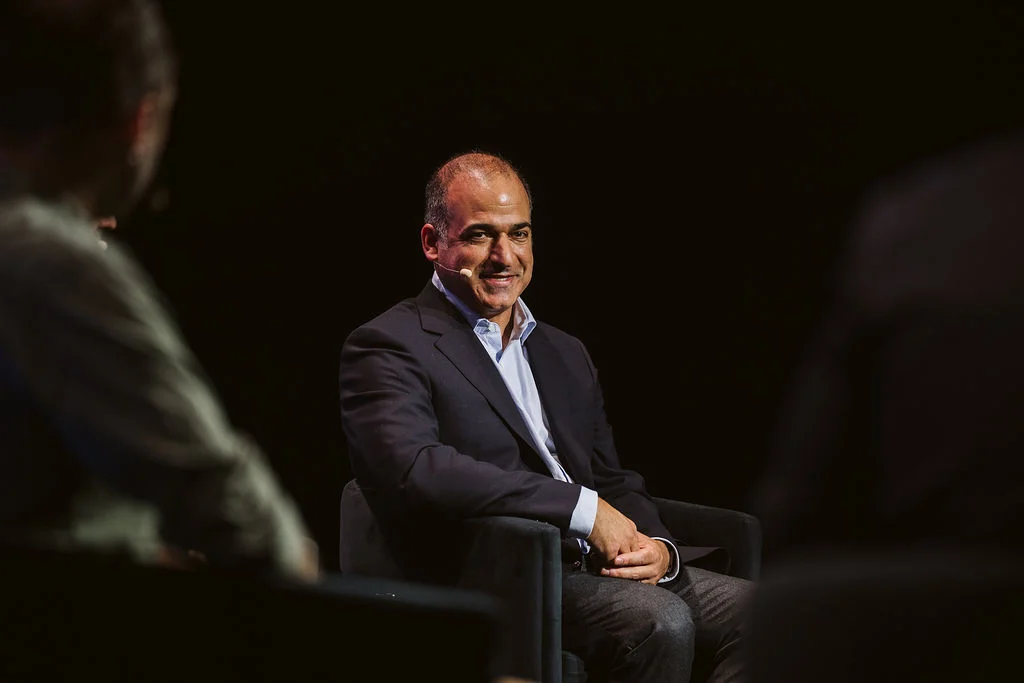
This week at the All In conference, a recurring theme emerged from the shadows of the artificial intelligence sector: the intense, almost tactical, silence surrounding the development of "world models." As the industry pivots from Large Language Models (LLMs) that manipulate text to systems that simulate the physical laws of the universe, two industry titans—Yann LeCun’s AMI Labs and Fei-Fei Li’s World Labs—have emerged as the vanguards. Despite their massive capital reserves and the pedigree of their founders, these organizations remain conspicuously opaque regarding their commercialization roadmaps, operating in a state of self-imposed stealth that suggests a calculated "dark forest" strategy.
The Genesis of Spatial Intelligence
World models represent the next frontier of artificial intelligence. Unlike traditional generative models that function within the constraints of tokens and linguistic probabilities, world models seek to encode "spatial intelligence." This involves training systems to understand the physical world—how objects move, interact, and occupy space—through video, sensor data, and synthetic environments.
The theoretical applications are vast. In robotics, a functional world model could allow a humanoid to navigate a chaotic warehouse or perform delicate surgical tasks without needing explicit instructions for every movement. In the creative industries, these models could facilitate the instant generation of explorable 3D environments, effectively automating the labor-intensive pipelines of video game design and film production.
However, the path from research to revenue remains obscured. While firms like World Labs have debuted platforms like "Marble," which showcases the ability to render complex, navigable scenes, these tools currently serve more as proofs of concept than as industrial-grade software. The industry is currently trapped in a phase where technological feasibility is high, but product-market fit remains a moving target.
The Anatomy of Institutional Silence
The reticence of industry leaders was on full display during the All In conference. When pressed on the specific commercial targets for AMI Labs, Michael Rabbat, the company’s VP of World Models, remained strictly guarded. "We’re still in a research and building phase, so we’re not talking publicly about any product plans or timeline," Rabbat stated in a follow-up communication.
This caginess is not unique to AMI Labs; it is a systemic trend across the sector. Even the suppliers providing the raw fuel for these models—the high-fidelity physical data required to train them—are being kept in the dark. Alex de Vigan, CEO of Physicl, a firm specializing in data sets for physical world training, noted a disconnect between his company’s contributions and the ultimate intent of the developers. "I wish they would tell us more," de Vigan said. "We could build more useful data if we knew what they were working on."
This silence is arguably a survival mechanism. In the current investment climate, where capital flows freely into foundational research, startups are under less immediate pressure to demonstrate profitability. By remaining vague, these companies avoid the scrutiny of competitors, incumbents, and potential regulatory bodies until they have achieved a significant "moat"—a technological advantage so profound it cannot be easily replicated by rivals like OpenAI or Anthropic.
A Chronology of the Spatial AI Surge
The rapid rise of these labs can be mapped against the broader acceleration of generative AI:
- Early 2024: Academic discourse around "World Models" shifts from theoretical physics and robotics into the mainstream AI spotlight. Papers emphasizing spatial reasoning replace standard LLM benchmarks as the industry’s primary metric of progress.
- Mid-2024: AMI Labs and World Labs announce massive funding rounds, signaling that venture capital firms are betting heavily on the hardware-agnostic nature of these models.
- Late 2024: Early demos from these labs demonstrate "video-to-world" capabilities, where static images or short clips are converted into interactive, 3D-simulated environments.
- 2025: The "Nabia" partnership serves as a rare public example of AMI Labs’ potential reach, signaling forays into biomedicine and manufacturing, yet the specific role of their world model remains undefined.
- Early 2026: The current state of "strategic ambiguity" settles in, as companies prioritize intellectual property protection over public product launches.
The "Dark Forest" Competitive Landscape
The term "dark forest," borrowed from Cixin Liu’s The Three-Body Problem, serves as an apt metaphor for the current AI arms race. In the novel, civilizations hide their existence to avoid being destroyed by superior, unknown adversaries. In the context of Silicon Valley, the logic is similar: the moment a startup announces a definitive commercial product—such as a proprietary humanoid control system or a revolutionary CGI rendering engine—they expose their research trajectory to the entire industry.
If AMI Labs were to announce a breakthrough in robotics, they would immediately face a multi-front war. They would be competing against specialized robotics companies, established "neolabs" that are rapidly pivoting, and the deep-pocketed tech giants like Google and Meta. By remaining silent, these startups extend the window of their research advantage.
Supporting Data and Market Implications
The funding landscape for world models is notably decoupled from revenue generation. According to recent market analysis, while investment in spatial AI has increased by an estimated 200% year-over-year, the majority of these firms have yet to report recurring revenue.
The volatility of this model is high. Because world models are versatile, a company could theoretically pivot from creating AI for surgical robots to developing software for automotive navigation within months. While this versatility is an asset for fundraising—allowing firms to pitch to multiple sectors simultaneously—it creates a paradox of choice. Each additional sector explored requires unique data sets, specific hardware integrations, and niche domain expertise, which can dilute the focus of a young company.
The Cost of Secrecy
While silence offers protection, it also imposes costs. The lack of transparency hinders the development of an ecosystem. Without clear product specifications, third-party developers cannot build applications on top of these models. Furthermore, the secrecy creates a "black box" perception among potential enterprise clients who are hesitant to commit to a platform that lacks a clear roadmap or documented long-term support.
Moreover, the "dark forest" strategy is only effective as long as the underlying technology remains a mystery. As research publications from these labs eventually enter the public domain, the barrier to entry for smaller, more agile competitors will lower. The advantage currently held by AMI and World Labs is temporal—it is based on speed and resources, not necessarily on a permanent proprietary secret.
Looking Ahead: The Pivot to Product
As the sector matures, the pressure to emerge from stealth will eventually become unavoidable. Investors, who are currently satisfied with progress reports and research milestones, will eventually demand clear paths to monetization.
The next 18 to 24 months will likely define the winners of the world model race. Companies that can successfully bridge the gap between their simulated environments and real-world utility—whether in autonomous manufacturing, high-fidelity digital twins, or advanced robotics—will command the market. For now, however, the industry remains in a period of intense, guarded preparation. The pioneers are currently in the woods, listening for the sounds of their rivals, waiting for the optimal moment to step into the light. Until then, the true power of their models remains a theoretical construct, hidden behind the high-stakes silence of the modern AI laboratory.

