
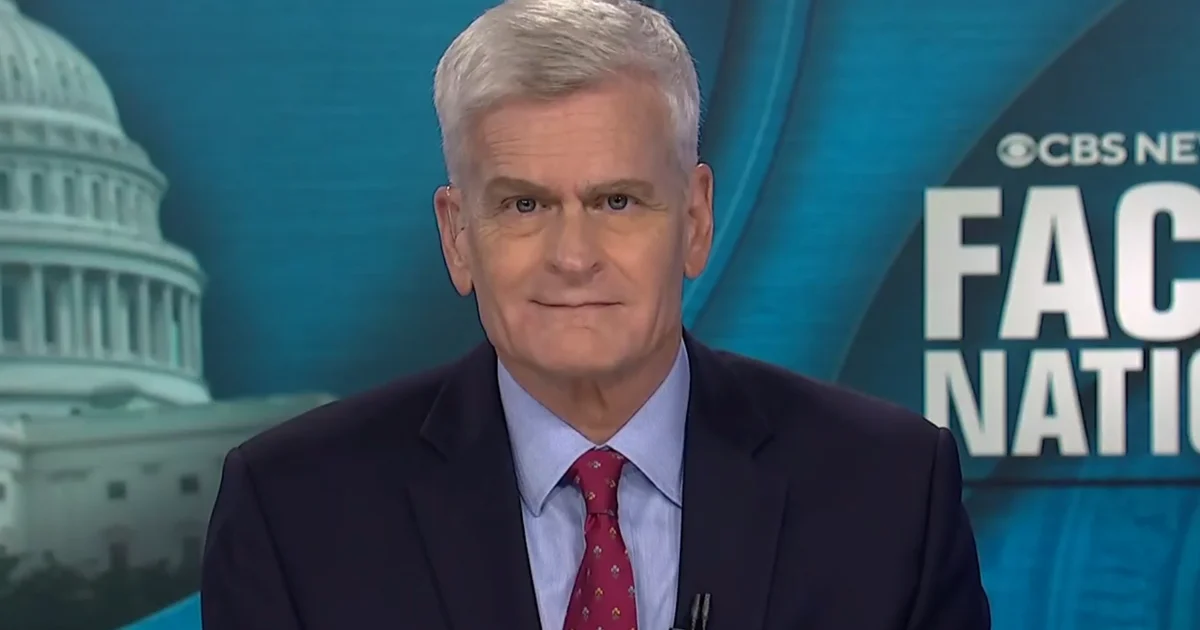
WASHINGTON — Republican Senator Bill Cassidy of Louisiana issued a sharp public challenge to the White House on Sunday, demanding that the administration adopt a posture of "radical honesty" regarding childhood immunizations. Speaking on a prominent national public affairs broadcast, Cassidy warned that rhetoric casting doubt on established medical science carries severe public health consequences, pointing to a surging nationwide measles epidemic that has driven case numbers to heights unseen in more than thirty years.
The legislative clash comes at a critical juncture for American public health. Federal health agencies report that the United States is currently experiencing its most severe resurgence of measles since the early 1990s. The outbreak has been characterized by sharp clusters of infection in regions with declining vaccination coverage, culminating in recent weeks in tragic fatalities, including the deaths of an 18-year-old and a 40-year-old adult. Public health authorities attribute these outcomes directly to a widening immunity gap caused by vaccine hesitancy and misinformation.
The White House Stance and Executive Actions
The growing political friction centers on shifting directives from the executive branch. In recent months, the administration has attempted to navigate a dual message regarding measles vaccinations. While lower-level health campaigns have formally encouraged parents to ensure their children receive protection against the highly contagious virus, the president himself has repeatedly questioned standard immunization schedules and safety profiles.
Last month, these doubts materialized in a formal executive order. The directive proposed restructuring the delivery of the combined measles, mumps, and rubella (MMR) vaccine, suggesting that the three components be administered as separate shots spread out over time. Compounding these assertions, the president claimed without scientific evidence that administering the combined MMR dose could potentially be "lethal."
These claims escalated further during an Oval Office exchange with reporters, where the president outlined plans to "demand" that pharmaceutical manufacturers reconfigure childhood vaccine protocols. Under the proposed vision, pediatric immunization schedules would be radically altered to distribute dozens of individual vaccine components across expanded six-month intervals. The president argued that reducing the immediate volume of administered antigens would achieve a "massive reduction in autism," an assertion thoroughly debunked by decades of rigorous epidemiological research.
"So instead of having a massive dose of 82 or 88 different vaccines pumped into your arm, we’ll take out certain vaccines that people are a little worried about," the president told reporters, underscoring an approach that public health experts argue lacks any grounding in clinical trial data.
A Physician’s Rebuke and the Call for Transparency
Cassidy, a practicing physician before his career in public policy and his current role as chairman of the Senate Health, Education, Labor and Pensions Committee, forcefully pushed back against the administration’s claims during his Sunday media appearance. Addressing the core of the controversy, the Louisiana Republican emphasized that medical professionals must confront public anxieties directly while refusing to validate unfounded claims that compromise community immunity.
"I would just ask the president to be aware that people are listening to him — if he discourages immunization, there’ll be fewer people immunized, and if we’re speaking of measles, there’ll be more people sick in the hospital or even die," Cassidy said.
Challenging the administration to substantiate its claims, Cassidy demanded transparency regarding the sources shaping federal health directives. "Have the president come forward — what is he basing this on? Who’s giving him advice?" Cassidy asked. He further questioned the factual basis of labeling the MMR vaccine lethal, asking pointedly whether the administration had ever documented a verified case of lethality attributed properly to the vaccine, contrasted against the undeniable mortality data associated with contracting the measles virus itself.
"If you want to be radically honest, the vaccines are safe, they’ve been proven to be safe, and the current regimen has been timed to be most convenient to the parent," Cassidy noted. "At any point, the parent can say, ‘I want something different.’"
The Toll of Vaccine Hesitancy: Drawing Parallels to Public Safety
To underscore the broader communal impact of refusing immunizations, Cassidy invoked the framework of collective responsibility, drawing an explicit comparison between vaccine refusal and reckless endangerment like drunk driving.
Citing the recent measles-related fatalities of a 40-year-old and an 18-year-old, the senator emphasized that contracting measles is not an isolated or victimless health event. Because measles is one of the most contagious infectious diseases known to science—capable of lingering in the air for up to two hours after an infected person leaves a room—lowered community vaccination rates pose an immediate threat to vulnerable populations, including infants too young to be immunized and immunocompromised hospital patients.
"You can drink and get drunk, but if you drive, you’re going to hurt other people," Cassidy said. "You can get measles, but when you start spreading it to other people, a 40-year-old dies, an 18-year-old dies, children in a neonatal intensive care unit are at risk. People have got to realize, and the government has to realize it. The president should be saying, ‘Be vaccinated. It is safe and effective.’"
"We should have a common voice of radical honesty, of trying to help the American people understand what is safe," he added. "And if the president calls it lethal, then where are you getting your information, Mr. President? And if you really don’t have it, why are you willing to risk the lives of fellow Americans?"
Senate Confirmations and Institutional Pushback
Cassidy’s outspoken critique arrives at a pivotal moment as the Senate prepares to vet key executive branch nominations for critical public health agencies. With Cassidy departing his Senate seat early next year following the president’s endorsement of a primary challenger, his final legislative months have placed him at the center of the confirmation battle for top health posts.
During upcoming confirmation hearings, Cassidy indicated that the stance of nominees regarding vaccine safety will serve as an essential litmus test for his vote. He specifically referenced Heidi Overton, the nominee for Food and Drug Administration (FDA) commissioner, stating his intention to press her on basic scientific realities.
"I need to hear that she understands that calling the measles vaccine lethal is absurd, and we need radical honesty," Cassidy said.
At the same time, Cassidy highlighted positive developments from other executive branch nominees who have publicly broken with the president’s rhetoric on immunization safety. He pointed to the confirmation testimony of Nicole Saphier, the nominee for U.S. Surgeon General, who explicitly testified before the committee that the MMR vaccine is not lethal and urged parents to ensure their children are vaccinated. Saphier’s unequivocal scientific stance earned her Cassidy’s endorsement.
"When somebody is willing to be honest to the American people and say that vaccines are safe, you should be taking it, and the consequence of not can even include death, well, what else can you ask for when it comes to vaccines?" Cassidy remarked.
Broader Implications for Public Health Policy
The public disagreement between a senior Senate Republican committee chairman and the executive branch highlights an intensifying ideological fault line within the conservative coalition regarding the governance of public health. For decades, standard childhood vaccination programs enjoyed broad, bipartisan political support, anchored by the consensus of agencies such as the Centers for Disease Control and Prevention (CDC), the FDA, and professional medical associations including the American Academy of Pediatrics.
However, the post-pandemic political landscape has seen a notable rise in institutional skepticism, with federal health guidance increasingly subjected to partisan friction. Public health experts warn that sustained political rhetoric undermining confidence in routine inoculations threatens to reverse decades of epidemiological progress, potentially paving the way for the resurgence of other vaccine-preventable diseases such as polio, pertussis, and rubella.
As the Senate evaluates upcoming nominees and public health officials grapple with the current multi-state measles surge, the debate ignited by Cassidy underscores a fundamental policy question for lawmakers: whether political messaging from the highest levels of government will align with established medical consensus or continue to amplify skepticism that health professionals argue carries fatal consequences.

