
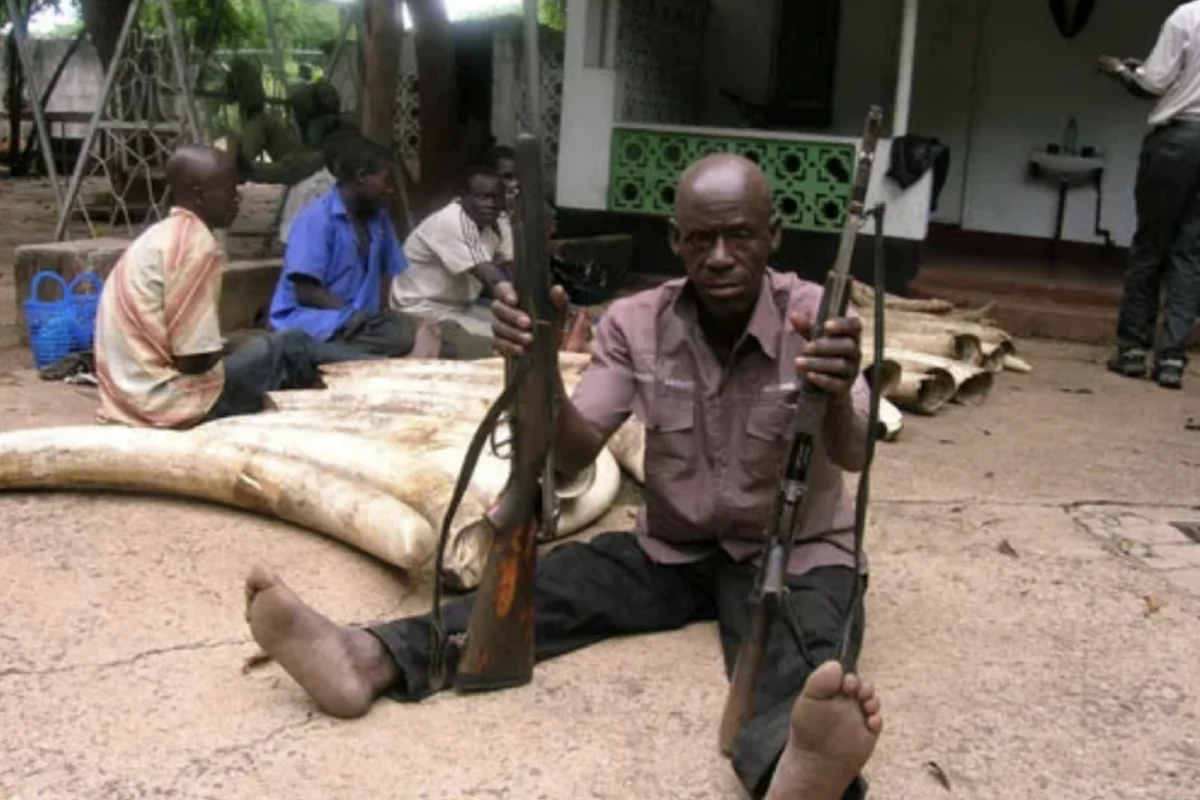
The silence of a Zambian prison cell provides a stark backdrop for the complex, often tragic, narratives of those incarcerated for wildlife offenses. For one inmate, the path to confinement began not with a grand criminal design, but with a simple, transactional interaction: a promise of financial stability offered by a middleman seeking access to ivory and pangolin scales. This individual, like many others, was lured by the prospect of building a home and securing his children’s education—a dream that ultimately collapsed into a multi-year prison sentence. His story serves as a human-centered lens through which to view the vast, multifaceted machinery of the illegal wildlife trade, an industry that relies on a stratified hierarchy ranging from vulnerable rural harvesters to the shadowy, powerful kingpins of international syndicates.
A recent collaborative study conducted by Wildlife Crime Prevention (WCP) Zambia and Copperbelt University has shed new light on the motivations, socio-economic drivers, and post-release challenges of those operating at the grassroots level of this illicit industry. By interviewing 302 inmates across 32 correctional facilities, researchers aimed to move beyond the simplistic "poacher as villain" trope, seeking instead to understand the systemic failures that push individuals toward criminal activity.

The Anatomy of a Global Crisis
Wildlife crime in Zambia is inextricably linked to the nation’s geography. Sharing borders with eight other countries, Zambia serves as both a critical source for wildlife products and a high-traffic corridor for international contraband. According to the research team, wildlife offenders represent approximately 7% of the nation’s total prison population. The legal consequences for these actions are severe, reflecting the government’s commitment to conservation; a first-time conviction for hunting in a protected area can result in a three-to-ten-year sentence, while crimes involving high-value species like elephants or rhinos can lead to incarceration for periods exceeding 20 years.
The study, published in the International Journal of Law, Crime and Justice, highlights that the majority of those behind bars are men, with a median age of over 41. While most are first-time offenders, the data reveals a troubling underlying trend: a third of respondents admitted to prior involvement in wildlife crime that went undetected, suggesting that many grassroots participants operate for years before their eventual capture.
Drivers of Illicit Activity: Necessity vs. Opportunity
The research categorized wildlife offenses into seven primary areas, including bushmeat hunting, illegal fishing, and the high-stakes trafficking of pangolin scales and elephant ivory. Perhaps the most significant finding of the study is that 40% of participants identified "opportunity" as the primary catalyst for their actions. This often manifests as a random encounter—stumbling upon a pangolin while traveling to market to sell produce—that creates an immediate, albeit illegal, financial incentive.

For another 16% of the incarcerated population, the motivation was rooted in stark existential necessity. In regions where subsistence farming provides an unpredictable income and social safety nets are virtually non-existent, a sudden medical emergency or a failed harvest can create a desperate need for cash. As the researchers noted, the absence of accessible credit or banking infrastructure means that illegal wildlife trade often acts as an informal, albeit dangerous, financial buffer for the rural poor.
The Limitations of Current Deterrence
The traditional approach to combating wildlife crime has focused heavily on enforcement and incarceration. However, the study suggests that this model is fundamentally flawed when applied to the lower rungs of the supply chain. Because these participants are easily replaceable, their arrest provides only a temporary disruption to the trade, failing to dismantle the larger syndicates that organize and profit from the poaching.
Furthermore, the "deterrence" aspect of prison time appears complicated by the lack of viable post-release alternatives. When asked about their intentions upon leaving prison, only about a third of respondents explicitly stated a desire to leave the industry. A significant portion expressed profound anxiety regarding their future, with one inmate poignantly stating, "If I leave this place with nothing to do, I am afraid of going back to crime." The lack of economic reintegration programs means that many ex-offenders return to the same poverty-stricken environments that led them to poaching in the first place.

Strategic Reintegration and Future Directions
Recognizing that incarceration alone is insufficient to end the cycle, WCP Zambia has begun piloting programs aimed at addressing the post-release reality of offenders. One such project, a six-month initiative, focused on reconnecting inmates with their families and planning for sustainable livelihoods prior to their release.
Emma Richards, the study’s lead author and a wildlife criminologist, emphasizes the importance of practical, localized support. "You can have somebody doing a carpentry project in prison," she explains, "but if they get out and they’ve got no access to carpentry tools, what have you really achieved?" WCP Zambia’s pilot program has begun providing released offenders with essential equipment for small-scale farming and initial capital for small retail businesses. These initiatives aim to replace the immediate financial incentive of poaching with legal, reliable income streams.
Meredith Gore, an environmental crime researcher at the University of Maryland, notes that this human-centric approach is vital. "The idea is that it’s a different alternative," Gore says. "Prison doesn’t really do anything to address the post-release reality." She further suggests that standard criminological models—often based on Western recidivism data—may not be the appropriate lens through which to view wildlife crime in an African context, especially given the complex social dynamics and the varying levels of stigma associated with these crimes.

The Broader Implications for Conservation
The findings of this study pose a challenge to policymakers and conservationists alike. While enforcement remains a necessary tool to protect endangered species, the research underscores that it cannot be the only tool. If the goal is long-term, sustainable conservation, the focus must shift toward community-led development and economic empowerment.
The lack of stigma reported by male respondents upon returning to their communities suggests that, in some areas, wildlife crime is not viewed with the same social disapproval as other criminal acts. This cultural perception complicates the task of deterrence and reinforces the need for programs that work with local populations rather than merely against them.
As the research team continues to analyze their data, they hope to spark a broader conversation about how the international community supports wildlife protection. By viewing offenders through a lens of human complexity rather than just as perpetrators, there may be a path toward reducing the pressure on wildlife populations while simultaneously improving the lives of the people living on the front lines of these ecosystems.

Moving Toward a More Holistic Approach
The study serves as a foundational text for future policy, emphasizing that wildlife crime is not a monolith. It is a nuanced issue that touches on poverty, economic development, and environmental stewardship. The researchers stress that their work has raised more questions than it has answered, particularly regarding the gendered dimensions of the trade and the long-term effectiveness of re-entry programs.
The urgency of these findings cannot be overstated. With species like the African elephant facing persistent threats from organized poaching, the need for effective, evidence-based solutions is greater than ever. By integrating social science with traditional conservation efforts, Zambia is positioning itself at the forefront of a shift in how the world addresses wildlife crime—moving away from a purely punitive model and toward a strategy that acknowledges the humanity and the socio-economic realities of those involved.
In the final analysis, the path to ending the illegal wildlife trade lies in creating a landscape where the value of a living animal, and the stability of the communities that surround it, are greater than the short-term profits offered by the criminal syndicates. The insights from the inmates themselves—the "low-level links" who are often the first to be arrested—may ultimately provide the key to building that future.

