

If you or someone you know may be experiencing a mental health crisis, contact the 988 Suicide & Crisis Lifeline by dialing or texting “988.”
For decades, the standard medical and psychological approach to suicide prevention has relied heavily on the identification and treatment of individuals deemed to be at acute risk. Psychiatrists, therapists, and emergency department personnel are routinely tasked with evaluating patients, prescribing medications, and recommending psychotherapy to prevent self-harm. Yet, a growing coalition of clinicians, public health researchers, and advocates argue that this individualized model, while essential, is fundamentally insufficient to address the scale of the crisis. At the heart of this debate is a stark and uncomfortable clinical reality: predicting precisely who will die by suicide remains one of the most difficult challenges in modern medicine.
Paul Nestadt, a practicing psychiatrist, co-author of numerous academic papers on suicide mechanics, and graduate educator, understands these limitations better than most. Despite treating suicidal patients and studying the phenomenon for years, Nestadt offers a blunt assessment of predictive capabilities. He admits that he cannot definitively identify which of his patients is likely to die by suicide over a given six-month period, a limitation that reflects a broader truth across the medical community. Empirical research demonstrates that clinical predictions of suicidal behavior perform only slightly better than a random coin toss—a statistical baseline that has failed to improve significantly over the past half-century.
This predictive failure has catalyzed a major philosophical shift among certain researchers and public health experts. Rather than focusing exclusively on the near-impossible task of identifying every high-risk individual and forcing clinical interventions, these experts advocate for population-level environmental controls. Chief among these strategies is the restriction of access to lethal means, a policy framework designed to reduce fatalities by making the mechanics of self-harm physically more difficult or delayed, regardless of whether a patient has been formally flagged by the medical system.
The Scale and Evolution of the Crisis
The urgency behind these policy discussions is underscored by rising mortality figures across the United States. According to preliminary federal data, more than 28,000 individuals killed themselves using a firearm last year, accounting for over half of all suicide deaths nationwide. While overall suicide rates have experienced periodic dips, gun-related suicides have broken records for five consecutive years, highlighting an escalating public health challenge that cuts across traditional demographic lines.
Historically, the highest rates of firearm suicide have been concentrated among middle-aged white men and military veterans—demographic cohorts that have experienced elevated risk profiles for decades. However, recent epidemiological data reveals a concerning expansion of this vulnerability. Gun suicides have seen notable increases among women, as well as among Black and Latino men. Public health analysts point out that a massive surge in first-time gun ownership during the COVID-19 pandemic—when nearly 30 million firearms were acquired, including 11 million by first-time buyers—further emphasizes the necessity for prevention strategies that reach beyond traditional clinical environments.
The Logic of Means Restriction and the Myth of Substitution
A common objection to restricting access to lethal means—whether through physical barriers on bridges, prescription limitations for pharmaceutical drugs, or regulations on firearms—is the assumption of substitution. Critics often argue that individuals determined to end their lives will simply find an alternative method, rendering preventative barriers futile.
However, comprehensive psychological and epidemiological research consistently refutes this assumption. Studies demonstrate that creating barriers or introducing friction for one specific method does not typically result in a direct migration to another. A critical factor in this dynamic is the temporal nature of a suicidal crisis. Research into the duration of suicidal ideation indicates that a significant percentage of crises are acute and short-lived, with individuals spending anywhere from less than an hour to as little as five minutes between the initial decision to act and the execution of the attempt.
Because the impulse can be fleeting, any intervention that introduces delay—such as requiring an individual to unlock a secure gun safe or navigate a waiting period—provides a crucial window of time. This delay can allow the acute emotional surge to subside, offer an opportunity for rational reconsideration, or create a window for a bystander or family member to intervene.

The Traffic Safety Analogy
To better understand the rationale behind population-level restrictions, public health advocates frequently draw comparisons to modern traffic safety regulations. Dr. Nestadt argues that managing suicide risk should mirror how society approaches motor vehicle accidents. Regulators do not attempt to prevent traffic fatalities by administering psychological evaluations, testing drivers’ reaction times, or cataloging individuals prone to minor fender-benders before they hit the road.
Instead, federal and state governments implemented systematic, structural interventions: mandatory speed limits, compulsory seatbelt laws, and federal mandates requiring automotive manufacturers to install airbags and shatter-resistant windshields. Over decades, these environmental engineering and policy controls drove down the rate of crash-related fatalities significantly.
Applying this analogy to suicide prevention involves policies that structurally delay or regulate acquisition and access. Examples include permit-to-purchase licensing systems, universal background checks, and mandatory waiting periods for firearm transactions. Academic evaluations of these policies show tangible results. A prominent study examining Connecticut’s permit-to-purchase law found an association with an approximate 15% decrease in local firearm suicide rates, whereas the repeal of a similar law in Missouri was linked to a 16% increase in firearm suicides. Furthermore, child access prevention (CAP) laws—enacted in approximately three dozen states and the District of Columbia—require gun owners to securely lock up firearms in homes where minors reside, a practice clinically proven to reduce youth suicides.
Political Polarization and Legislative Realities
Despite the empirical support for means restriction, discussing firearms within the context of suicide prevention remains a profound political lightning rod in the United States. Even though suicide prevention is traditionally viewed as a bipartisan objective, proposals touching on background checks, waiting periods, or extreme risk protection orders frequently divide lawmakers and ignite intense ideological debates.
Gun owners and firearm trade associations argue that broad regulatory policies infringe upon Second Amendment rights and unfairly penalize law-abiding citizens. Many policymakers view restrictions as a nonstarter, favoring approaches that emphasize individual responsibility, mental health awareness, and educational campaigns.
At the federal level, the political landscape has shifted under the administration of President Donald Trump, a staunch ally of gun rights advocates. The administration has systematically rolled back numerous federal firearms regulations, rescinded a prior Surgeon General advisory that classified gun violence as a public health crisis, and revoked specific federal grants aimed at addressing community gun violence while cutting federal research staff.
While the White House did not respond to targeted inquiries regarding how these rollbacks might influence national gun suicide statistics, administration officials maintain a stated commitment to mental health initiatives. White House spokesperson Lauren Bis emphasized that President Trump is dedicated to broad health improvement, pointing to administrative support for innovative treatments, such as the development of psychedelic therapies for severe mental illness, alongside the announcement of $52.5 million in targeted grant funding for veteran suicide prevention programs.
The Promise and Limitations of Red Flag Laws
One specific policy instrument that has gained legislative traction across 22 states and the District of Columbia, despite persistent political pushback, is the Extreme Risk Protection Order (ERPO), commonly known as a red flag law. These legal mechanisms empower judges to temporarily remove firearms from individuals when clear evidence indicates they pose an imminent danger to themselves or others.
Although red flag laws are frequently debated in the public sphere in the aftermath of mass shootings, empirical studies suggest they are statistically more effective at preventing suicides than stopping mass casualty events. Research indicates that for every 10 to 20 firearms legally removed under ERPO provisions, one suicide is successfully averted.
However, advocates and researchers are acutely aware of the structural limitations inherent in these laws. Red flag laws rely entirely on identification—someone must recognize the warning signs and initiate legal proceedings. This presents a major obstacle, as individuals most vulnerable to firearm suicide often display no discernible warning signs to family members or clinicians.
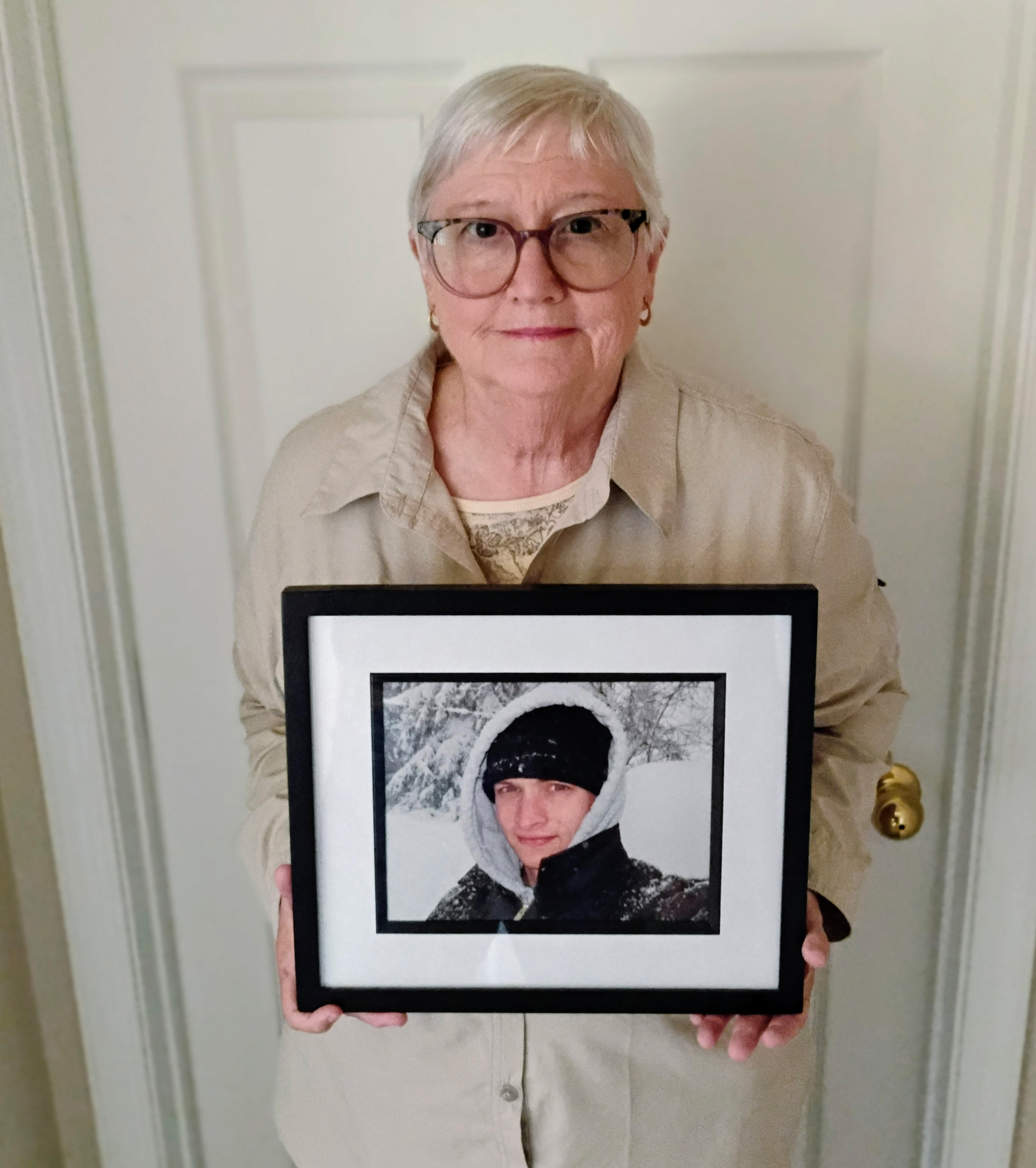
Case studies from families affected by suicide illustrate this disconnect. Dorothy Paugh, an active advocate for gun safety legislation and mental health awareness, experienced the tragedy of suicide across two generations. In 1965, her father purchased a handgun and died by suicide following sudden job loss and financial distress. Decades later, in 2012, Paugh lost her 25-year-old son, Peter, who also died by a self-inflicted gunshot wound. Unlike her grandfather’s situation, Peter exhibited no overt warning signs; he had recently purchased a home, celebrated his brother’s birthday, and bought early Mother’s Day gifts. Paugh notes that even if red flag laws had been in place at the time, she would not have known to utilize them because her son’s distress was entirely hidden.
This dynamic is supported by clinical research. Michael Anestis, a clinical psychologist and executive director of the New Jersey Gun Violence Research Center, points out that individuals who die by firearm suicide are statistically less likely to have sought prior mental health care. Furthermore, a significant majority of service members and veterans who die by gun suicide never disclose their suicidal ideation to anyone in the months preceding their death. Consequently, while red flag laws provide a critical legal tool for intervention in recognized cases, they fail to capture the many individuals who experience silent, unarticulated crises.
Bridging the Divide: Grassroots and Industry Collaboration
Recognizing the limitations of reactive legal measures and the political gridlock surrounding broad federal mandates, public health advocates and industry stakeholders have increasingly turned toward collaborative, community-level interventions. These initiatives seek to bridge the gap between public safety objectives and gun ownership rights by fostering localized partnerships among gun store owners, public health researchers, community libraries, and advocacy organizations.
For instance, programs like the Gun Shop Project and various local initiatives have worked to distribute free firearm safety locks directly to consumers, establish secure off-site storage networks where gun owners can temporarily house their firearms during a personal crisis, and train commercial firearms dealers to recognize behavioral warning signs to avoid selling weapons to individuals experiencing acute distress.
Concurrently, mainstream firearms organizations have engaged in targeted educational outreach. The National Shooting Sports Foundation (NSSF), representing the manufacturing and retail sectors, has partnered with organizations like the American Foundation for Suicide Prevention to distribute informational brochures and display safety materials inside commercial gun shops. Bill Brassard, senior director of suicide prevention initiatives at the NSSF, emphasized that the industry’s objective is to provide actionable educational resources to the firearm-owning community to help prevent tragedies.
Conversely, organizations such as the National Rifle Association maintain that legislative restrictions miss the root causes of the crisis. NRA spokesperson Justin Davis stated that true solutions must focus on underlying mental health conditions rather than political efforts to restrict the constitutional rights of law-abiding citizens, asserting that individuals posing a genuine danger require comprehensive clinical intervention rather than the mere removal of a specific instrument.
Moving Forward: Balancing Rights and Preservation
As the nation grapples with persistently high rates of firearm-related mortality, the dialogue surrounding suicide prevention continues to evolve at the intersection of public health, constitutional law, and personal tragedy. While systemic policy debates over background checks, waiting periods, and storage mandates remain polarized, advocates like Dorothy Paugh argue that every incremental step holds immense value.
Acknowledging that no single policy serves as a universal cure-all, Paugh emphasizes that structural interventions, combined with open cultural conversations about mental health and expanded community resources, fundamentally alter survival outcomes. For families who have navigated the profound loss of a parent or a child, the implementation of measures that delay a crisis or provide a moment for intervention represents the difference between life and death.
