Inside the walls of a state minimum-security prison in Cranston, Rhode Island, a man known as Joe is relearning the language of his youth. Before his three-year sentence for drug distribution, Joe worked sporadically as a construction laborer, often spending his weekends on home improvement projects with his youngest daughter. Today, Joe is one of the inaugural participants in a construction pre-apprenticeship program, a vocational lifeline that aims to bridge the gap between incarceration and stable, family-sustaining employment. However, the path to a new career has proven more academically rigorous than he anticipated. Joe, now in his 40s, finds himself grappling with fractions and geometric measurements he hasn’t used in three decades, occasionally calling his teenage children for math tutoring during his allotted phone time.
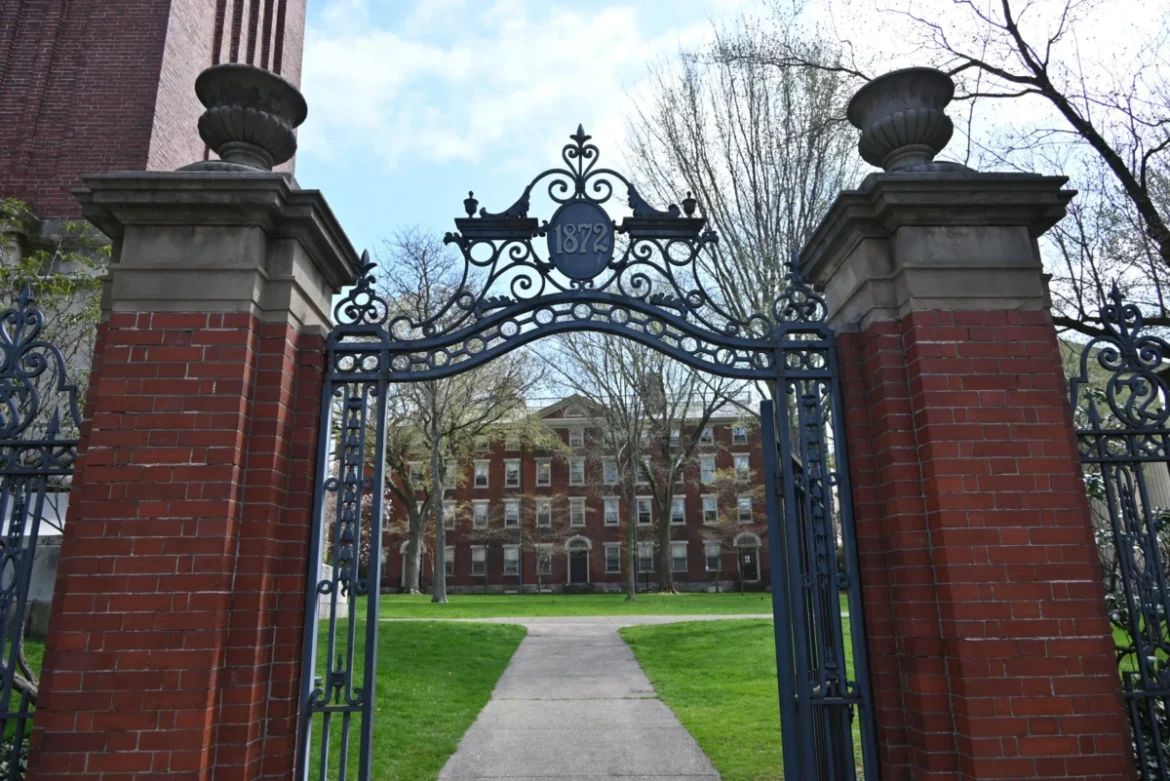
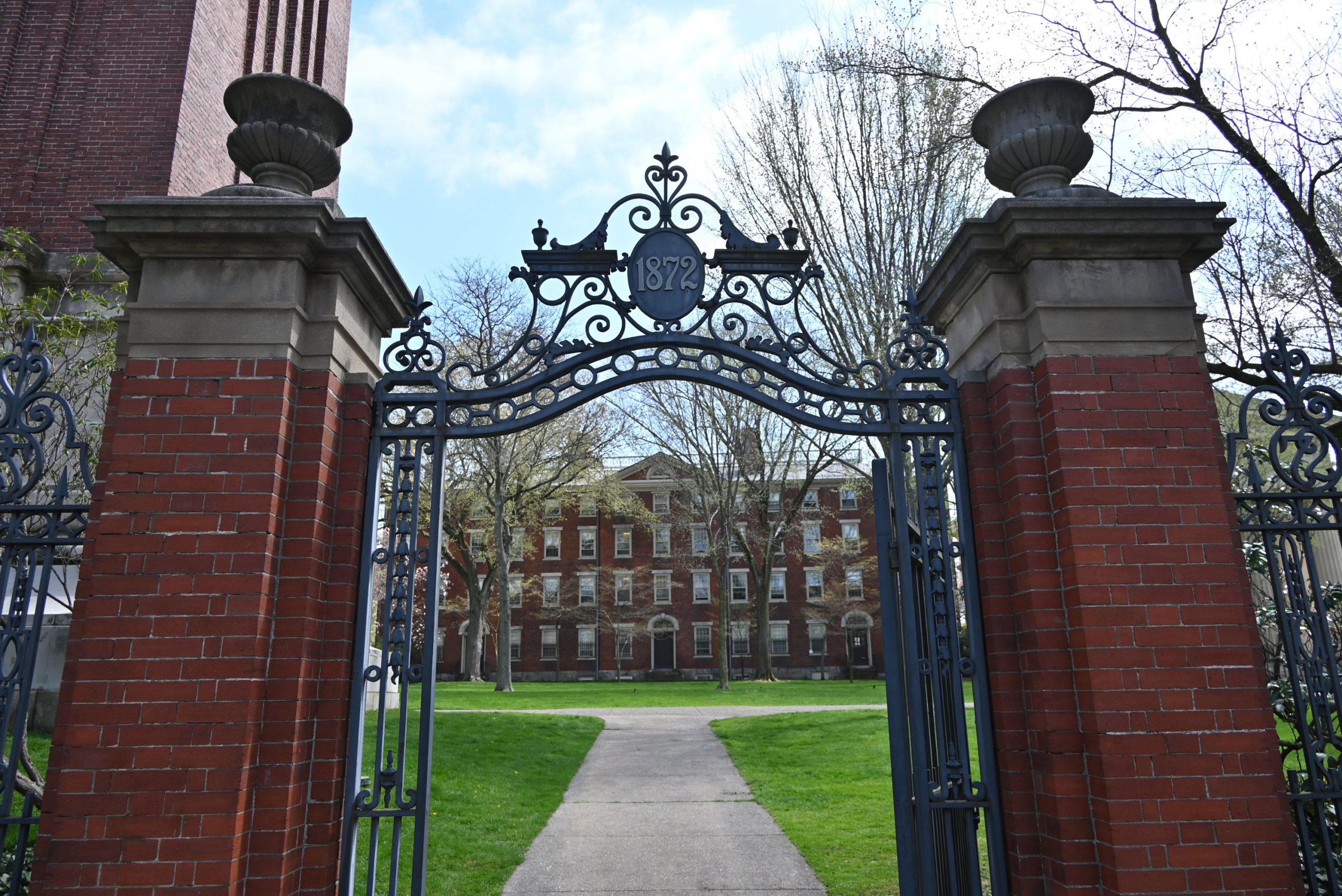
Joe’s opportunity is the direct result of a landmark $50 million commitment by Brown University. Over the next ten years, the Ivy League institution will invest this sum into local workforce development initiatives as part of a July settlement with the Trump administration. The agreement concludes a series of high-stakes federal reviews into Brown’s compliance with anti-discrimination laws, a move that successfully restored the university’s access to hundreds of millions of dollars in federal research and student aid funding. Unlike similar settlements involving Columbia and Cornell Universities, which required direct payments to the federal treasury, Brown’s deal allows the university to redirect potential fines into the local economy through community grants.
The Genesis of the Fifty Million Dollar Commitment
The settlement was reached after the U.S. Department of Education, the Department of Justice, and the Department of Health and Human Services concluded a trio of compliance reviews. While the specific findings of these reviews were not detailed in the public resolution, the threat of losing federal funding was a powerful motivator for the university. Brian Clark, Brown’s vice president for news and strategic campus communications, emphasized that the agreement did not constitute a determination of fault. Instead, he characterized the $50 million investment as a strategic alignment of the university’s service mission with federal priorities regarding workforce readiness.
The "grants-in-lieu-of-fines" approach represents a unique pivot in federal enforcement. By securing a commitment to local job training rather than a standard fine, the administration has sought to demonstrate a tangible benefit to the working class. For Brown, the deal preserves its critical federal partnerships while deepening its ties to the Rhode Island community. Mary Jo Callan, Brown’s vice president for community engagement, noted that the university sought to begin the initiative with "proven providers" to ensure immediate impact.
Building Futures and the Path from Prison to Payroll
One of the primary beneficiaries of the first round of funding is Building Futures, a Rhode Island nonprofit that has spent two decades addressing the dual challenges of a skilled labor shortage in construction and high unemployment in Providence’s most impoverished neighborhoods. Founded by Andrew Cortes, Building Futures operates a 120-hour pre-apprenticeship program designed to prepare individuals for union-level apprenticeships.
The organization’s prison-based program was on the verge of collapse before Brown’s $1.5 million grant arrived. Previously, the program relied on a $40 million federal Department of Justice grant that the Trump administration had recently canceled. Without the infusion of capital from the university, the current cohort—including Joe and his peers—would likely have been the last.
The program is a rigorous simulation of the modern construction site. In a workshop that echoes with the sounds of hammers, drills, and saws, participants undergo a final assessment that Ian Chase, Building Futures’ chief program officer, describes as the "SAT of trade skills." Rather than measuring academic aptitude, the test evaluates "apprenticeship readiness," requiring students to accurately fit drywall, install piping, and frame structures within strict tolerances.
For participants like Kevin, a man in his 30s who dropped out of college due to rising tuition costs, the program offers a viable alternative to the illicit economy. Kevin noted that the hands-on nature of the training provided a sense of purpose that his previous attempts at higher education lacked. By providing these individuals with a marketable skill set, the program aims to lower recidivism rates in a state where the city of Providence accounts for 38 percent of the incarcerated population despite housing only 17 percent of the general residents.
The Political Dichotomy: Rhetoric versus Reality
The settlement with Brown University unfolds against a backdrop of intense national debate over the value of elite higher education. President Donald Trump has frequently used his platform to criticize Ivy League institutions, accusing them of ideological bias and failing to meet the needs of the modern labor market. In his rhetoric, "trade schools" are often framed as the practical, affordable antithesis to "elitist" four-year universities.

Last spring, the President issued an executive order aimed at redirecting federal resources toward programs that train workers for high-paying, skilled trades. A White House fact sheet accompanying the order accused previous administrations of pushing a "college for all" agenda that resulted in an "economically unproductive postsecondary system." This narrative has resonated with many working-class voters who feel alienated by the rising costs of traditional degrees.
However, critics and policy analysts point to a disconnect between the administration’s public praise for vocational training and its budgetary actions. While the administration has steered some existing funds toward apprenticeships, its recent budget proposals sought to reduce future workforce spending by $1.6 billion. Furthermore, the administration proposed significant cuts to the Carl D. Perkins Career and Technical Education Act, a $1.4 billion program that serves as the primary federal funding source for vocational education in high schools and community colleges.
Braden Goetz, a senior policy advisor at the Center on Education and Labor at New America, suggested that the high-profile settlements with universities like Brown may serve as a distraction from broader federal funding cuts. Goetz argued that while the $50 million is a boon for Rhode Island, it does not compensate for the systemic reduction in support for community colleges, which educate the majority of the nation’s working-class students.
Expanding the Scope: Early Childhood Education at CCRI
The second major beneficiary of the initial $3 million grant installment is the Community College of Rhode Island (CCRI). The college plans to use its share to address a critical shortage in the state’s early childhood education workforce. Unlike the construction program, which focuses on the trades, the CCRI initiative highlights the essential "care economy" that allows the rest of the workforce to function.
Poonam Katoch, a teacher at the Academy for Little Children in West Warwick, is a beneficiary of this expansion. While working full-time, Katoch is completing a 24-credit certificate in early childhood education at CCRI. The grant from Brown will allow CCRI to train an additional 180 teachers over the next three years, providing them with the credentials necessary to secure higher wages and remain in a field plagued by high turnover.

Madeline Burke, CCRI’s associate vice president for career, technical, and continuing education, emphasized that a stable childcare sector is an economic necessity. "If folks don’t have childcare, they can’t go to work," Burke stated, noting that the investment in early educators has a multiplier effect on the local economy.
Broader Implications and Future Outlook
The Brown University settlement may serve as a blueprint for future federal oversight of higher education. By requiring elite institutions to fund local workforce development, the government is effectively forcing a redistribution of resources from wealthy endowments to community-based vocational programs. The administration has hinted at similar deals elsewhere, with claims that Harvard University might eventually commit $500 million toward a network of trade schools, though Harvard has yet to confirm such an arrangement amid ongoing litigation.
For the city of Providence, where the poverty rate stands at 22 percent—double the state average—the $50 million investment represents a significant opportunity for structural change. Rhode Island Department of Corrections Lt. Brian Carvalho, who oversees the pre-apprenticeship program at the state’s minimum-security prison, believes that teaching trades is a matter of public safety. He noted that most participants enter the program unable to read a ruler, but leave with the fundamentals necessary to become productive members of society.
As Brown University begins reviewing applications for its next $5 million installment of workforce grants, the focus remains on whether these localized investments can offset the broader volatility in federal education policy. For Joe, the construction student in Cranston, the high-level political maneuvering is secondary to the immediate task at hand. His goal is to master the math of the job site, finish his sentence, and return home with a career that allows him to work with his hands and provide for his family—a goal that, for the first time in years, feels within reach.