
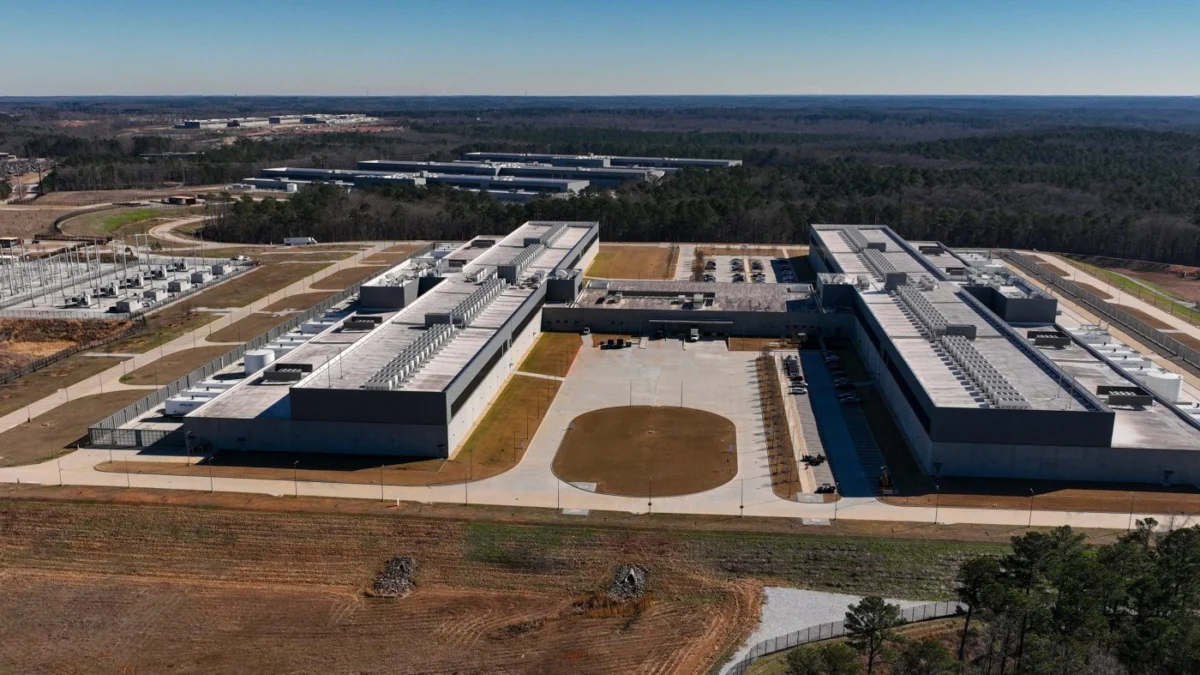
The Maine legislature has taken a significant step in regulating the rapidly expanding digital infrastructure sector, passing the nation’s first statewide ban on the development of large data centers. The landmark legislation, specifically House Paper 0207, approved on Tuesday, imposes a temporary moratorium lasting 1.5 years on the construction of new data centers that consume more than 20 megawatts of power. This decisive action underscores a growing national concern over the environmental impact, energy demands, and economic implications of these critical yet resource-intensive facilities. The bill now awaits the signature of Governor Janet Mills (D), whose office has been reached for comment regarding the legislative outcome.
Governor Mills had previously advocated for an exemption to the ban for a specific data center project slated for a defunct paper mill site. This proposed development, seen by some as a potential economic revitalization opportunity for a struggling industrial area, ultimately failed to garner legislative support, signaling the legislature’s firm commitment to a comprehensive pause on new large-scale data center construction. The rejection of the governor’s proposed exception highlights the robust consensus among lawmakers regarding the necessity of a statewide, uniform approach to this burgeoning issue.
The Rationale Behind Maine’s Moratorium
Maine’s legislative initiative comes amidst escalating apprehension from environmental advocates, energy policy experts, and local communities across the United States regarding the unchecked proliferation of data centers. These facilities, which house the vast servers and networking equipment essential for cloud computing, artificial intelligence, streaming services, and virtually all digital operations, are notorious for their immense consumption of electricity and water.
The average large data center can consume as much electricity as tens of thousands of homes, placing significant strain on local and regional power grids. This demand often necessitates upgrades to existing infrastructure, which can be costly and lead to increased electricity rates for residential and commercial customers. Furthermore, a substantial portion of this energy consumption is dedicated to cooling the high-density server racks, often relying on vast quantities of water through evaporative cooling systems. In regions facing water scarcity, this usage can exacerbate environmental concerns and create competition for vital resources.
For Maine, a state known for its pristine natural environment and a growing commitment to renewable energy, the decision to implement a moratorium was driven by a confluence of factors. Lawmakers expressed concerns about the potential for large data centers to overwhelm the state’s existing grid infrastructure, potentially hindering efforts to integrate more renewable energy sources like wind and solar. There were also apprehensions about the impact on electricity prices for Maine residents and businesses, as well as the long-term sustainability of the state’s water resources, particularly in localized areas where facilities might concentrate. The 1.5-year pause is intended to provide a critical window for a thorough assessment of these complex issues.
Establishing a Coordinating Council for Future Policy
Central to Maine’s temporary ban is the establishment of a coordinating council, tasked with developing comprehensive recommendations and guidelines to inform the state’s future policies on large data centers. This council, which will comprise government officials, energy experts, environmental scientists, economists, and other relevant stakeholders, will delve into the multifaceted implications of data center development. Its mandate will likely include studying best practices for energy efficiency, exploring strategies for integrating renewable energy sources, assessing water conservation technologies, analyzing the true economic benefits versus costs (including the impact of potential tax incentives), and developing robust siting criteria to mitigate local community impacts.
The bill allocates $95,000 to support the council’s activities, underscoring the legislature’s commitment to a data-driven, deliberative process. This funding will enable the council to conduct research, consult with national and international experts, and engage in public outreach to gather diverse perspectives. The outcome of the council’s work is expected to lay the groundwork for a more sustainable and responsible framework for data center development in Maine, ensuring that future projects align with the state’s environmental goals and economic priorities.
A National Trend: States and Localities Push Back
Maine’s bold move is not an isolated incident but rather a leading example of a burgeoning national trend. Across the United States, state legislatures and local municipalities are increasingly scrutinizing data center projects and considering new restrictions. Reports indicate that at least 12 other states, with bipartisan support, are currently evaluating similar temporary bans or other regulatory measures on these construction projects. This widespread deliberation reflects a growing recognition that while data centers are essential for the digital age, their growth cannot proceed without careful consideration of their societal and environmental footprint.
The concerns driving this national conversation are varied but often converge on key themes:
- Energy Consumption: The massive electricity demand of data centers puts stress on existing grids, drives up energy costs, and can increase reliance on fossil fuels if renewable sources are not readily available or integrated.
- Water Usage: Cooling systems, particularly evaporative cooling, consume vast amounts of water, raising concerns in regions prone to drought or water scarcity.
- Land Use: Large data center campuses require significant land, often in areas undergoing rapid development, leading to concerns about sprawl and impact on local ecosystems.
- Economic Impact: While proponents tout job creation and tax revenue, critics argue that the jobs are often limited post-construction, and generous tax incentives may not always provide a net benefit to communities when factoring in infrastructure strain and environmental costs.
- Local Control: Many communities feel that large data center projects are imposed upon them without sufficient local input or consideration for their specific needs and resources.
Local and State-Level Precedents and Debates
Beyond state legislative efforts, local communities are also asserting greater control over data center development. Earlier this month, Port Washington, Wisconsin, made headlines by becoming the first city to approve a referendum requiring larger data center projects to seek direct voter approval before proceeding with construction. This groundbreaking initiative empowers residents with a direct say in significant infrastructure developments that could profoundly impact their local environment and economy, setting a precedent for citizen-led oversight.
In Pennsylvania, a bill introduced last month in the state legislature seeks to place explicit restrictions on data centers’ impacts on electricity bills. The measure, which has already been approved by the state’s lower chamber and now awaits consideration in the Pennsylvania Senate, directly addresses concerns that the high energy consumption of data centers can disproportionately drive up utility costs for residential consumers and small businesses. This legislative effort underscores a focus on protecting ratepayers from the economic externalities of industrial-scale energy consumption.
The issue has also become a prominent talking point in midterm elections, particularly in states grappling with the proliferation of these facilities. In Georgia, for instance, where the state legislature is considering a temporary ban of over two years on data center construction, gubernatorial candidates are actively debating the merits and drawbacks of these projects. State Representative Derrick Jackson (D), a sponsor of the proposed moratorium, has highlighted the environmental and community impacts as central to his campaign platform. Conversely, former GOP Lieutenant Governor Geoff Duncan (D) has articulated a perspective often echoed by industry advocates, emphasizing the economic opportunities. Duncan notably stated, "We [shouldn’t] as a state come in and tell a community not to do something that could eventually become one of the largest economic tailwinds the community’s seen in decades, if not a generation." This dichotomy illustrates the complex balance policymakers face between fostering economic development and addressing environmental and social concerns.
Federal Scrutiny and the Future of Digital Infrastructure
The regulatory push is not confined to state and local levels; federal lawmakers are also beginning to engage with the issue. On the federal level, prominent Democrats have led efforts to establish safeguards around data center construction. Senator Bernie Sanders (I-Vt.) and Representative Alexandria Ocasio-Cortez (D-N.Y.) jointly introduced the "AI Data Center Moratorium Act." This ambitious bill aims to bar the construction of any new data center until it can be definitively determined that these facilities will not pose health or safety threats to surrounding communities. Such threats could encompass issues ranging from excessive noise pollution and heat dissipation to potential electromagnetic interference and the risks associated with the storage and management of hazardous materials used in cooling systems or battery backups. A federal moratorium would represent a seismic shift in how the nation approaches its digital infrastructure growth, potentially impacting the trajectory of artificial intelligence development and cloud computing expansion across the country.
Implications and the Road Ahead
Maine’s decision to enact the nation’s first statewide data center moratorium is a pivotal moment, setting a potential precedent for other states grappling with similar challenges. While the temporary nature of the ban allows for a period of careful study and policy formulation, its immediate effect is to send a clear signal to the data center industry: unchecked growth without regard for local impacts and resource constraints is no longer acceptable.
For the industry, this trend presents both challenges and opportunities. The immediate challenge lies in navigating a potentially patchwork regulatory landscape, where varying state and local rules could complicate siting decisions and investment strategies. However, it also presents an opportunity for innovation, encouraging the development of more energy-efficient, water-saving, and environmentally sustainable data center technologies and operational practices. Companies that proactively embrace green technologies and community-centric development models may find themselves better positioned in a future regulatory environment.
Ultimately, the Maine moratorium, alongside parallel efforts across the country, reflects a broader societal reckoning with the true costs of our increasingly digital world. As demand for data storage and processing continues to skyrocket, fueled by advancements in AI, IoT, and big data, the question of how to sustainably power and cool these essential facilities will remain a critical policy challenge. The deliberations of Maine’s coordinating council, and the outcomes of similar initiatives nationwide, will undoubtedly shape the future landscape of digital infrastructure development, striving to balance technological progress with environmental stewardship and community well-being. The eyes of the nation, and indeed the world, will be watching Maine as it navigates this complex and consequential path forward.

