
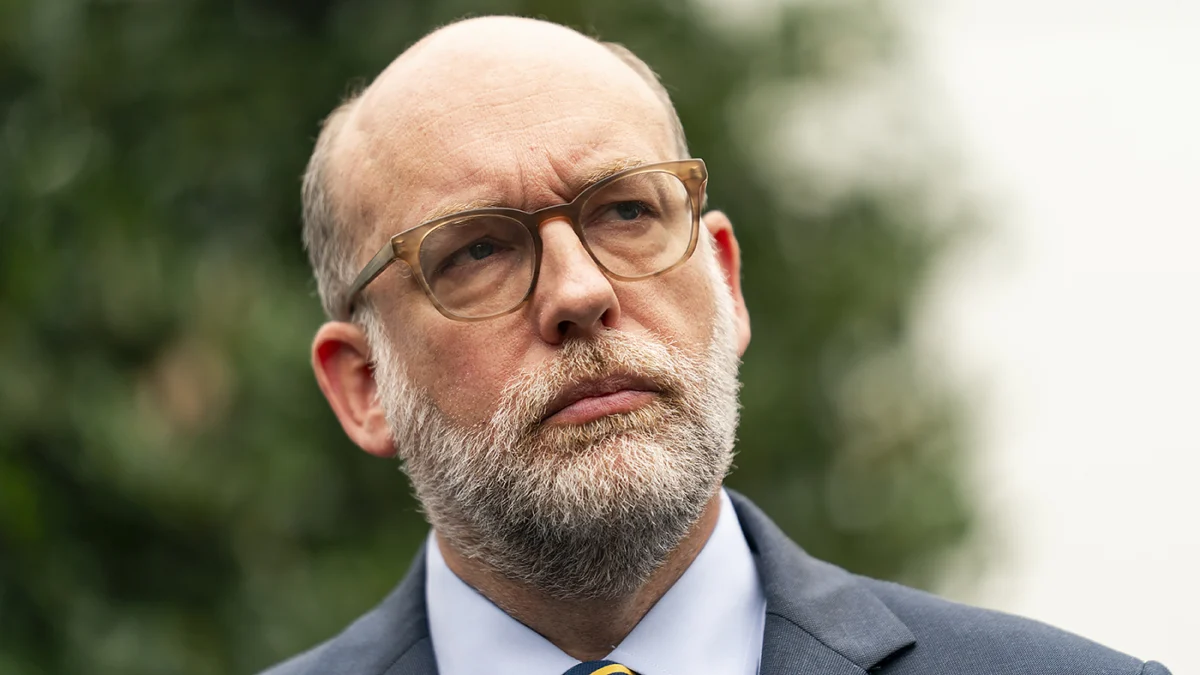
Office of Management and Budget (OMB) Director Russ Vought appeared before a House Budget Committee panel on Wednesday morning to present and defend President Trump’s highly anticipated fiscal year 2027 White House budget request. The proposal, unveiled earlier this month, signals a dramatic shift in federal spending priorities, advocating for a substantial increase in defense outlays alongside significant cuts to non-defense programs. The hearing, which commenced at 10:15 a.m. EDT, served as the initial formal opportunity for congressional lawmakers to scrutinize the administration’s fiscal vision for the upcoming year, setting the stage for what is expected to be a contentious budget season.

The cornerstone of the Trump administration’s FY2027 budget is a staggering request for $1.5 trillion in defense spending, representing an approximate 42 percent increase compared to the previous year’s allocation for 2026. This aggressive expansion of military funding is posited as essential for national security, aiming to bolster military readiness, invest in advanced weaponry, and project American strength on the global stage amidst evolving geopolitical challenges. Concurrently, the budget proposes to slash non-defense discretionary spending by $73 billion, a move justified by the administration as targeting "woke, weaponized, and wasteful programs." This reduction is also intended to facilitate a devolution of certain responsibilities and associated funding from the federal government back to state and local authorities, aligning with a broader philosophy of decentralization and limited federal intervention.
A Deep Dive into the Fiscal 2027 Budget Priorities

The proposed $1.5 trillion defense budget marks one of the most significant year-over-year increases in recent history, excluding periods of major conflict. Proponents argue this infusion of capital is critical to counter emerging threats from rival global powers, particularly in domains such as cyber warfare, artificial intelligence, and hypersonic weapons development. The administration’s rationale likely emphasizes a need to modernize aging military infrastructure, enhance troop capabilities, and ensure a technological edge over adversaries. For instance, the budget might allocate considerable funds to naval shipbuilding to expand the fleet, accelerate research and development for next-generation fighter jets, or invest in missile defense systems designed to protect against sophisticated ballistic threats. Such an increase could also be framed as a jobs program, stimulating growth in the defense industry and related technological sectors across various states, from aerospace hubs in California and Washington to shipyards in Virginia and Maine. However, critics often raise concerns about the efficiency of such large defense expenditures, potential for waste, and the prioritization of military solutions over diplomatic or developmental aid.
On the other side of the ledger, the $73 billion cut to non-defense spending is positioned as a measure to restore fiscal discipline and streamline government operations. The administration’s rhetoric around "woke, weaponized, and wasteful programs" suggests a targeting of initiatives perceived to be ideologically driven, inefficient, or exceeding the federal government’s proper scope. While specific programs were not detailed in the initial summary, such language typically encompasses a wide array of areas, including:

- Environmental Protection: Cuts could target climate change research, renewable energy initiatives, or regulatory bodies deemed to hinder economic growth.
- Social Services: Programs related to housing assistance, nutrition support, or community development might face reductions.
- Education: Funding for certain federal education grants or research programs could be curtailed, particularly those focused on specific social justice initiatives.
- Arts and Humanities: Cultural funding, often a target for conservative administrations, could see significant decreases.
- Regulatory Agencies: Departments overseeing business, labor, or consumer protection might experience budget contractions, reflecting a deregulatory stance.
The proposal to return "some state and local responsibilities to their respective governments" implies a shift in federal funding mechanisms, potentially leading to block grants with fewer federal mandates or outright defunding of programs previously supported by Washington. This approach would place a greater financial and administrative burden on state and local governments, which would then need to decide whether to absorb these costs, find alternative funding sources, or discontinue the programs. This aspect of the budget highlights a long-standing debate over federalism and the appropriate balance of power and responsibility between different levels of government.
The Federal Budget Process: A Complex Journey

The President’s budget request, while a significant policy statement, is merely the opening salvo in a lengthy and often contentious annual process. The Office of Management and Budget (OMB), under Director Vought’s leadership, plays a pivotal role in this process. OMB’s responsibilities extend beyond merely compiling agency requests; it involves detailed policy analysis, economic forecasting, and ensuring that agency budgets align with the President’s overarching priorities. The request presented to Congress is the culmination of months of internal negotiations and reviews within the Executive Branch.
The typical timeline for the federal budget process unfolds as follows:

- Spring/Summer (preceding fiscal year): OMB issues guidance to federal agencies for their budget requests. Agencies then develop and submit their detailed proposals.
- Fall/Winter: OMB reviews agency requests, conducts hearings, and makes final recommendations to the President. The President and senior advisors make final decisions on policy priorities and spending levels.
- First Monday in February (typically): The President submits the full budget request to Congress. For FY2027, this would have been in February 2026.
- Congressional Review (February onwards):
- House and Senate Budget Committees: Hold hearings, like the one Vought attended, to examine the President’s request. They then draft and approve their own budget resolutions, which set overall spending limits and revenue targets for the coming fiscal year. These resolutions are not law but serve as blueprints for appropriations.
- Appropriations Committees: Based on the budget resolution, the House and Senate Appropriations Committees, through their 12 subcommittees, draft detailed appropriations bills that allocate specific funds to federal agencies and programs.
- Full Chamber Votes: Both the House and Senate vote on their respective appropriations bills.
- Conference Committee: Differences between House and Senate versions are reconciled in a conference committee.
- Final Passage: Both chambers vote on the reconciled bill.
- October 1: The new fiscal year begins. If appropriations bills are not signed into law by this date, Congress must pass continuing resolutions (CRs) to keep the government funded at previous levels, or face a government shutdown.
Given this intricate process, the President’s budget request rarely passes Congress in its original form. It serves more as a political and fiscal roadmap, outlining the administration’s priorities and initiating negotiations with the legislative branch.
Initial Reactions and Political Battle Lines

As anticipated, the Trump administration’s FY2027 budget request has already drawn sharp criticism, particularly from congressional Democrats. Even before Director Vought’s testimony, leading Democratic voices had expressed strong opposition, decrying the proposed cuts to non-defense spending as detrimental to essential public services and the well-being of American families.
Democratic lawmakers are likely to argue that slashing funds for programs such as environmental protection, public health, education, and affordable housing would disproportionately harm vulnerable populations and undermine long-term societal progress. They may highlight specific examples of successful federal programs that would be jeopardized by these cuts, painting a picture of reduced access to healthcare, diminished educational opportunities, and a weakened social safety net. Furthermore, the characterization of certain programs as "woke" or "wasteful" is expected to be met with strong ideological pushback, with Democrats defending these initiatives as vital investments in diversity, equity, and a just society.

Conversely, many Republicans in Congress are expected to largely support the administration’s fiscal framework. Fiscal conservatives will likely laud the proposed non-defense cuts as a necessary step towards reducing government bloat and curbing federal spending, aligning with their long-held principles of limited government and fiscal responsibility. The substantial increase in defense spending will also likely find strong backing among national security hawks and those who advocate for a robust military presence globally. Republican arguments will likely center on the importance of prioritizing national defense in an increasingly unstable world and the need to empower states and local communities to address their unique needs without federal overreach.
Historically, budget negotiations under divided government—or even within a single party with differing factions—are fraught with tension. The stark contrast between the administration’s priorities and those of many Democrats suggests that reaching a bipartisan consensus on appropriations bills will be a significant challenge. The debate will likely become a proxy for broader ideological battles over the role and size of government, social values, and national priorities.

Broader Implications and Future Outlook
The fiscal 2027 budget request carries profound implications across various sectors of American life and the global stage.

- Economic Impact: The massive increase in defense spending could stimulate growth in the defense industry, creating jobs and fostering technological innovation. However, the opportunity cost of such an allocation—funds not invested in infrastructure, education, or clean energy—will be a key point of discussion. The non-defense cuts, if enacted, could lead to job losses in federal agencies and associated contractors, and potentially shift economic burdens onto states and localities. The overall impact on the national debt and economic growth will depend on various factors, including revenue projections and the broader economic climate.
- Social Services and Quality of Life: Cuts to non-defense programs could have tangible impacts on the daily lives of millions. Reduced funding for housing assistance could exacerbate homelessness, cuts to environmental agencies could lead to weaker regulations and increased pollution, and reductions in educational grants could affect schools and universities. The emphasis on returning responsibilities to states, while appealing to some as a matter of principle, could create a patchwork of services across the nation, with wealthier states potentially better equipped to absorb new costs than less affluent ones.
- National Security and Foreign Policy: The substantial defense spending increase would send a clear signal about the administration’s commitment to military strength. This could involve an expansion of military operations, increased presence in strategic regions, and an acceleration of arms development. The geopolitical implications of such a boost would be closely watched by allies and adversaries alike, potentially influencing international alliances and arms races.
- Political Landscape: The budget will inevitably become a central issue in upcoming political campaigns, serving as a litmus test for candidates and parties. The debates over defense spending versus social programs, and federal versus state control, will likely resonate with voters across the political spectrum. The ability of Congress and the administration to navigate these deep divisions and arrive at a functional budget will be a key indicator of governance effectiveness in the coming year.
As the hearing unfolds, Director Vought’s testimony will provide further insights into the detailed justifications and anticipated outcomes of this ambitious budget proposal. The ensuing months will be critical, as Congress grapples with these proposals, initiating a complex dance of negotiations, compromises, and potential stalemates that will ultimately shape the fiscal direction of the United States for fiscal year 2027 and beyond. The live video stream of the hearing provides the public with direct access to this crucial legislative process, allowing citizens to witness firsthand the deliberations that will impact the nation’s future.

