
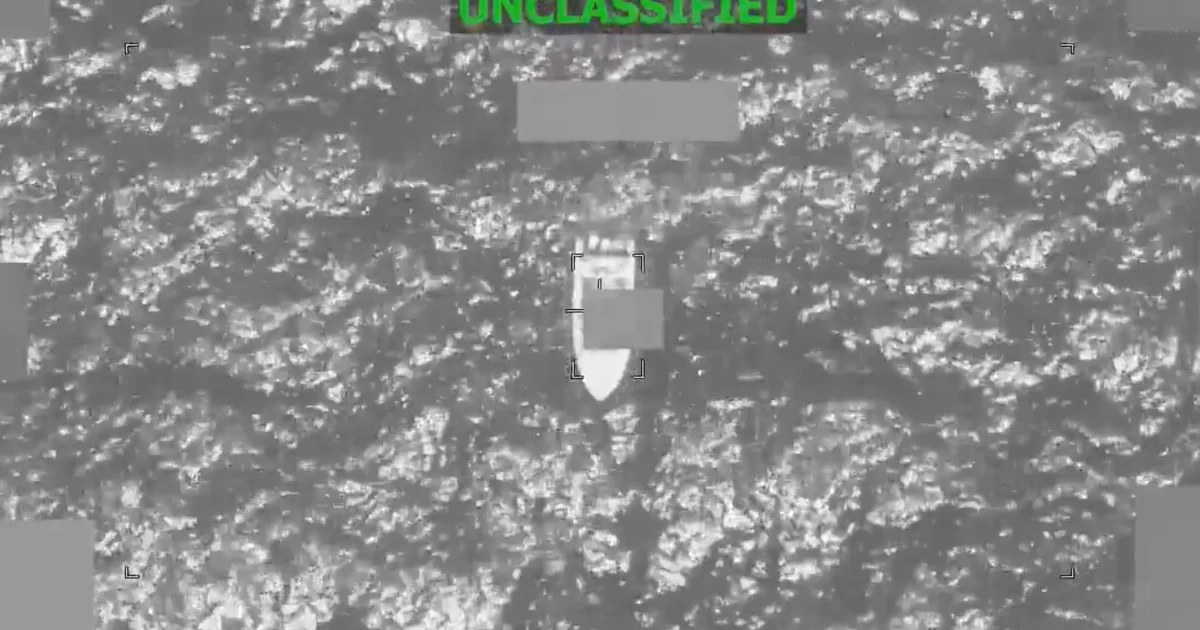
The U.S. military launched a targeted strike on an alleged drug-carrying vessel in the eastern Pacific Ocean on Tuesday, resulting in the deaths of four individuals. This incident marks the fourth such interdiction announced within a span of days and brings the total number of fatalities in the ongoing campaign to 175 since its commencement in early September. The operation underscores an increasingly aggressive stance by the U.S. administration against maritime narco-trafficking, a strategy that has drawn both support for its stated objectives and sharp criticism regarding its legality, effectiveness, and humanitarian implications.
Recent Chronology of Interdictions
The Tuesday strike, which saw a vessel struck by a projectile and exploding, was documented in aerial video released by U.S. Southern Command (SOUTHCOM) on social media. This incident follows a series of similar actions in rapid succession. Just days prior, on Saturday, the military reported striking two separate boats suspected of drug trafficking. A third interdiction occurred on Monday, which, according to a CBS News report, resulted in the deaths of two men. The recent flurry of operations highlights an intensification of the campaign, which aims to disrupt the flow of illicit narcotics, particularly cocaine and other potent substances, through maritime routes in the Eastern Pacific. The swift succession of these strikes has brought renewed scrutiny to the tactical and strategic dimensions of the U.S. approach.
The Broader Campaign and Its Justification
Since early September, the U.S. military has been engaged in a controversial campaign targeting suspected drug trafficking vessels. The administration has repeatedly asserted that these vessels are "operated by Designated Terrorist Organizations" and that intelligence confirms their transit along "known narco-trafficking routes in the Eastern Pacific," engaged in "narco-trafficking operations." However, specific, publicly available evidence to substantiate these claims, particularly regarding the direct links to designated terrorist organizations, has not been provided. When pressed for details regarding the intelligence gathering and operational specifics, a spokesperson for U.S. Southern Command cited "operational security reasons" for their inability to discuss "specific sources or methods."
President Trump has been a vocal proponent of this aggressive stance, characterizing the U.S. as being in "armed conflict" with cartels in Latin America. He has consistently justified these attacks as a necessary escalation to stem the tide of illegal drugs entering the United States and to combat the devastating impact of fatal overdoses claiming American lives. The administration frames these actions as vital for national security, arguing that drug cartels pose a direct threat to American communities and destabilize regional security. This framing elevates counter-narcotics operations from a law enforcement issue to a national defense imperative, broadening the scope of military engagement.
Humanitarian Concerns and Survivor Protocols
A significant aspect of the controversy surrounding these strikes involves the humanitarian consequences and the handling of survivors. The latest strike on Tuesday, which killed four, underscores the lethal nature of these operations. The total death toll of 175 since the campaign began in early September raises serious questions about the rules of engagement and the potential for civilian casualties, even if unintended.
In several instances, individuals have survived the initial strikes on alleged drug trafficking boats. The U.S. Coast Guard has often been involved in search and rescue operations following these incidents. For example, the search for one survivor from an attack on Saturday was recently suspended. While authorities have called off several such searches, there have been cases where survivors were successfully recovered. In a notable operation in October, two survivors were picked up by a Navy helicopter and subsequently repatriated to their home countries of Ecuador and Colombia. These repatriations highlight the complex international dimensions of these operations, requiring coordination with sovereign nations for the return of their citizens.
However, a particularly troubling incident occurred during the campaign’s inaugural boat strike on September 2. In that operation, two individuals reportedly survived an initial strike but were subsequently killed in a follow-on attack. This specific event prompted accusations from critics that the second strike may have constituted a war crime, raising profound questions about the adherence to international humanitarian law and the principles of proportionality and distinction in armed conflict. Such accusations underscore the high stakes and ethical dilemmas inherent in military actions against non-state actors in international waters.
The Legal and Ethical Quagmire
The legality and effectiveness of these boat strikes have been widely questioned by legal experts, human rights organizations, and some international bodies. Critics argue that operating in international waters against individuals who may not be uniformed combatants blurs the lines between law enforcement, self-defense, and acts of war. The absence of publicly disclosed legal frameworks or detailed rules of engagement for these operations fuels concerns about due process and accountability.
International law, particularly the law of the sea and international humanitarian law, governs actions in international waters. While nations have the right to self-defense, the application of military force against suspected drug traffickers, particularly without clear evidence of an immediate armed threat or belligerent status, is subject to intense scrutiny. Critics point out that traditional counter-narcotics operations typically involve interdiction, boarding, and arrest by law enforcement agencies, followed by judicial proceedings. The use of lethal force, especially through missile strikes, raises the bar for justification significantly.
Furthermore, the administration’s claim of "armed conflict" with cartels in Latin America is a contentious legal assertion. Characterizing these groups as entities engaged in armed conflict could potentially trigger the application of international humanitarian law, which dictates how conflicts are to be conducted, including protections for non-combatants and restrictions on certain types of weaponry and tactics. However, applying this framework to criminal organizations, rather than state or quasi-state actors, is a complex and debated legal area.
Effectiveness and the Broader Drug Trafficking Landscape
Beyond the legal and ethical debates, the effectiveness of these maritime strikes in achieving the stated goal of stemming the flow of drugs into the United States is also under scrutiny. Critics highlight that the primary driver behind many fatal overdoses in the U.S., particularly fentanyl, is predominantly trafficked overland from Mexico. Fentanyl is largely produced in Mexico using precursor chemicals imported from China and India. While maritime routes are undoubtedly used for various narcotics, particularly cocaine, the focus on boat strikes in the Eastern Pacific may not directly address the most significant pathways for the deadliest drugs currently impacting American communities.
Data from the U.S. Drug Enforcement Administration (DEA) and other intelligence agencies consistently indicate that the vast majority of fentanyl, methamphetamine, and heroin entering the U.S. crosses the land border with Mexico. While cocaine is more frequently transported via maritime routes, often originating from South America and moving through the Eastern Pacific or Caribbean, the overall impact of these strikes on the diversified and adaptable global drug trade remains a subject of intense debate. Drug trafficking organizations are known for their resilience and ability to quickly adapt routes and methods in response to interdiction efforts. A disruption in one area often leads to a shift in another, sometimes with unintended consequences.
Statements and Reactions from Related Parties
The U.S. Southern Command, responsible for these operations, consistently reiterates its mission to counter transnational criminal organizations that pose threats to U.S. national security and regional stability. Their public statements emphasize the use of intelligence to identify high-value targets and disrupt illicit networks. However, the consistent reference to "operational security" in response to requests for detailed information limits public understanding and independent verification of the intelligence basis for each strike.
From a diplomatic perspective, the repatriation of survivors to countries like Ecuador and Colombia indicates a level of cooperation, albeit after the fact. These Latin American nations are often on the front lines of the drug trade, grappling with its devastating effects on their own societies. While they generally support efforts to combat narco-trafficking, unilateral military actions by the U.S. in international waters can sometimes create diplomatic sensitivities, particularly if there are concerns about sovereignty or the impact on regional stability.
Human rights organizations, such as Amnesty International and Human Rights Watch, have expressed deep concerns over the use of lethal force without clear legal authority or due process. They call for greater transparency, independent investigations into fatalities, and adherence to international human rights and humanitarian law. Legal scholars from institutions like Georgetown and Harvard have also published analyses questioning the legal basis for these operations, especially the "armed conflict" designation, and the potential implications for international law precedents.
Broader Impact and Implications
The ongoing campaign of military strikes in the Eastern Pacific carries several significant implications. Geopolitically, it signals a more aggressive, militarized approach by the U.S. to counter-narcotics efforts, potentially setting a precedent for future engagements against non-state actors. This could reshape international norms regarding the use of force in response to transnational crime.
Domestically, the strategy is presented as a forceful response to the opioid crisis and drug-related deaths. However, its efficacy in genuinely reducing drug availability or overdose rates, particularly given the overland routes for fentanyl, remains a critical point of contention. The financial cost of these high-tech military operations versus the potential for investment in demand reduction, treatment, and border security for land routes is also part of the broader policy discussion.
Finally, the campaign highlights the complex and often murky intersection of national security, law enforcement, and international law in the 21st century. As transnational criminal organizations grow in sophistication and reach, governments are continually challenged to develop effective strategies that are both robust and legally sound. The U.S. military’s boat strike campaign in the Eastern Pacific serves as a stark example of this ongoing tension, generating significant debate over its immediate impact and long-term consequences for global drug policy and international relations. The rising death toll and the persistent questions surrounding legality and effectiveness ensure that this controversial strategy will remain a focal point of discussion for the foreseeable future.

