
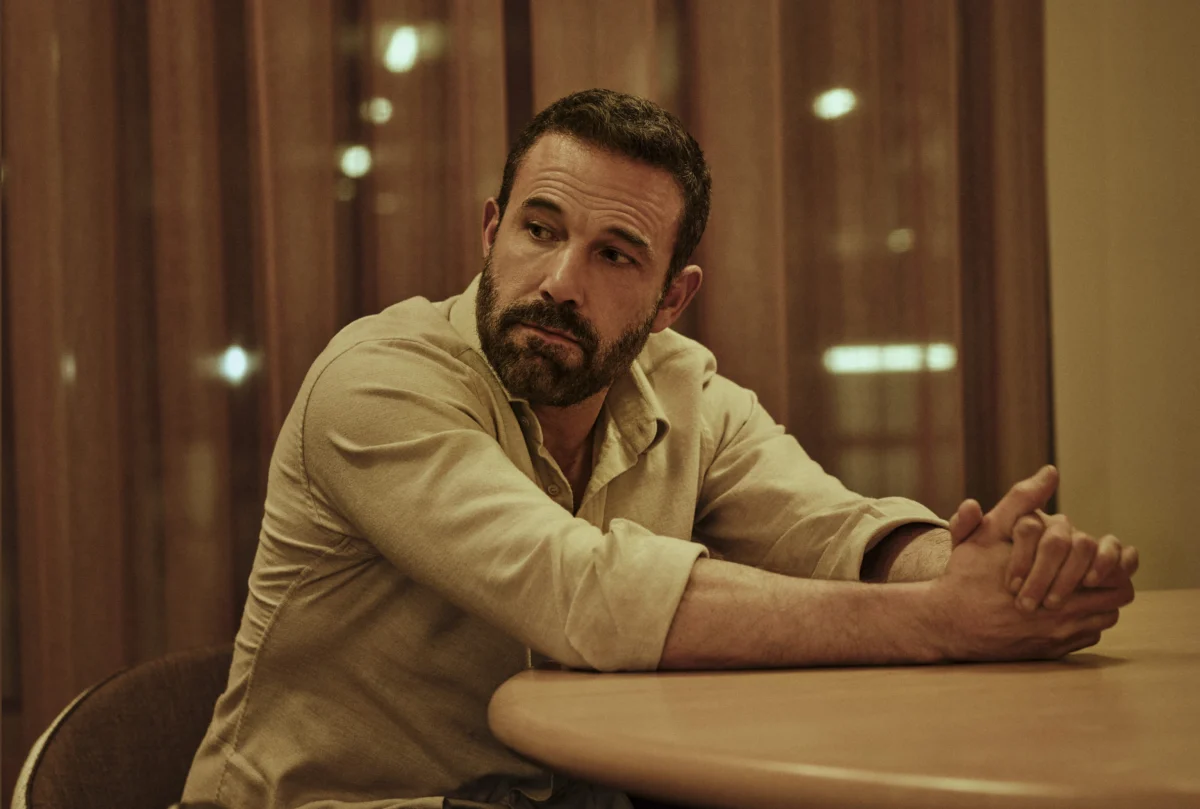
Netflix has officially confirmed its acquisition of Ben Affleck’s artificial intelligence firm, InterPositive, for $587 million. This figure aligns with earlier estimates and was disclosed in a recent Securities and Exchange Commission (SEC) filing, providing a more detailed overview of the company’s second-quarter financial performance. The deal, which was initially reported as a surprise announcement last March with Bloomberg suggesting a price tag around $600 million, underscores Netflix’s strategic investment in AI technologies to streamline its vast content production pipeline.
InterPositive, founded by Affleck in 2022, has been operating quietly with a focus on leveraging AI to enhance film and television production processes. As part of the acquisition, Netflix absorbed InterPositive’s small team of employees, with Affleck himself taking on an advisory role. This move signals Netflix’s intent to integrate advanced AI capabilities directly into its operational framework, aiming to achieve significant cost savings and accelerate content creation.
The Strategic Imperative of AI in Streaming
The acquisition of InterPositive by Netflix arrives at a critical juncture for the streaming industry, where the integration of artificial intelligence is becoming a paramount concern. The financial implications of content production, coupled with the increasing demand for a high volume of diverse programming, necessitate innovative solutions to maintain profitability and competitive advantage. Netflix, as the industry leader, is clearly positioning itself at the forefront of this technological shift.
Ted Sarandos, co-CEO of Netflix, addressed the acquisition and its potential impact during the company’s quarterly earnings interview. He emphasized the ongoing exploration of AI efficiencies and how the cost savings generated by InterPositive are anticipated to be reinvested into the platform. Sarandos highlighted that generative AI is already demonstrating a tangible impact across hundreds of Netflix productions, particularly in areas such as visual effects and animation.
"It’s early days for InterPositive, but we’re broadly seeing that gen-AI is starting to have an impact across hundreds of our productions," Sarandos stated, referencing specific examples like Eyeline, a visual effects and virtual production studio, and an in-house animation lab. This sentiment echoes the initial emphasis placed by InterPositive itself on the cost-saving potential of its AI solutions, as previously reported.
Generative AI’s Expanding Role in Content Creation
The strategic deployment of generative AI across the entire content creation lifecycle is a key focus for Netflix. Sarandos elaborated on the scalability of these tools, noting their application from the initial concept development and pre-visualization stages through post-production and final delivery. The company’s objective is to produce higher-quality output more rapidly and efficiently than traditional methods would allow.
"Gen AI is scaling quickly across the entertainment creation process, from concept to pre-vis through post and delivery," Sarandos explained. "We’re making higher-quality output more quickly and effectively than we would have using traditional methods." He further revealed that gen AI workflows have already been implemented in approximately 300 Netflix titles, with a significant concentration in post-production, particularly for complex shots and sequences.
The application of AI in generating challenging visual elements, such as large-scale crowd scenes or battle sequences, presents a compelling use case. Sarandos noted that productions might have previously foregone such scenes due to prohibitive costs or time constraints. The integration of gen AI tools now makes these ambitious visual elements feasible, thereby enriching the storytelling and overall production value.
Case Study: AI Enhancement in Documentary Production
A notable example of AI’s practical application cited by Sarandos is a recent documentary series, The American Experiment. This series reportedly features 17 minutes of AI-enhanced footage, which was produced "twice as fast and at half the cost of previous options." This specific instance provides concrete data supporting the financial and operational benefits that Netflix aims to achieve through its AI investments.
Despite the significant advancements and cost efficiencies enabled by AI, Sarandos reiterated Netflix’s commitment to the essential role of human artistry. "It takes great artists to make something great, and AI is not changing that," he affirmed. This statement aims to address potential concerns within the creative community regarding AI’s impact on artistic integrity and employment.
Financial Implications and Reinvestment Strategy
The cost savings realized through the integration of AI technologies are earmarked for reinvestment into new content for the Netflix service. This strategic allocation of resources is intended to fuel higher-quality engagement and reinforce the company’s long-standing "revenue/profit flywheel" model. The financial benefits derived from AI efficiencies are thus projected to contribute to the sustained growth and expansion of Netflix’s content library and subscriber base.
A Timeline of the Acquisition
- 2022: Ben Affleck quietly establishes InterPositive, a firm focused on AI applications in production.
- March 2026 (reported): Bloomberg reports on a surprise deal between Netflix and InterPositive, estimating the acquisition price at approximately $600 million. Netflix initially offers no comment.
- Later in March 2026: Deadline reports on the surprise deal announcement.
- Thursday (date not specified, likely in the second quarter of 2026): Netflix files a shorter SEC report referencing the acquisition.
- Friday (date not specified, following the Thursday filing): Netflix files a more comprehensive SEC report detailing its second-quarter financial results, including the confirmed acquisition price of $587 million for InterPositive.
Background and Context of InterPositive
While details surrounding InterPositive’s specific technological advancements prior to the acquisition remain largely proprietary, its founding by a prominent figure like Ben Affleck suggests an ambition to disrupt traditional filmmaking workflows. Affleck, a seasoned filmmaker with a deep understanding of the production process, likely envisioned AI as a tool to address persistent challenges in efficiency and cost management within the industry. The firm’s formation in 2022 indicates a proactive approach to developing and integrating AI solutions at a time when the technology was rapidly evolving.
The decision by Netflix to acquire InterPositive, rather than simply partnering or licensing its technology, suggests a desire for deeper integration and control over the AI capabilities. This strategic move allows Netflix to tailor the technology to its specific needs and to potentially develop proprietary AI tools that offer a competitive edge. The inclusion of InterPositive’s staff and Affleck’s advisory role further supports this integrated approach, ensuring the transfer of knowledge and expertise.
Broader Industry Implications and Future Outlook
The Netflix acquisition of InterPositive is indicative of a larger trend within the entertainment industry. As studios and streaming platforms grapple with escalating production costs and the increasing demand for high-quality, visually complex content, AI is emerging as a crucial solution. The financial success of this acquisition will likely influence further investments in AI by other major players in the media landscape.
However, the widespread adoption of AI in creative industries also raises significant questions and concerns. The creative community, including actors, writers, and visual effects artists, has voiced apprehension about potential job displacement and the ethical implications of AI-generated content. The Writers Guild of America (WGA) and the Screen Actors Guild – American Federation of Television and Radio Artists (SAG-AFTRA) have both engaged in labor disputes that touched upon the role of AI in their respective fields.
Netflix’s stance, as articulated by Sarandos, attempts to strike a balance between embracing technological innovation and valuing human creativity. The emphasis on AI as a tool to augment rather than replace human artists, and the commitment to reinvesting savings into more content, are key messages aimed at mitigating industry-wide anxieties.
The long-term implications of this $587 million investment will unfold over time. If InterPositive’s technology proves as transformative as anticipated, Netflix could solidify its position as a more efficient and innovative content producer. This could lead to a more dynamic and potentially more affordable content landscape for consumers, while simultaneously reshaping the operational realities for those working within the entertainment production ecosystem. The success of this venture will undoubtedly be closely watched by competitors and industry observers alike, as it represents a significant bet on the future of AI in shaping the stories we consume.

