
Christopher Nolan’s highly anticipated epic, The Odyssey, has stormed the global box office, shattering expectations and solidifying its place as a cinematic event of monumental proportions. However, for fans eager to witness the visionary filmmaker’s next cinematic endeavor, a significant period of anticipation lies ahead. Nolan himself has candidly revealed that audiences should brace for "at least" a three-year hiatus before his subsequent work graces the silver screen, a testament to the demanding nature of his creative process and the immense scale of his recent undertaking.
A Deliberate Pace for a Master Craftsman
This revelation comes as Nolan continues to navigate the overwhelming success of The Odyssey, a film that has not only captivated audiences but also pushed the boundaries of cinematic presentation. In a recent interview with Today, the director elaborated on his typical production cycle, noting a consistent pattern of releasing a new film approximately every three years. This rhythm is evident in his recent filmography: Oppenheimer arrived in 2023, preceded by Tenet in 2020, Dunkirk in 2017, and Interstellar in 2014. Nolan’s confirmation that the next project would adhere to a similar "at least" three-year timeline underscores his commitment to meticulous craftsmanship and the extensive development required for each of his ambitious productions.
The sheer undertaking of bringing Homer’s seminal epic to life as a writer, director, and producer has been an arduous yet ultimately rewarding experience for Nolan. He shared with the NBC morning show, "I definitely hit the limits of my own stamina and everybody’s stamina, I think. I mean, it’s The Odyssey, of course it should be difficult. We’re not doing the job right making a film of The Odyssey if it doesn’t seem difficult." This candid admission highlights the profound challenges inherent in adapting such a sprawling and mythic narrative, a task that demanded an extraordinary level of dedication from Nolan and his entire crew.
IMAX and Epic Scale: The Visual Language of The Odyssey
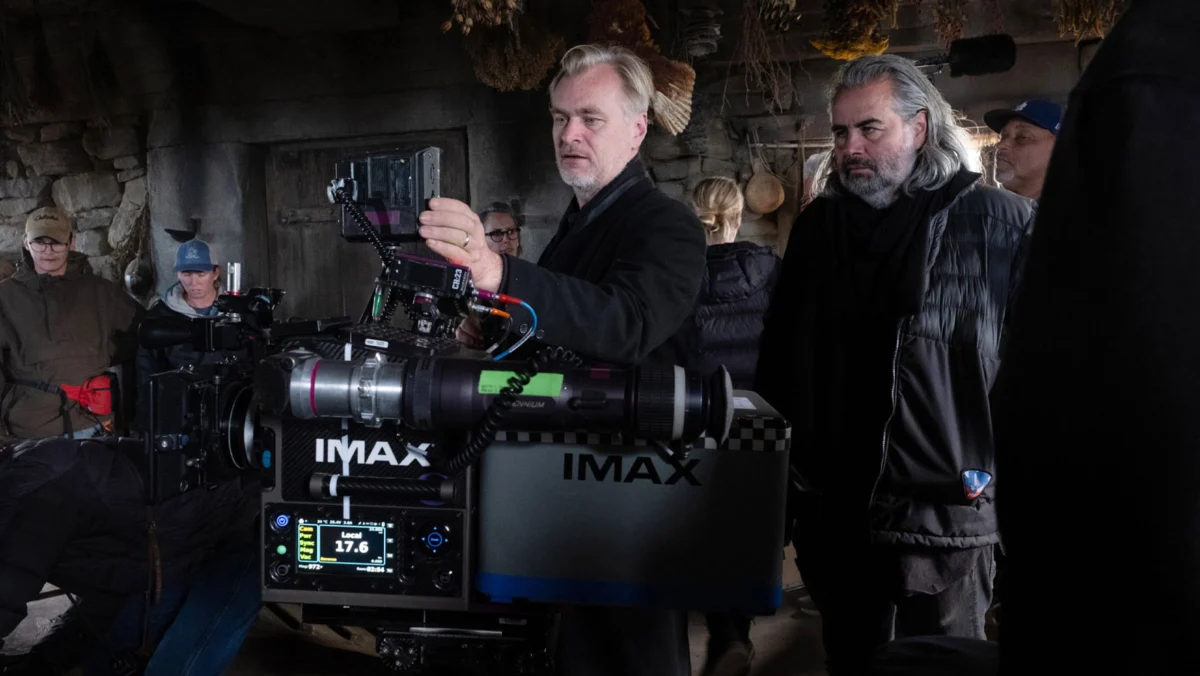
A significant aspect contributing to The Odyssey‘s visual grandeur and its box office triumph is Nolan’s groundbreaking decision to shoot the entire film on IMAX 70-millimeter film. This ambitious commitment to a singular, immersive format was a deliberate choice, as Nolan explained, "I went to IMAX, and I said, ‘Look, if ever we are going to fulfill this dream of shooting the entire movie that way, this is the one. This is The Odyssey.’" This statement underscores the profound connection Nolan felt between the ancient, heroic narrative and the unparalleled visual fidelity offered by IMAX technology. The format allows for an expanded aspect ratio and exceptional clarity, drawing audiences deeper into the tumultuous journey of Odysseus and his crew, making the mythical world of gods and monsters feel palpably real.
Box Office Dominance and Critical Acclaim
The immediate impact of The Odyssey on the global box office has been nothing short of spectacular. The film is projected to open with an astounding worldwide gross exceeding $257 million, marking Nolan’s most successful global opening since The Dark Knight Rises in 2012, which debuted with $249 million. This robust performance is a clear indicator of the immense public appetite for Nolan’s distinctive brand of filmmaking, characterized by intricate narratives, breathtaking visuals, and profound thematic explorations. The film’s success also speaks to the enduring power of classical storytelling when reimagined through a modern, cinematic lens.
The Odyssey boasts an ensemble cast of considerable star power, featuring acclaimed actors such as Matt Damon, Anne Hathaway, Lupita Nyong’o, Robert Pattinson, Tom Holland, Zendaya, and Charlize Theron, among many others. The collective talent on display undoubtedly contributes to the film’s broad appeal and its ability to draw diverse audiences to theaters. The critical reception, while varied in its specific assessments of the adaptation’s fidelity to the source material, has largely lauded Nolan’s directorial vision, the film’s technical achievements, and the powerful performances.
Historical Context and Nolan’s Cinematic Trajectory
Christopher Nolan has consistently demonstrated a unique ability to blend commercial success with artistic ambition. His filmography is a testament to this, with each project often pushing the envelope in terms of narrative complexity, thematic depth, and technical innovation. From the mind-bending narratives of Inception and Memento to the historical grandeur of Dunkirk and Oppenheimer, Nolan has cultivated a loyal following of cinephiles who anticipate his films with a rare level of excitement.
The decision to adapt The Odyssey, one of the foundational texts of Western literature, is a bold move that aligns with Nolan’s penchant for tackling grand narratives. The epic poem, attributed to Homer, chronicles the arduous ten-year journey of the Greek hero Odysseus as he attempts to return to his island kingdom of Ithaca after the Trojan War. It is a tale of perseverance, cunning, divine intervention, and the enduring human spirit in the face of overwhelming adversity. Translating such a rich and complex tapestry of mythology, adventure, and human emotion to the screen presents a formidable challenge, one that Nolan appears to have embraced with characteristic rigor.
The release schedule of Nolan’s films provides a fascinating insight into his creative process. The approximate three-year gap between projects allows for extensive pre-production, research, development, and the complex logistical planning that is essential for his large-scale productions. This deliberate pace ensures that each film receives the full attention and resources necessary to realize his ambitious vision.
The Demands of Epic Storytelling
Nolan’s comments regarding the "limits of his own stamina" and the inherent difficulty of adapting The Odyssey resonate with the historical context of the work itself. The epic journey of Odysseus is fraught with peril, featuring encounters with mythical creatures, vengeful gods, and treacherous seas. The very nature of the story demands a sense of struggle and monumental effort, both from its protagonist and, by extension, from those who endeavor to bring it to life in cinematic form.
The decision to shoot entirely on IMAX 70-millimeter film is not merely a stylistic choice; it is a statement about the immersive power of cinema and Nolan’s commitment to providing audiences with an unparalleled viewing experience. IMAX technology, with its larger screens and higher resolution, is particularly well-suited to capturing the vastness of the sea, the grandeur of ancient landscapes, and the visceral intensity of epic battles. By committing to this format for the entirety of The Odyssey, Nolan aimed to transport viewers directly into Odysseus’s world, making his trials and tribulations feel immediate and overwhelming.
The Broader Impact and Future Implications
The box office success of The Odyssey has significant implications for the film industry. It reaffirms the enduring appeal of original, large-scale cinematic experiences that offer something truly distinct. In an era often dominated by franchise sequels and remakes, Nolan’s ability to draw massive audiences to a film based on a classic literary work, presented in an ambitious format, is a powerful testament to the potential of auteur-driven cinema.
Furthermore, the substantial investment in IMAX 70-millimeter production for The Odyssey could inspire other filmmakers to explore the possibilities of this format, potentially leading to a resurgence of interest in large-format filmmaking. The film’s performance also underscores the global appetite for event cinema, with its strong international performance indicating that audiences worldwide are eager for compelling narratives and visually spectacular experiences.
The anticipation for Nolan’s next project, coupled with his candid statement about the extended production timeline, highlights the unique position he occupies in contemporary filmmaking. He is a director whose name alone generates significant buzz, and whose films are approached with a high degree of expectation due to his consistent track record of delivering thought-provoking and technically brilliant cinema. The three-year waiting period, while perhaps a test of patience for fans, is likely to be a period of intense creative development, ensuring that his next cinematic offering will be another meticulously crafted and impactful work. The success of The Odyssey serves as a powerful prelude, setting a high bar for whatever monumental vision Nolan chooses to bring to the screen next.

