

Marine biologists have identified a curious and accidental evolutionary blunder occurring in the Pacific waters off the coast of Costa Rica, where tiny crab larvae have been found hitching rides on yellow-bellied sea snakes. While it is common for marine organisms to utilize larger animals as mobile substrates—a phenomenon known as epibiosis—this specific interaction appears to be a case of mistaken identity rather than a symbiotic partnership. The findings, recently published in the journal Ecology and Evolution, reveal that these juvenile crustaceans, known as megalopae, are not the specialized drifters scientists expected, but rather coastal species that have wandered far from their intended habitats.
A Decade of Discovery: The Chronology of the Research
The investigation began in 2012, when Joseph Pfaller, a marine herpetologist currently affiliated with the University of Florida, was conducting extensive field research on the yellow-bellied sea snake (Hydrophis platurus). During his survey, Pfaller observed a peculiar behavior: the sea snakes were often found in tight, knotted loops. This coiling is a tactical necessity for the reptiles, which must generate friction against a solid surface to shed their outer epidermal layers. Because sea snakes occupy an environment largely devoid of stationary objects like rocks or reefs, they rely on these contortions to slough off dead skin.
While documenting these behaviors, Pfaller noticed that some of the snakes were not traveling alone. He observed small, crab-like organisms detaching from the reptiles’ bodies. Over the course of his expedition, Pfaller collected 371 specimens of Hydrophis platurus. Upon closer inspection, the biological "passengers" included not only crabs but also various shrimp, snails, and even a clingfish.

The collected specimens were stored at the Florida Museum of Natural History, but the study remained dormant for years as Pfaller shifted his research focus toward sea turtle conservation. It was not until a chance conversation with Robert Lasley, a crustacean specialist at the University of Guam, that the significance of the collection was realized. The duo, recognizing the humorous parallels to the cult horror film Snakes on a Plane, began a formal investigation into the genetic identity of these mysterious stowaways.
The Genetic Surprise: Misidentified Travelers
Initial hypotheses suggested that the crabs were members of the genus Planes, commonly known as "turtles crabs." These crustaceans are well-adapted to the open ocean and frequently inhabit the crevices of sea turtles, debris, or other floating objects. However, genetic sequencing conducted by the research team—led by Soma Elefánti of the University of Florida—produced results that defied these expectations.
The DNA analysis confirmed that none of the megalopae belonged to the Planes genus. Instead, they were identified as various species within the family Grapsidae, a group of crabs that typically inhabit coastal mangrove forests, rocky shorelines, and tidal zones. This revelation provided a critical insight into the crabs’ behavior: they were not specialized ocean travelers, but rather coastal larvae that had been swept out to sea and were desperately seeking a substrate upon which to settle.
Understanding the Megalopa Stage
To understand why these crabs ended up on sea snakes, one must look at their life cycle. The megalopa is a transitional developmental phase between the planktonic larval stage and the juvenile adult stage. During this period, the crab is mobile and capable of swimming, but its primary biological drive is to locate a solid, stable environment where it can mature into an adult.
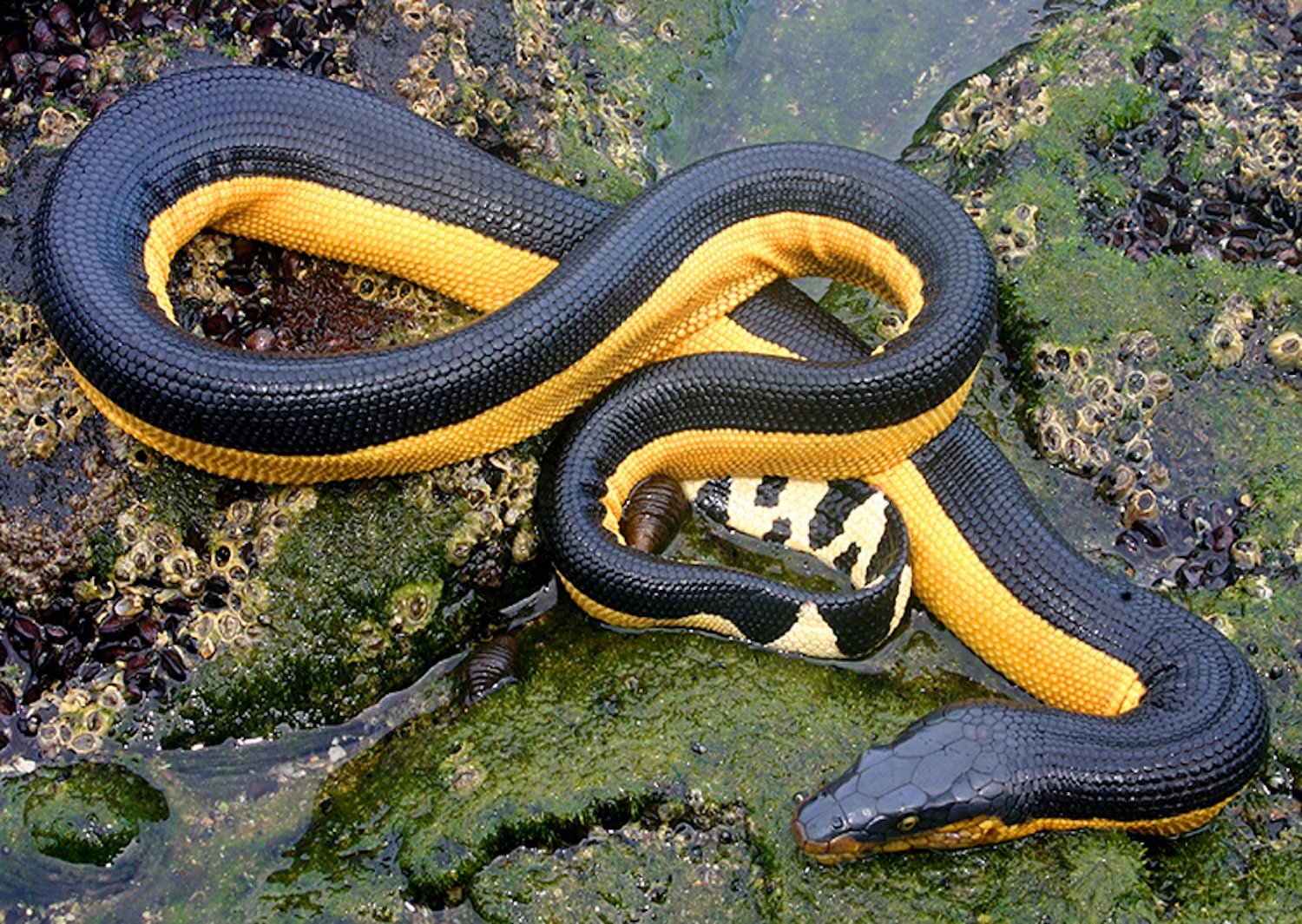
In their natural coastal environment, these megalopae would settle on rocks, driftwood, or mangroves. However, when these larvae are caught in offshore currents, their instinct to find a "home" remains active. As they drift through the open ocean, they encounter the yellow-bellied sea snake. To the crab, the surface of the snake provides a temporary, tactile reprieve from the open water. The researchers concluded that the crabs are essentially "lost," mistaking the snake for a piece of coastal debris or a reef.
Ecological Implications and Evolutionary Dead Ends
The interaction is largely considered an "evolutionary trap." While the crabs successfully attach themselves to the snakes, the outcome for the crustacean is almost universally fatal. Unlike the specialized Planes crabs, which have evolved to survive in the open ocean and interact safely with their hosts, the Grapsidae megalopae are ill-equipped for a life in the pelagic zone.
By hitching a ride on a sea snake, these crabs are transported further away from their coastal homes. Once the snake dives or continues its migration, or once the crab outgrows its host, it is left in an environment where it cannot survive. The study suggests that this is a case of instinct gone wrong—a behavior that is beneficial in a coastal setting but disastrous in the vast, open Pacific.
Why This Went Unnoticed for So Long
The fact that this phenomenon had not been documented in scientific literature until now is attributed to the specialized focus of marine researchers. For decades, the yellow-bellied sea snake has been a subject of intense study due to its unique evolutionary history, its extreme toxicity, and its peculiar distribution. Scientists studying these reptiles were often so focused on the snakes themselves—their movement, color patterns, and hunting techniques—that the presence of tiny, incidental passengers was either overlooked or dismissed as biological "background noise."

The research team noted that in most cases, these passengers are not permanent residents. Because the snakes are highly active and frequently submerge, the hold that a tiny, non-specialized crab has on a snake’s skin is tenuous at best.
Broader Scientific Context
This study highlights the importance of re-examining preserved specimens in museum collections. By utilizing modern DNA sequencing on samples collected over a decade ago, the researchers were able to solve a biological mystery that had been sitting on a shelf.
The findings also provide a cautionary tale regarding how changing ocean currents and climate patterns might impact larval dispersal. As ocean temperatures rise and current patterns shift, larvae from coastal ecosystems may be transported into the open ocean more frequently, leading to higher rates of these "accidental" host-parasite interactions.
Ultimately, the "Planes on a Snake" discovery serves as a reminder of how much is still unknown about the micro-interactions occurring within our oceans. While the crabs themselves may have made a "poor decision" from an evolutionary standpoint, their presence on the sea snakes has provided scientists with a fascinating window into the desperate, instinctive drives of marine life and the often-unintended consequences of oceanic navigation. As the researchers continue to study these specimens, they hope to further map out the complex, and sometimes messy, ways in which marine species navigate the vast and interconnected world of the Pacific.

