
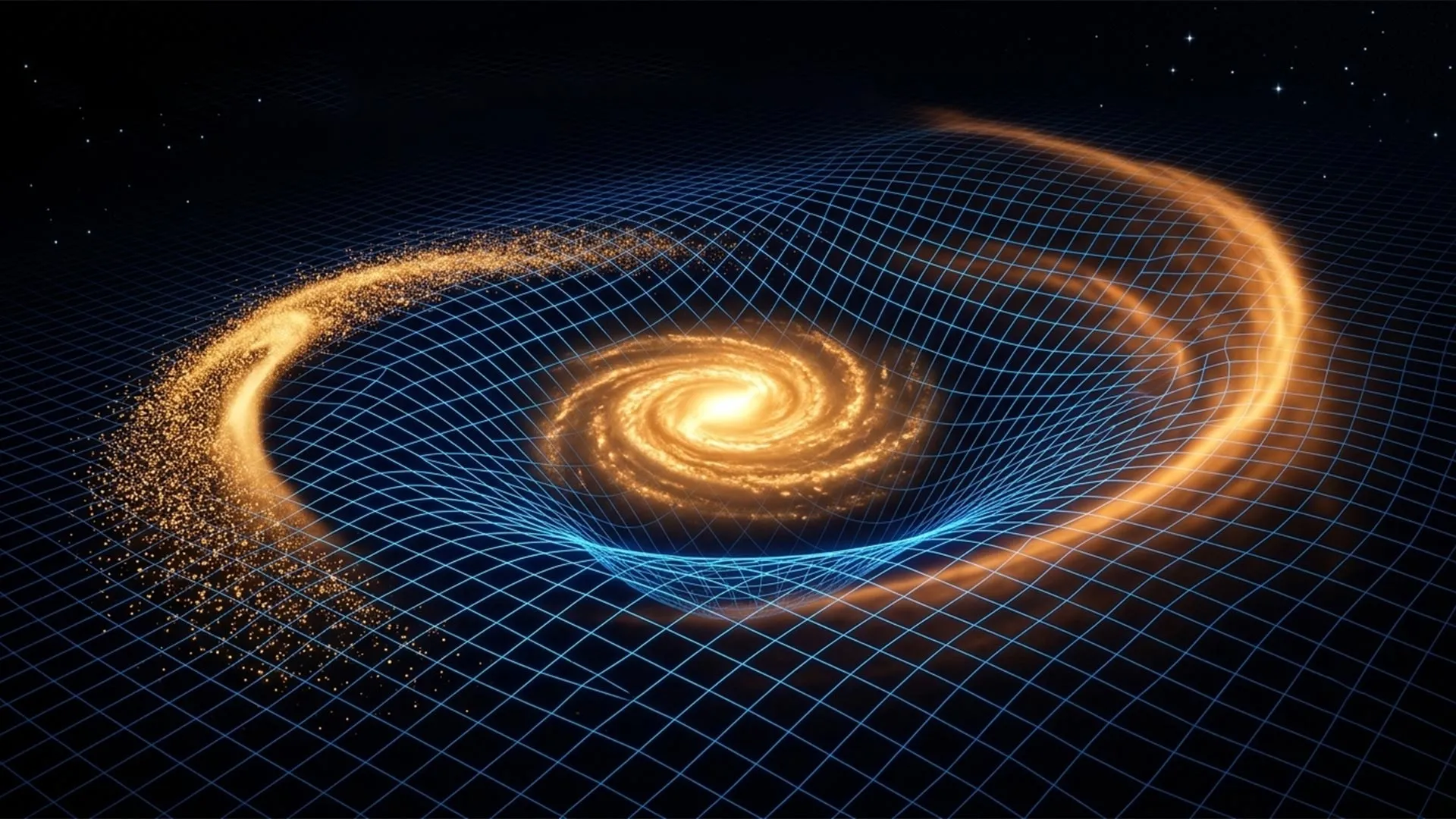
The largest global survey of physicists ever conducted has revealed that the foundations of modern science are characterized less by dogma and more by a state of productive, profound uncertainty. Published in the American Physical Society’s Physics Magazine, the study—spearheaded by Niayesh Afshordi of the Perimeter Institute and the University of Waterloo, alongside coauthor Phil Harper—polled a massive, representative sample of the international physics community. The results paint a portrait of a discipline grappling with fundamental questions that remain stubbornly resistant to consensus. From the nature of the dark sector to the reconciliation of gravity with the quantum realm, the data suggests that the "standard" answers in physics are failing to command the allegiance of those working at the cutting edge.
A Fractured Consensus: The Data Landscape
The survey results provide a stark departure from the common public perception of physics as a field defined by settled, immutable laws. In reality, the "Standard Model" of cosmology—the Lambda Cold Dark Matter ($Lambda$CDM) framework—is under significant strain. This model, which posits that the universe is composed of dark energy (Lambda) and cold dark matter, has long served as the bedrock of modern astrophysics. However, the survey shows that it no longer enjoys majority support among researchers.
This skepticism is not happening in a vacuum. The results appear to be a direct reaction to recent empirical findings, most notably from the Dark Energy Spectroscopic Instrument (DESI). Earlier this year, DESI data suggested that dark energy might not be a constant value—a "cosmological constant"—but rather a dynamic force that evolves over time. If true, this discovery would necessitate a wholesale rewrite of the $Lambda$CDM model. The survey indicates that physicists are increasingly comfortable entertaining these heterodox theories, reflecting a community that is responding to data rather than adhering to legacy models.
Chronology of the Crisis in Theoretical Physics
To understand why the physics community finds itself at this crossroads, one must look at the timeline of theoretical development over the last century.
- 1915: Albert Einstein publishes his General Theory of Relativity, establishing the modern understanding of gravity as the curvature of spacetime.
- 1920s–1950s: The birth and consolidation of Quantum Mechanics, which successfully describes the subatomic world but operates on a mathematical framework fundamentally incompatible with General Relativity.
- 1970s–1990s: The "Golden Age" of the Standard Model of particle physics, culminating in the prediction and discovery of the Higgs Boson.
- 1998: The discovery of the accelerating expansion of the universe leads to the dominance of the $Lambda$CDM model, which requires the existence of dark matter and dark energy—two phenomena that remain undetected in laboratory settings.
- 2020s: A period of "anomalous data" emerges. Tensions in the Hubble constant (the rate of universal expansion) and the new findings from DESI suggest that the $Lambda$CDM model is insufficient.
The recent survey highlights that, after decades of progress, the field has reached a point where the "low-hanging fruit" of discovery has been picked, leaving only the most difficult, contradictory problems remaining.
The Big Bang and the Inflationary Question
Among the few topics that achieved a majority consensus was the interpretation of the Big Bang. Popular culture often misrepresents the Big Bang as a "creation event" or the absolute beginning of time. The survey reveals that 68% of physicists reject this simplified narrative, viewing the Big Bang instead as a transition from an incredibly hot, dense state. This distinction is crucial; it separates the physical evolution of the observable universe from the metaphysical question of whether time itself had a starting point.
Conversely, the theory of cosmic inflation—the hypothesis that the universe underwent an exponential expansion in the first fractions of a second—is far less secure. Only 51% of respondents agreed with the inflationary model. This narrow majority highlights a significant divide; while inflation solves many problems regarding the uniformity of the cosmic microwave background, it lacks definitive "smoking gun" evidence, such as the detection of primordial gravitational waves. The lack of overwhelming support indicates that a large portion of the field is keeping the door open for alternative models of the early universe.
The Dark Matter Impasse
Perhaps no topic better illustrates the current state of confusion than dark matter. Despite dark matter being a foundational pillar of galaxy formation theory, the survey results are a fragmented mosaic of conflicting hypotheses:
- 17% support the existence of undiscovered low-mass particles (such as axions or WIMPs).
- 12% advocate for Modified Newtonian Dynamics (MOND) or other gravity modifications.
- 21% believe the solution lies in a hybrid approach or a completely different, as-yet-unproposed framework.
The fact that the largest group—at only 21%—refuses to commit to a single explanation underscores a crisis of evidence. Despite trillions of dollars in equipment and decades of deep-underground detector operations, dark matter has yet to be observed directly, forcing the community to reconsider whether the "missing mass" is a particle at all, or a fundamental misunderstanding of gravitational laws at galactic scales.
Quantum Gravity: The Search for a Unified Language
The search for a theory of "Quantum Gravity"—a bridge between the smooth geometry of Einstein and the jittery, probabilistic nature of quantum particles—remains the "Holy Grail" of physics. Yet, the survey shows that this search is drifting further away from consensus. String theory, once the dominant paradigm of theoretical physics, garnered only 19% of the vote. Loop Quantum Gravity followed with 12%, while 18% of physicists argued that gravity might not be quantizable at all.
This diffusion of opinion suggests a shift in the culture of theoretical physics. The era of "Grand Unified Theories" that command broad institutional support appears to be over, replaced by a more pluralistic approach where multiple, competing ideas are allowed to flourish simultaneously.
Implications: Why Disagreement is the Engine of Discovery
While some may view this lack of consensus as a sign of intellectual stagnation, researchers like Niayesh Afshordi argue the opposite. The survey findings suggest that the discipline is in a state of "generative tension." In scientific inquiry, the absence of consensus is often the precursor to a paradigm shift.
"Scientific truth is not decided by a vote," Afshordi noted in the report. "But consensus, or its absence, tells us where the evidence feels settled and where researchers still see room for radically different ideas."
The implications of these findings are profound. They suggest that the next decade of physics will likely be defined by "precision cosmology"—a move away from broad theoretical frameworks toward data-heavy observations that can definitively rule out or confirm the various competing theories. The emergence of next-generation observatories, such as the Vera C. Rubin Observatory and the James Webb Space Telescope, will provide the empirical data necessary to force this consensus.
Conclusion: A Field Ready for the Next Leap
The American Physical Society’s survey acts as a mirror, reflecting a scientific community that has grown more humble and more cautious in the face of the universe’s complexity. By moving away from rigid adherence to established models, physicists are better positioned to detect the anomalies that lead to revolutionary breakthroughs.
As the field continues to investigate the "cracks" in our current understanding—whether in the dark sector, the quantum nature of gravity, or the origin of time—the consensus, or lack thereof, will serve as a map for future exploration. Far from being a failure, the current lack of agreement is a hallmark of a healthy, active, and intellectually honest scientific frontier, proving that the most exciting questions are not the ones we have already answered, but the ones we are still brave enough to debate.

