
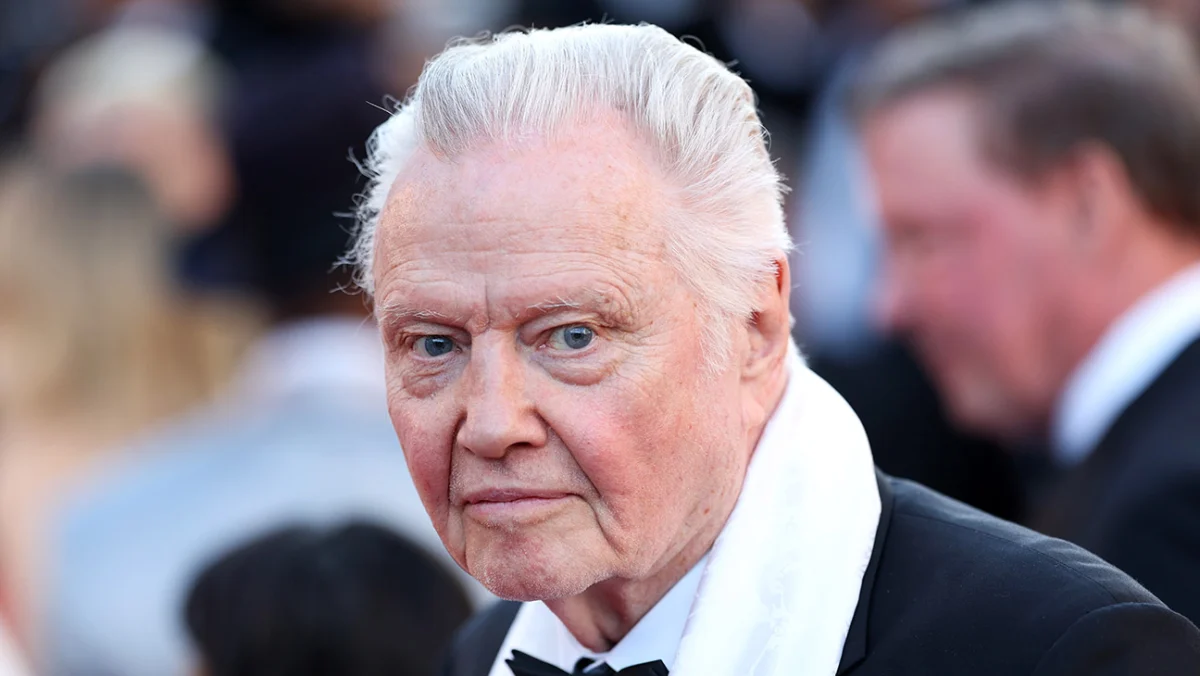
When President Donald Trump appointed 87-year-old Academy Award-winning actor Jon Voight as a "special ambassador" to Hollywood in early 2025, industry insiders were initially uncertain what the role would entail. Known equally for his deeply empathetic cinematic performances—such as his portrayal of a paraplegic Vietnam veteran in 1979’s Coming Home—and his staunch, vocal support for conservative politics, Voight’s appointment signaled a novel bridge between the federal government and an entertainment industry that has frequently found itself at ideological odds with Washington. Yet, rather than stoking partisan division, Voight, alongside manager Steven Paul and SP Media Group lead Scott Karol, quickly pivoted toward unexpected legislative diplomacy. Within months of taking up his post, the trio spearheaded a comprehensive coalition involving studio heads, major labor unions, and key industry stakeholders to address what many describe as a severe crisis of runaway production.
The Legislative Push and the Oval Office Breakthrough
The culmination of this lobbying effort materialized in late August, when Voight, Paul, and Karol secured a pivotal meeting in the Oval Office. According to interviews with the trio, the delegation presented President Trump with a concise, highly structured briefing outlining the perilous state of domestic film and television production. Hollywood has increasingly struggled against international competitors offering aggressive tax incentives that lure studios away from traditional domestic hubs like Los Angeles and New York.
During the August meeting, Voight delivered an impassioned plea on behalf of the industry’s workforce, emphasizing that the health of American filmmaking is intrinsically tied to cultural influence and economic stability. Steven Paul, acting as a producer facing the difficult economic reality of taking projects overseas, underscored the practical imperative of a federal intervention. Scott Karol provided the necessary data metrics demonstrating how a federal film and television tax credit could reverse the flight of capital, protect American jobs, and stimulate localized economies far beyond traditional entertainment centers.
The response from the Oval Office was immediate. Observing the presentation, President Trump engaged in a characteristically informal and direct manner, calling upon aide Natalie Harp to capture Voight reading his prepared statement on video. Right there in the room, the President drafted a post for Truth Social signaling his official endorsement of a federal film and television tax credit.
"We did it, gee whiz!" Voight recalled, describing the emotional high point of the meeting. The social media endorsement acted as a legislative catalyst, instantly transforming what many industry lobbyists had long written off as a "pie-in-the-sky" policy proposal into a viable, fast-moving legislative objective. By late autumn, momentum had built to the point where congressional champions, such as Rep. Brian Jack (R-GA), openly credited Voight with fundamentally shifting the administration’s legislative trajectory on the matter.
Building a Bipartisan Coalition in a Divided Industry
What has surprised many industry analysts is the distinctly nonpartisan framework Voight and his team have utilized. Despite Voight’s history of framing political struggles in stark ideological terms, his mandate as special ambassador has intentionally sidestepped partisan rhetoric. In organizing a united front among studio executives and labor leaders representing behind-the-scenes workers—such as carpenters, teamsters, and technicians—the delegation successfully fostered a collaborative environment where political affiliation took a backseat to economic survival.
"Nobody talked about their politics on that call," Paul noted during a post-press conference briefing. "They were all Americans who love America and love the entertainment business. And I couldn’t tell you who was a Republican and who was a Democrat."
This strategy has allowed the coalition to win over figures from across the political spectrum. Industry figures and political leaders alike have rallied around the premise that the decline of domestic production threatens not just major studios, but a vast network of ancillary businesses. Small enterprises, including hotel chains, local restaurants, transportation companies, and equipment suppliers across multiple states, stand to benefit from active film production.
Economic Implications and the Shovel-Ready Argument
The push for a federal tax credit arrives at a critical juncture for the United States entertainment economy. Currently, approximately 39 states offer individual production incentives, according to data from the Motion Picture Association (MPA). However, proponents argue that these state-level measures are increasingly insufficient to compete against heavily subsidized international markets, which routinely offer tax rebates covering up to 40 percent or more of local expenditures.
Supporters of the proposed federal tax incentive argue that the measure will function as a "shovel-ready" economic stimulus. Unlike infrastructure projects that require years of planning and regulatory approval, film and television productions can mobilize rapidly once financing and locations are secured. Industry advocates maintain that enacting a federal credit to level the playing field against foreign tax havens would trigger an immediate resurgence in domestic shooting days, instantly reactivating thousands of skilled craftspeople and support personnel.
Furthermore, proponents point out that federal incentives are commonplace in other vital American sectors—such as agriculture, renewable energy, and semiconductor manufacturing—none of which uniformly touch every single state directly, yet all of which receive federal backing for their broader macroeconomic benefits. By extending similar logic to entertainment, advocates believe production could spread more evenly to states that currently lack robust local incentive programs, thereby diversifying the geographic footprint of American media creation.
Broader Industry Landscape and Future Outlook
While Voight and his coalition focus heavily on the legislative remedy for runaway production, the broader entertainment landscape continues to face structural transformations. Rumors and reports regarding massive corporate maneuvers, such as potential media mergers involving major legacy studios like Paramount and Warner Bros., loom large over the industry. While Voight’s team has largely declined to comment publicly on specific corporate consolidation talks to preserve their working relationships across the studio ecosystem, they acknowledge that maintaining open lines of communication with newly structured media giants remains essential.
Meanwhile, Voight’s fellow presidential appointees to the Hollywood ambassadorial post—actor Sylvester Stallone and filmmaker Mel Gibson—have remained occupied with their respective creative projects. While Stallone has leant his support by signing the coalition’s foundational letters amid his television commitments, and Gibson has been abroad filming his directorial projects, Voight, Paul, and Karol have effectively driven the day-to-day diplomatic engagement between Washington and Hollywood.
As the legislative text for the federal film and television tax credit advances toward formal consideration in Congress, the political and cultural dynamics set in motion by Voight’s unique appointment continue to unfold. Whether this unprecedented alignment between a populist White House and a historically progressive entertainment sector can successfully deliver a permanent federal incentive remains to be seen. Nonetheless, Jon Voight’s unexpected tenure as special ambassador has permanently altered the playbook for industry lobbying, proving that even the deepest cultural divides can temporarily yield to a shared economic imperative.

