
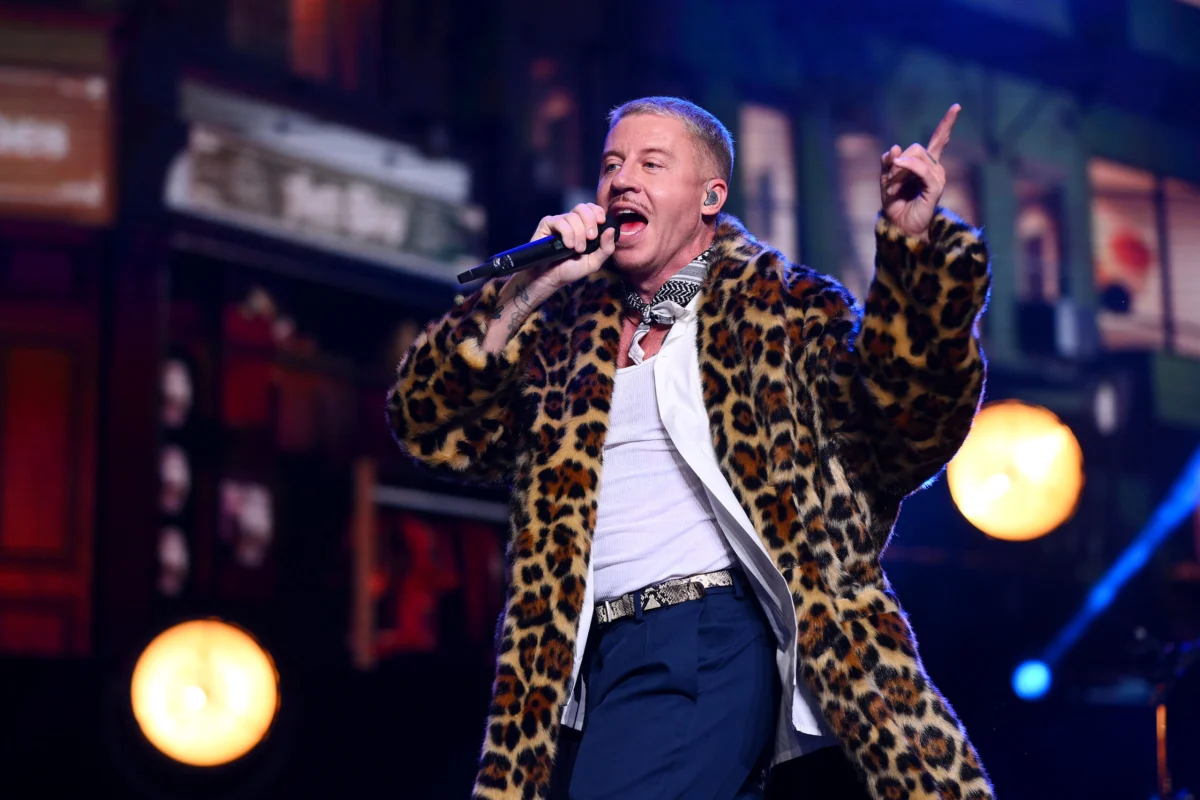
The ongoing intersection of global geopolitical advocacy and the high-stakes world of international touring reached a flashpoint this week, as rapper Macklemore announced he would donate the entirety of his one-million-dollar net earnings from his time as a supporting act on Ed Sheeran’s "Mathematics" (Loop) Tour to organizations providing humanitarian aid in Palestine. This move follows the artist’s abrupt dismissal from the tour, an event that has triggered a cascade of secondary departures from other performers and ignited a vigorous debate regarding the boundaries of political speech in corporate-sponsored entertainment venues.
The Chronology of a High-Profile Fallout
The conflict originated earlier this month at MetLife Stadium in New Jersey, where Macklemore—known for his outspoken stance on social justice issues—delivered a speech from the stage explicitly advocating for "Free Palestine." The rhetoric, which characterized the ongoing military actions in the region as a humanitarian crisis requiring immediate global attention, reportedly triggered immediate friction between the artist, tour promoters, and high-profile venue stakeholders.
Within days of the performance, reports surfaced indicating that pressure was being exerted on the tour’s management, specifically citing Robert Kraft, the owner of the New England Patriots and Gillette Stadium, as a central figure in the push to remove the rapper. While Ed Sheeran initially attempted to navigate the fallout, the logistical pressures proved insurmountable. Sheeran eventually confirmed that a "mutual resolution" could not be reached, stating that the decision of the venue and the promoter was final. In a social media statement that drew significant criticism, Sheeran concluded with the assertion, "I am not complicit," a phrase that served as a lightning rod for further public outcry.
The repercussions were swift. Following the announcement of Macklemore’s removal, a wave of solidarity emerged within the tour’s lineup. Artists including Finneas, Lukas Graham, Beoga, and Aaron Rowe collectively announced their withdrawal from the tour in protest. This secondary exodus effectively disrupted the tour’s structural integrity and highlighted a growing divide between artists who prioritize political activism and the corporate entities that control access to major stadium markets.
Macklemore’s Direct Challenge to Robert Kraft
In a detailed statement released via his Instagram account, Macklemore reframed the narrative, moving the focus away from his personal professional loss and toward the humanitarian conditions in Gaza. "With everything that has happened over the last 48 hours, I want to bring the conversation back to where it belongs: to the Palestinian people who are still being killed, still living under military occupation, and still fighting for their freedom," the artist stated.
The donation, totaling $1,000,000, is earmarked for six specific organizations: the Palestine Children’s Relief Fund, Heal Palestine, the Gaza Soup Kitchen, Medical Aid for Palestinians, the UNRWA USA National Committee, and Anera. By directing these funds toward established aid groups, the rapper has sought to validate his political stance with material action. Furthermore, he issued a direct challenge to Robert Kraft, the billionaire philanthropist and stadium owner, to match the donation. Macklemore’s appeal to the mogul was framed as a bridge-building exercise: "Whatever we disagree about, perhaps we can agree on this: Palestinian lives are worth protecting. A Palestinian life is no less valuable than any other life on this earth." As of the time of this reporting, neither Mr. Kraft nor his representatives have issued a formal response to the challenge.
Humanitarian Context and Supporting Data
The urgency behind the donations cited by Macklemore is supported by data from various international aid bodies. According to reports from the United Nations Office for the Coordination of Humanitarian Affairs (OCHA), the healthcare infrastructure in Gaza has been severely compromised, with a significant majority of hospitals rendered non-functional or operating at extreme capacity with limited supplies. The organizations chosen by the artist, such as Medical Aid for Palestinians (MAP), have been at the forefront of providing surgical equipment, blood supplies, and emergency medical kits to the region since the escalation of hostilities in October 2023.
The situation for humanitarian workers has been equally dire. International humanitarian law mandates the protection of medical personnel, yet agencies have reported record numbers of casualties among doctors, nurses, and aid workers. Macklemore’s focus on the "parents carrying their children into hospitals without the basic resources to treat them" mirrors the accounts provided by international aid agencies regarding the critical shortage of anesthesia, antibiotics, and clean water in shelters and makeshift clinics across the Gaza Strip.
Professional Implications and Venue Policies
The incident has opened a broader discourse regarding the "morality clauses" often embedded in artist contracts for stadium tours. These clauses, which typically allow venue owners and promoters to cancel performances if an artist’s conduct is deemed detrimental to the venue’s reputation or business interests, are being scrutinized for their role in silencing political discourse.
Industry analysts suggest that the incident marks a shift in how artists view their relationship with corporate venue owners. While historically, artists have avoided polarizing political statements to ensure seamless tour operations, a new generation of performers is increasingly willing to risk financial or logistical repercussions to maintain their personal mandates for activism. The fact that supporting acts like Finneas and others felt empowered to drop out of a high-grossing tour suggests that the "solidarity economy" within the music industry is gaining traction, potentially creating a new leverage point for performers.
However, the counter-argument, often voiced by promoters and venue owners, focuses on the business necessity of maintaining a "neutral" environment. By hosting diverse audiences, venues argue that they must protect the "guest experience" from political volatility. The standoff between the artist’s right to freedom of speech and the venue’s right to curate its stage presents an evolving challenge for legal teams and artist management firms alike.
The Future of Political Advocacy in Music
As the news cycle surrounding the tour’s cancellation begins to wane, the long-term impact of this event remains to be seen. Macklemore has explicitly asked his supporters not to move on, urging his audience to maintain their focus on the ongoing humanitarian situation. "When the news cycle moves on, which it will, don’t move with it," he wrote.
The financial sacrifice made by the artist—surrendering a million dollars in net income—is a rare move in an industry where tour revenue is the primary source of income for many performers. By linking his removal from the tour to a tangible humanitarian commitment, Macklemore has effectively transformed a professional crisis into a platform for ongoing international advocacy.
For the music industry, the incident serves as a bellwether for the upcoming touring season. With global tensions remaining high, promoters and venue owners may face increased pressure to clarify their policies regarding political speech. Conversely, artists may become more selective in choosing tour partners, favoring venues and promoters that align with their ethical and political values.
The silence from the Kraft camp leaves a significant void in this narrative, one that many observers are now waiting to see filled. Whether this results in a private dialogue, a public donation, or a sustained refusal to engage remains the central question of this unfolding situation. For now, the event stands as a clear reminder that the stage, once a place for performance alone, has become a complex arena for global diplomacy, where the stakes—both financial and humanitarian—are higher than ever before.

