
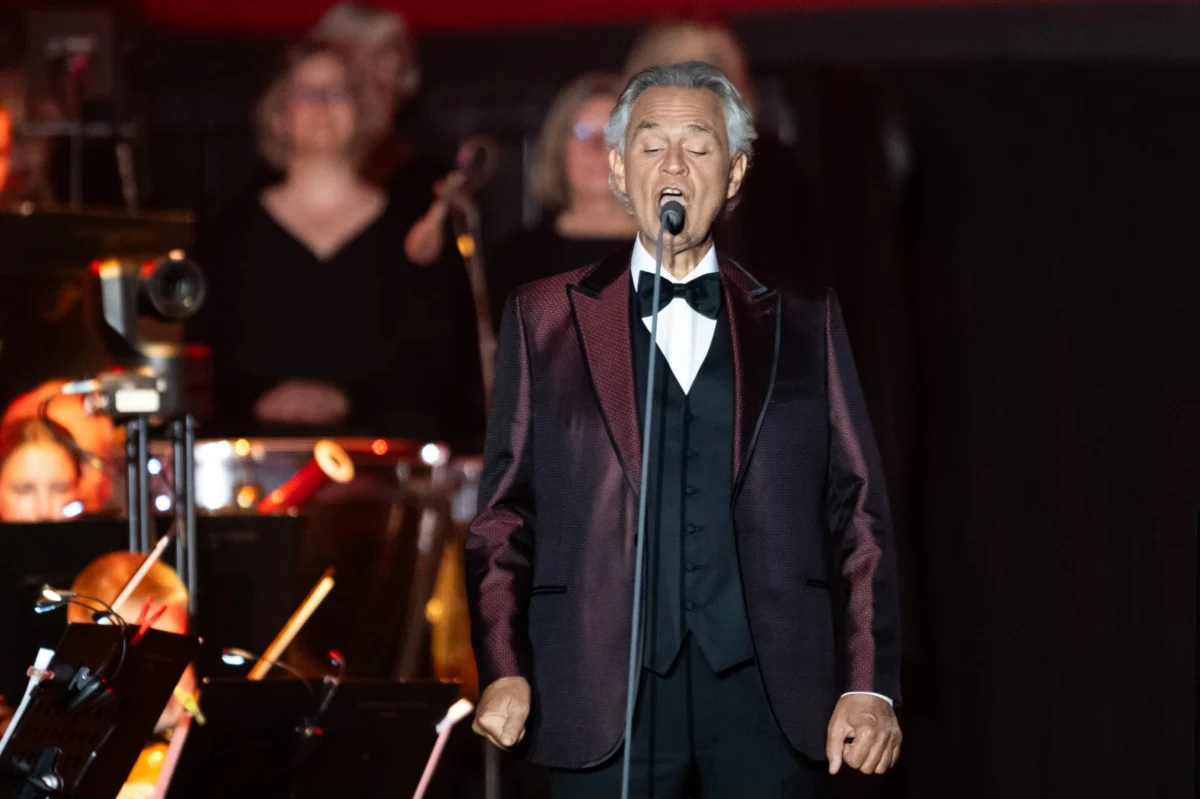
The crisp autumn air of Southern California carried the soaring notes of classical crossover music on Tuesday, September 15, as legendary Italian tenor Andrea Bocelli took the stage for a sold-out performance at the historic Hollywood Bowl. The momentous evening marked the beginning of a two-night engagement at the iconic Los Angeles venue, forming a crucial leg of Bocelli’s expansive Romanza 30th Anniversary World Tour. Produced globally by AEG Presents, the high-profile tour is dedicated to commemorating three decades of Romanza, the groundbreaking 1997 compilation album that catapulted Bocelli from a promising Italian vocalist into a global superstar and remains one of the best-selling contemporary classical records in music history.
While the musical performances themselves delivered breathtaking moments that resonated deeply with the capacity crowd, the production choices and stage management during the evening drew scrutiny from critics and attendees alike. Balancing an immense orchestral arrangement, a massive supporting cast, and high-production visual elements, the concert showcased both the enduring brilliance of Bocelli’s vocal instrument and the operational friction that can accompany massive arena-scale classical crossover productions.
Main Facts of the Evening
The Hollywood Bowl performance was structured as a grand multi-media spectacle, featuring a full symphony orchestra, a dedicated choir, guest vocalists, a troupe of ballet dancers, and instrumental soloists. The musical repertoire spanned Bocelli’s extensive career, highlighting selections from his celebrated classical albums as well as pop-infused crossover hits. However, structural decisions regarding the pacing of the evening created an unintended emotional barrier between the performer and his audience.
The concert opened not with an overture or a traditional musical introduction, but with a polished, high-definition promotional video. The segment functioned largely as a commercial montage celebrating Bocelli’s career milestones and global accolades. Critics noted that the self-congratulatory video felt redundant to an audience that had already purchased tickets out of a deep, established appreciation for the tenor’s artistry.
Compounding the initial detachment was Bocelli’s extended silence during the first half of the program. The tenor addressed the crowd only briefly until near the end of the evening, when he offered a lengthy apology for what he humorously referred to as his "terrible English." In reality, Bocelli’s command of the language was clear and articulate, but his prolonged conversational absence earlier in the night fostered a sense of distance. In live performance formats, especially within large outdoor amphitheaters like the Hollywood Bowl, verbal rapport and informal audience interaction are often critical in uniting thousands of spectators into a cohesive community.
Chronology and Production Dynamics
The logistical flow of the evening revealed a heavy reliance on pre-recorded visual credits rather than live, in-moment acknowledgments. Throughout the performance, Bocelli routinely left the stage to allow guest vocalists and soloists to carry major portions of the show. Yet, despite sharing the spotlight musically, none of these collaborating artists were introduced to the audience by name as they performed.
Instead, the contributions of the supporting cast were relegated to a formal credit roll displayed on the large video screens flanking the stage at the absolute conclusion of the event. While standard theatrical productions frequently utilize end-credits, music critics argued that standard concert etiquette dictates that musicians and vocalists sharing the physical stage should receive verbal introductions while the audience’s attention is actively focused on them.
Despite this oversight in stagecraft, the supporting roster featured world-class talent that carried significant weight in shaping the evening’s artistic success. Soprano Aida Garifullina delivered soaring vocal performances that matched the emotional intensity of the orchestration, while bass Edward Parks provided a rich, grounding depth to the ensemble pieces. Violinist Rusanda Panfili added intricate, lyrical melodies that cut cleanly through the dense orchestral arrangements, and pop vocalist Pia Toscano brought contemporary flair to several crossover numbers, bridging the gap between classical tradition and modern radio sensibilities.
Furthermore, the physical production was enhanced by a troupe of dancers—Francesco Costa, Angelica Gismondo, Brittany O’Connor, and Paul Barris—who infused several musical compositions with classical ballet and contemporary choreography, transforming the auditory experience into a multi-sensory theatrical showcase.
Conductor Steven Mercurio maintained tight control over the massive orchestra, ensuring seamless transitions between the various guest artists. The evening also featured appearances by a select group of high-profile special guests closely tied to Bocelli’s career, including Grammy-winning songwriter and producer David Foster, prolific songwriter Diane Warren, and powerhouse vocalist Jennifer Hudson.
Background and Context of the Romanza Anniversary
The underlying motivation for the current world tour is rooted in the remarkable commercial legacy of Romanza. Released in 1997, the album served as Bocelli’s international breakthrough. Blending classical vocal techniques with accessible pop structures, songs like "Con te partirò" (subsequently released globally as "Time to Say Goodbye" in a duet with Sarah Brightman) redefined the boundaries of the classical crossover genre.
Romanza went on to sell millions of copies worldwide, achieving multi-platinum status in numerous countries across Europe, Latin America, and North America. It established Bocelli as a permanent fixture on the global charts and opened doors for subsequent generations of classical crossover artists. The 30th-anniversary tour, managed and promoted by AEG Presents, is designed as a retrospective celebration of this milestone, routing through iconic stadiums, arenas, and outdoor amphitheatres across Europe and North America through late 2026.
Bringing a production of this magnitude to the Hollywood Bowl—a venue renowned for its acoustic distinctiveness and historical significance in Los Angeles culture—demands meticulous execution. The venue has historically hosted legendary classical and contemporary acts, making it an ideal backdrop for a career-retrospective tour of this scale.
Fact-Based Analysis and Implications
From a critical standpoint, the Hollywood Bowl engagement highlights a recurring challenge in contemporary arena classical music: the tension between highly commercialized, corporate-backed tour production and the intimate connection expected from live performance art.
The inclusion of promotional video packages and heavily scripted show flows often alienates audiences who seek organic, unvarnished interactions with legendary performers. Bocelli’s hesitation to engage in casual stage banter—whether driven by linguistic insecurities or traditional performance philosophy—demonstrates that even artists with decades of global experience can struggle with the modern expectation of artist-fan intimacy.
However, the musical integrity of the performance remained unquestioned. The collaboration with top-tier instrumentalists, internationally acclaimed guest stars, and a symphonic orchestra ensured that the artistic standard of the evening met the high expectations associated with the Bocelli name. The constructive criticisms regarding artist introductions and stage pacing are viewed by industry analysts as easily correctable variables as the tour continues its North American and global routing.
Broader Impact on the Classical Crossover Market
As the Romanza 30th Anniversary World Tour progresses, its reception offers valuable insights into the health and marketability of classical crossover music in the mid-2020s. Bocelli remains the undisputed titan of the genre, proving that decades-old catalogs can still command sellout crowds at premier venues like the Hollywood Bowl.
The tour’s commercial success underscores the enduring purchasing power of older demographic cohorts who grew up alongside Romanza, while the inclusion of modern collaborators like Pia Toscano and Jennifer Hudson demonstrates a strategic effort to appeal to diverse, multi-generational audiences.
Ultimately, while production refinements regarding stage introductions and performance pacing could enhance future iterations of the tour, the Hollywood Bowl kickoff reaffirmed Andrea Bocelli’s status as a generational vocal talent. As the tenor continues to celebrate thirty years of recorded music history, the tour stands as both a retrospective of past triumphs and a testament to the timeless appeal of the human voice.

