
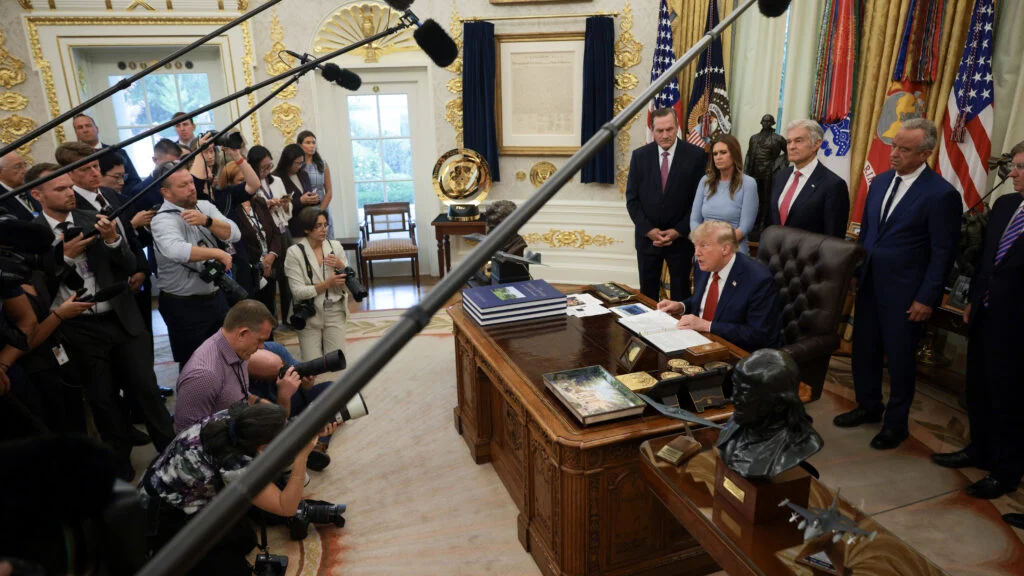
WASHINGTON — President Donald Trump announced on Friday a sweeping initiative titled the GENEROUS model, a policy framework designed to fundamentally alter how state Medicaid programs procure pharmaceuticals. The announcement, delivered from the White House, positions the administration’s strategy as a cornerstone of its broader effort to curb the rising costs of prescription medication. While the administration touts the model as a transformative victory for taxpayer-funded healthcare, the rollout has been met with a mix of political fanfare and cautious skepticism from industry analysts, health policy experts, and state officials who suggest that the mechanics of the plan remain shrouded in ambiguity.
The GENEROUS model aims to secure for Medicaid programs drug pricing parity with international markets. By securing commitments from over two dozen pharmaceutical manufacturers, the administration claims it will force a downward adjustment in the costs of high-expenditure medications. Under the agreement, participating companies have pledged to offer state Medicaid programs pricing tiers that reflect the costs currently paid in comparable peer nations. According to White House officials, all 50 states, the District of Columbia, and Puerto Rico are slated to participate in the model, theoretically creating a unified front in drug procurement negotiations.
The Chronology of an Evolving Drug Pricing Strategy
The emergence of the GENEROUS model represents the culmination of a multi-year effort by the Trump administration to address the persistent issue of drug affordability. Since taking office, the administration has consistently identified high pharmaceutical costs as a primary driver of federal and state budget deficits.
In 2018, the Department of Health and Human Services (HHS) released its "American Patients First" blueprint, which laid the groundwork for international price referencing. Throughout 2019 and early 2020, the administration engaged in a series of closed-door negotiations with major pharmaceutical executives. These discussions focused on balancing the need for domestic innovation—often cited by the pharmaceutical industry as the primary reason for high costs—with the increasing political pressure to provide relief to state-level Medicaid budgets.
The GENEROUS model is the latest iteration of these negotiations. While the administration had previously explored an "International Pricing Index" (IPI) for Medicare Part B, the transition of this logic to Medicaid suggests a pivot toward state-level implementation. The formalization of these deals with over two dozen manufacturers indicates a strategic shift from broad legislative proposals, which have historically stalled in Congress, toward executive-led procurement agreements.
Supporting Data and the Medicaid Landscape
To understand the scope of the GENEROUS model, one must consider the sheer volume of pharmaceutical spending within the Medicaid program. According to data from the Centers for Medicare & Medicaid Services (CMS), Medicaid spending on prescription drugs has grown significantly over the last decade, exacerbated by the expansion of the program under the Affordable Care Act and the introduction of high-cost specialty biologics.
Recent reports from the Kaiser Family Foundation indicate that Medicaid drug spending, after mandatory rebates, reached record highs in the 2022 fiscal year. When accounting for gross spending before rebates, the figures are even more staggering, often straining state coffers that are already balancing competing priorities like infrastructure, education, and public safety.
The GENEROUS model seeks to address this by effectively capping the cost of drugs at the "international reference price." Proponents argue that if successful, this could save states billions of dollars annually. However, the lack of transparency regarding which specific drugs are included in the agreements and the methodology for determining an "international reference price" has left many stakeholders searching for clarity.
Industry Reactions and Expert Analysis
The pharmaceutical industry’s response to the announcement has been nuanced. Industry trade groups, such as PhRMA, have historically opposed government-mandated price controls, arguing that they stifle research and development. The fact that two dozen companies have agreed to the terms of the GENEROUS model suggests either a strategic concession to avoid more draconian legislative threats or a calculated assessment that the terms of the model are manageable within their existing global pricing structures.

Independent policy analysts have raised several technical concerns. First, the challenge of defining an "international peer country" is significant. Different nations utilize different regulatory frameworks, tax structures, and health technology assessments (HTAs) to determine drug costs. Applying a single international benchmark to a diverse array of American state Medicaid programs may lead to administrative complexities that could offset the theoretical savings.
"The concept of international reference pricing is intuitively appealing but practically fraught," said one veteran healthcare economist. "The devil is in the details of the contract. If these companies are offering ‘peer country’ prices, are they using the lowest price found in the G7, or an average? And how do they account for the differences in the cost of delivery and ancillary services?"
Implications for State Governments
For state governors and Medicaid directors, the promise of lower drug costs is welcome, but the administrative burden of implementing the GENEROUS model remains a point of concern. States are responsible for the day-to-day administration of Medicaid, and they have historically relied on the federal "best price" mechanism to ensure they are not overpaying for prescriptions.
The integration of the GENEROUS model into existing state-level formulary management will require significant cooperation between the federal government and state agencies. There is also the potential for legal challenges. Previous attempts by the administration to alter drug pricing via executive order have faced litigation from both industry trade groups and patient advocacy organizations, who argue that such changes require Congressional authorization.
Furthermore, there is the question of supply chain stability. If manufacturers find the GENEROUS model’s pricing to be unsustainable for certain niche medications, there is a risk that they may limit supply or exit the Medicaid market entirely, potentially causing disruptions for patients who rely on specific, high-cost therapies.
Broader Impact and Future Outlook
The GENEROUS model serves as a vital component of the Trump administration’s messaging on healthcare reform as it navigates a challenging political landscape. By focusing on procurement efficiency rather than sweeping market deregulation, the administration is attempting to demonstrate tangible progress on a top-tier voter issue.
However, the long-term success of the model will depend on several factors that have yet to be fully articulated:
- Transparency: Will the administration release the specifics of the deals with the two dozen participating pharma companies? The public and state legislatures will likely demand to know which drugs are impacted and how much they are expected to save.
- Congressional Oversight: Even with the executive power to negotiate, the GENEROUS model will likely face scrutiny from lawmakers who may feel that such significant shifts in drug procurement should be governed by statute rather than executive agreement.
- Market Response: How will the pharmaceutical industry adjust their global strategies? If manufacturers attempt to raise prices in other markets to compensate for lower Medicaid margins, the global pricing equilibrium could shift in unexpected ways.
As the GENEROUS model moves from the announcement stage to the implementation phase, the focus will shift from the podium to the pharmacy benefit managers (PBMs) and state Medicaid offices tasked with the heavy lifting. While the administration has declared this a major win for affordability, the transition from theory to practice will be the ultimate test of the model’s viability.
For the millions of Americans covered by Medicaid, the primary concern remains access to life-saving medications. If the GENEROUS model can lower costs without restricting access or compromising the quality of care, it could serve as a model for future reform. If, however, the implementation leads to bureaucratic gridlock or supply shortages, it may be viewed as a missed opportunity to address the fundamental structural issues within the American pharmaceutical market.
The coming months will provide a clearer picture as the administration begins to release technical guidance for state participation. Until then, the GENEROUS model remains a significant, yet enigmatic, addition to the ongoing debate over the cost of American healthcare.

